Introduction
The United Arab Emirates (UAE) remains one of the most popular destinations for job seekers from around the world. Every year, thousands of professionals, skilled workers, and fresh graduates move to the UAE in search of better career opportunities and higher salaries. Before starting work in the UAE, it is important to understand the work visa process, eligibility requirements, and legal procedures.
This guide explains the UAE work visa process in simple language and provides useful information for anyone planning to work in the country in 2026.
What Is a UAE Work Visa?
A UAE work visa is an official permit that allows foreign nationals to live and work legally in the UAE. The visa is usually sponsored by an employer who has hired the employee for a specific position.
Without a valid work visa and residence permit, foreign nationals cannot legally work in the UAE.
Who Needs a UAE Work Visa?
Most foreign nationals require a work visa before they can legally work in the UAE. This applies to applicants from India, Pakistan, Bangladesh, Nepal, the Philippines, African countries, and many other regions.
The employer generally handles the visa application process after offering employment to a candidate.
Basic Requirements for a UAE Work Visa
Applicants typically need:
- Valid passport
- Passport-sized photographs
- Employment offer letter
- Educational certificates (if required)
- Medical fitness certificate
- Clean legal record
- Employer sponsorship
Different professions may have additional requirements depending on the role and company.
UAE Work Visa Process
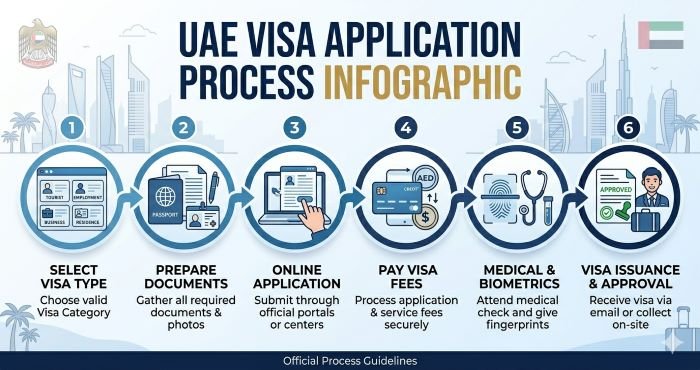
Step 1: Receive a Job Offer
The first step is obtaining a genuine job offer from a UAE employer. Candidates should verify the employer’s details and carefully review the employment contract before accepting the offer.
Step 2: Work Permit Application
After hiring a candidate, the employer applies for a work permit through the relevant UAE authorities.
Step 3: Entry Permit Issuance
Once approved, an entry permit may be issued, allowing the employee to enter the UAE and complete the remaining formalities.
Step 4: Medical Examination
Applicants must undergo a medical fitness test at an approved medical center. This examination is mandatory for obtaining a residence visa.
Step 5: Emirates ID Registration
Employees are required to complete biometric registration and apply for an Emirates ID.
Step 6: Residence Visa Stamping
After completing all requirements, the residence visa is processed and linked to the employee’s legal status in the UAE.
Important Documents to Prepare
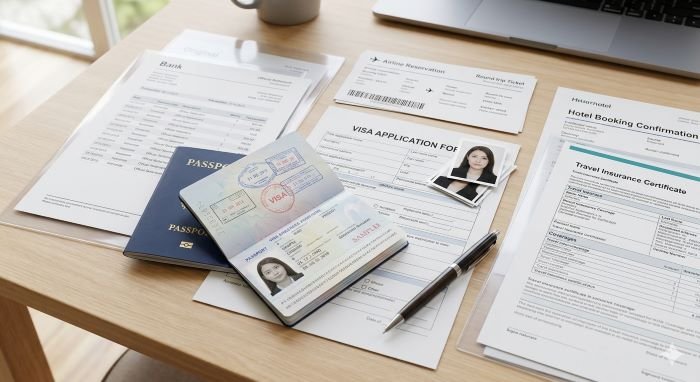
To avoid delays, applicants should keep the following documents ready:
- Passport with sufficient validity
- Educational certificates
- Professional experience certificates
- Updated CV or resume
- Passport photographs
- Job offer letter
Keeping digital and printed copies of all documents is recommended.
Common Mistakes to Avoid
Many job seekers face problems because of avoidable mistakes. Some common issues include:
Accepting Unverified Job Offers
Always verify the employer and job details before making any payments or travel arrangements.
Using Incomplete Documents
Missing documents can delay the visa process and create complications.
Ignoring Employment Contract Details
Read salary, benefits, working hours, leave policy, and accommodation terms carefully before signing any agreement.
Benefits of Working in the UAE
The UAE offers several advantages to international workers:
- Competitive salaries
- International work environment
- Modern infrastructure
- Career growth opportunities
- Exposure to global industries
- Safe and stable business environment
Many professionals use UAE work experience to strengthen their long-term careers.
Tips for Job Seekers

Create a Professional CV
A well-structured CV increases the chances of getting interview calls from UAE employers.
Apply Through Reliable Sources
Use reputable company career pages and trusted recruitment channels.
Improve Professional Skills
Employers value candidates with relevant certifications, communication skills, and industry knowledge.
Prepare for Interviews
Research the company and practice common interview questions before attending interviews.
Frequently Asked Questions
Q1. Can I work in the UAE on a tourist visa?
No. Working without the proper authorization may violate UAE regulations.
Q2. Who pays for the work visa?
In many cases, the employer manages the work visa process according to applicable regulations and company policies.
Q3. How long does the process take?
Processing times vary depending on the employer, documentation, and approval procedures.
Q4. Is medical testing mandatory?
Yes, medical fitness procedures are generally required as part of the residence visa process.
Conclusion
Working in the UAE can provide excellent career opportunities for qualified professionals and skilled workers. Understanding the work visa process, preparing documents properly, and applying through legitimate channels can help job seekers avoid common problems and begin their careers successfully.
Before accepting any offer, verify employer information, review contract details carefully, and follow official immigration and employment procedures. Proper preparation can make the transition to working in the UAE smoother and more successful.