Teaching Jobs in Dubai: Qualifications, School Requirements, and Applications

Dubai has a large education sector with schools following many curricula, from British and American to Indian, International Baccalaureate and the national programme. That variety creates opportunities for teachers, but it also makes the market confusing. A candidate who is excellent in one system may not understand what another expects, and applicants often send general applications that do not match a school's needs. This guide explains how the sector is organised, what qualifications schools commonly request, how to prepare an application and how to judge an offer.
It does not list vacancies or give salary figures. Requirements are set by schools and regulators and can change, so always confirm them directly.
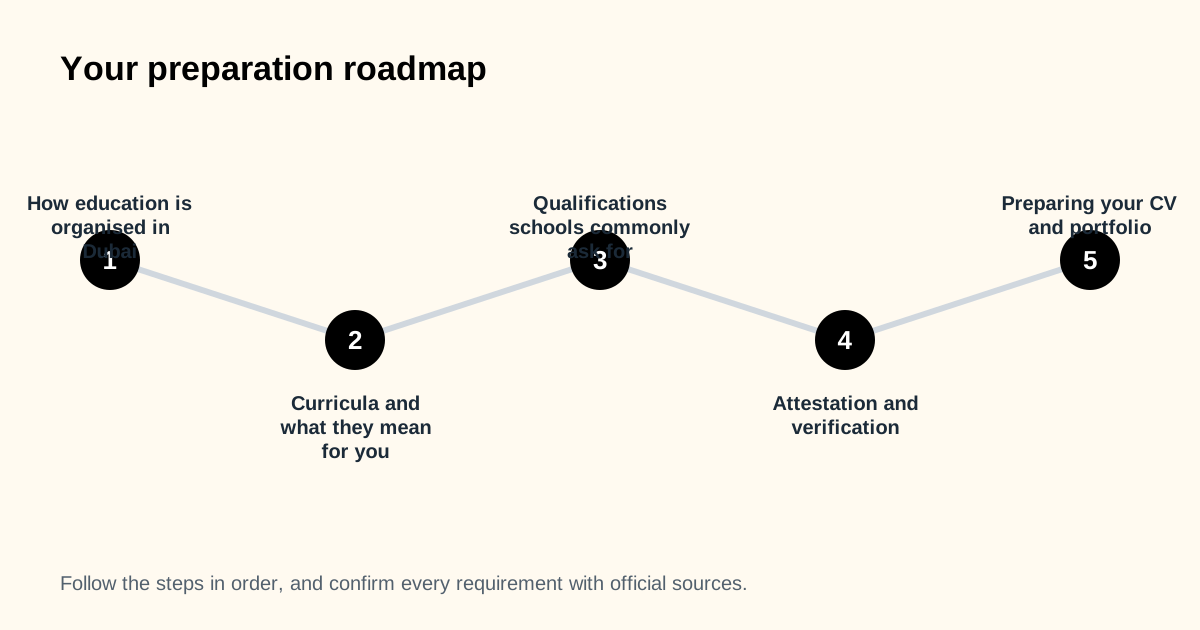
How education is organised in Dubai
Private schools make up a large share of the sector in Dubai, and they are regulated by the Knowledge and Human Development Authority (KHDA). In Abu Dhabi, the Department of Education and Knowledge (ADEK) plays a similar role, and the Ministry of Education oversees public schools and national policy. Each body publishes guidance on school quality, teacher qualifications and licensing, and the details can be updated.
Because regulators and schools set their own conditions, there is no single route into teaching. Instead, the path depends on the curriculum, the age group, the subject and the school's own recruitment practice.
Curricula and what they mean for you
A school's curriculum shapes the kind of teacher it wants. British curriculum schools often prefer teachers trained in that system, and many ask for a recognised teaching qualification. American curriculum schools look for familiarity with their standards and assessment methods. Indian curriculum schools often recruit teachers with experience in that curriculum and relevant subject qualifications. International Baccalaureate schools value training and experience in that programme. Language and Arabic or Islamic studies posts have their own requirements.
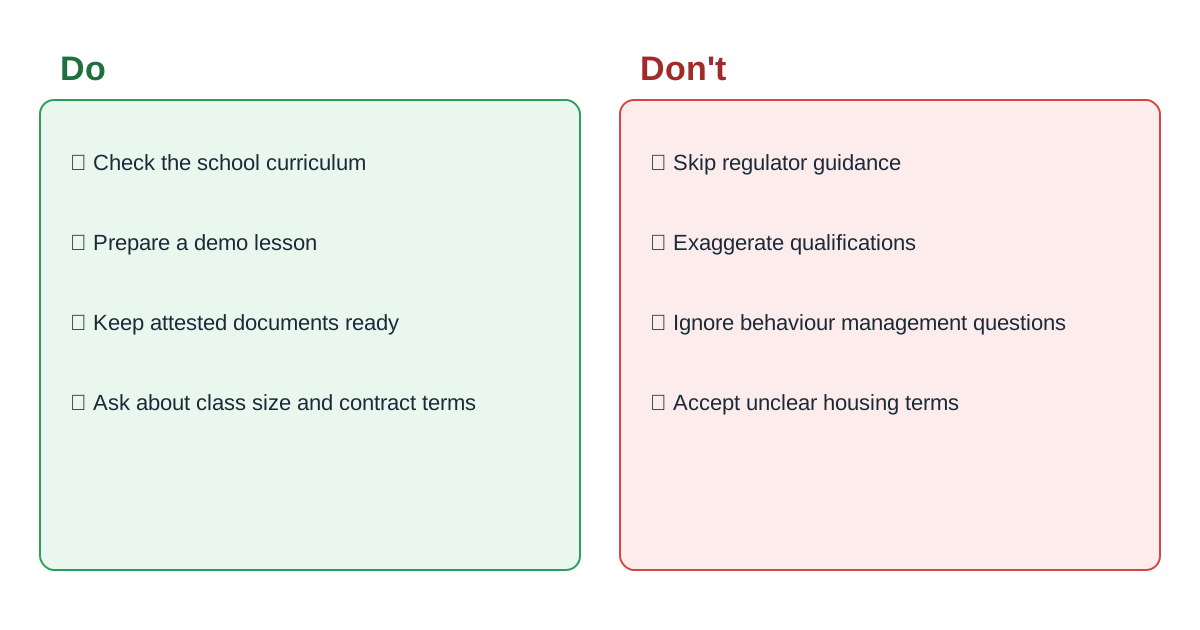
Before applying, read the school's website and inspection reports, which are often published by the regulator. Understand its curriculum, class sizes, age range and leadership. Tailor your application to show that you know the school and can teach its programme.
Qualifications schools commonly ask for
The table below shows typical expectations. It is a general guide, since every school sets its own conditions and regulators update rules.
| Item | What schools commonly ask for | Preparation tip |
|---|---|---|
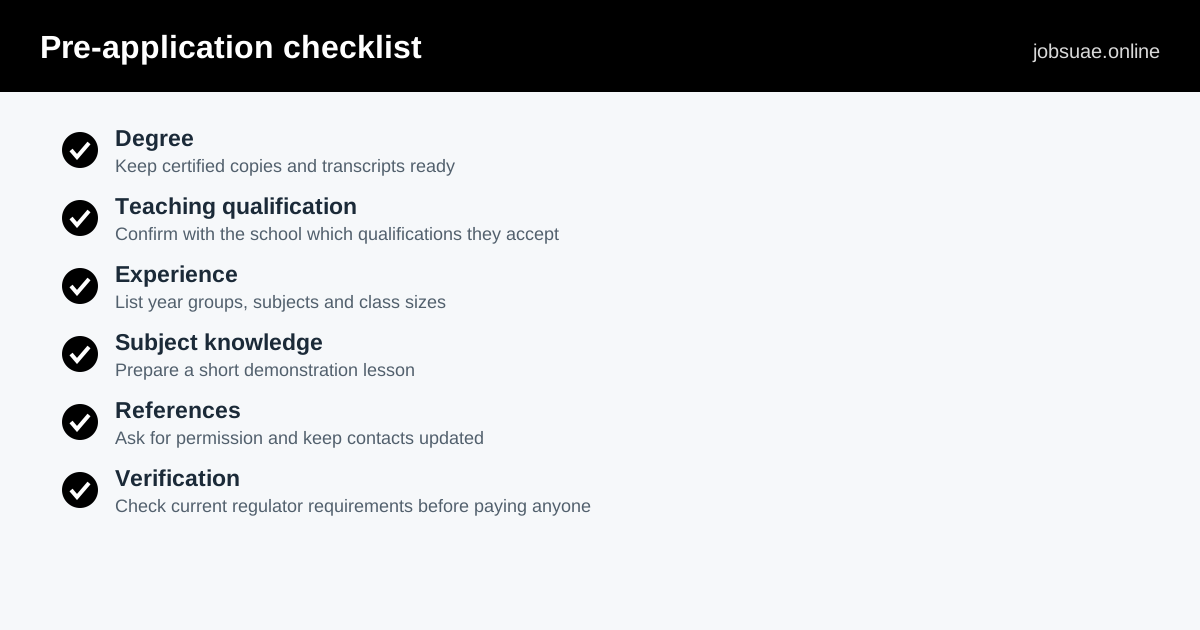
| Degree | A bachelor's degree, often in the subject taught or in education | Keep certified copies and transcripts ready |
| Teaching qualification | A recognised teaching qualification or licence for the curriculum | Confirm with the school which qualifications they accept |
| Experience | Classroom experience, sometimes in a similar curriculum | List year groups, subjects and class sizes |
| Subject knowledge | Strong command of the subject and its assessments | Prepare a short demonstration lesson |
| References | Professional references from previous schools | Ask for permission and keep contacts updated |
| Verification | Attestation and verification of degrees and certificates | Check current regulator requirements before paying anyone |
| Background and conduct checks | Safeguarding and good conduct documentation | Obtain the documents the school requests through official channels |
Attestation and verification
Many teachers need their qualifications attested or verified before they can be licensed or hired. The process, the documents required and the order of steps can depend on your country and the qualification. Do not rely on a recruiter or social media post for the details. Ask the school and the relevant regulator what is needed, and use official verification channels. Be careful with agents who promise to obtain documents quickly for a fee, and do not use anyone who offers a "ready-made" certificate.
Preparing your CV and portfolio
A teaching CV should show impact, not just duties. Lead with your qualifications and teaching licences, then list your experience with year groups, subjects, curricula and results where you can state them truthfully. Include examples of professional development, extracurricular activities, languages and technology skills. A short portfolio, with sample lesson plans, assessment examples and anonymised student work where permitted, can strengthen your application.
Keep the CV to two pages for an experienced teacher and write a cover letter that addresses the school's needs. A step-by-step layout is in our UAE-style CV guide.
Where to find teaching jobs
Many schools publish vacancies on their own websites, and school groups run central recruitment pages. Education recruitment agencies and reputable job boards also list positions. Attend verified education job fairs where the organiser is clearly identified. Our guide to finding jobs in Dubai sets out a weekly routine for searching and tracking applications.
Recruitment timelines often follow the school year, with a lot of hiring activity before the new academic year, though vacancies appear throughout the year. Plan ahead, and be careful with any employer that demands payment or sends offers without an interview. Our guide to avoiding recruitment scams lists warning signs.
Interviews and demonstration lessons
Teaching interviews often combine questions with a demonstration lesson. Expect to discuss classroom management, differentiation for different learners, assessment, working with parents, safeguarding and your approach to technology. You may be asked to teach a short lesson, sometimes remotely. Prepare a clear objective, an engaging starter, a main activity with checking for understanding and a brief summary.
Interviewers also want to see how you work with colleagues and handle feedback. Prepare examples of how you supported a struggling student, collaborated on a curriculum plan or responded to an observation. Ask about class sizes, resources, professional development, curriculum expectations and the induction programme.
Contracts and conditions
Review the offer carefully. Check the position, grade or subject, salary, allowances, working hours, term dates, probation, notice period and the terms for accommodation, flights, medical cover and school fees for children if these are offered. Ask whether the offer depends on attestation, licensing and background checks, and what happens if they are delayed. Do not resign from your current job until you have a written offer and a clear understanding of the process. Check MOHRE's guidance on labour contracts if any term looks unusual.
Cultural awareness and professional conduct
Dubai's classrooms are multicultural, and teachers are expected to respect local culture, values and laws. Schools often have clear guidance on communication, social media use and professional boundaries, and teachers should follow them. Good practice includes polite and inclusive language, respect for diverse backgrounds and careful communication with parents. Learning basic Arabic phrases can show respect, even if you do not teach the language.
Career growth
Teachers can progress to subject coordinator, head of department, pastoral leader, curriculum lead or school leadership. Others move into training, counselling, special educational needs or educational technology. To grow, seek professional development, ask for observations and feedback, take on responsibilities and keep evidence of your impact. Strong teaching and collaboration are noticed.
Preparing a demonstration lesson step by step
A short demonstration lesson can decide an application, so prepare it with care. Begin by asking the school for the year group, topic, length and available equipment. Write one clear learning objective, such as "students will be able to compare two fractions with unlike denominators". Plan a starter that activates prior knowledge, one main activity with a way to check understanding, and a short plenary. Prepare for technology to fail by having a printed backup. Practise aloud and time yourself, because many candidates run over.
Afterwards, expect to be asked what went well and what you would change. A reflective, honest answer shows that you can improve, which is often valued more than a perfect lesson.
Living and working in Dubai as a teacher
Practical questions matter as much as the contract. Ask about the school's location, commute, accommodation arrangements and term calendar. Dubai is large, and traffic can add a lot to the working day. Think about how your family will settle, including schools for your own children, and the cost of living in the area you choose. Speak to current teachers if the school allows it, and compare what they say with the written offer.
Mistakes teaching applicants often make
Some applicants send the same letter to every school, ignoring the curriculum. Others claim experience in a system they have not taught, and a demonstration lesson reveals the gap. Some accept a job before understanding the attestation process, then face delays and cost. A few pay agents for guaranteed placements. To avoid these problems, research each school, be accurate about your experience, ask about verification and insist on written terms.
Building a long-term profile
Teachers who stay in the market for years build a recognisable profile. They keep their licences and training current, document student progress and share good practice with colleagues. They also build relationships with school leaders and keep references up to date. If you plan to move between schools, keep copies of observation reports, curriculum plans and professional development records, because these show your development over time.
Qualifications and regulators
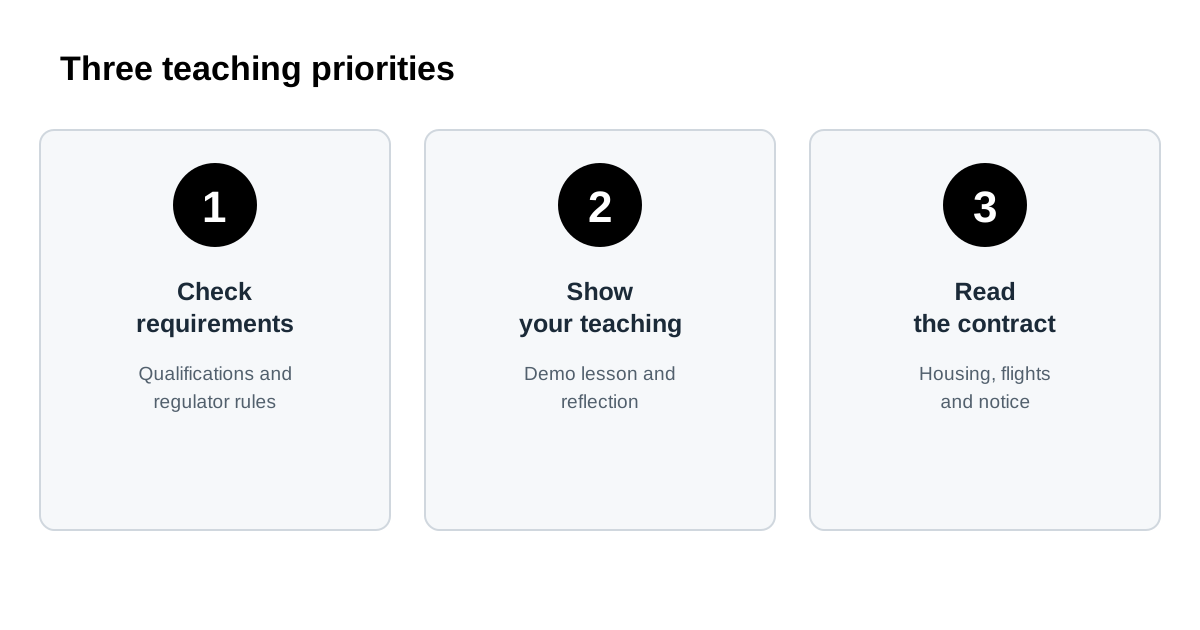
Teaching roles usually require a recognised degree, teaching qualification, attested certificates and background checks. Education is regulated by authorities such as KHDA in Dubai and ADEK in Abu Dhabi, so check their current rules on their official websites. Prepare a sample lesson plan, and ask about the curriculum, class size, and contract terms.
Prepare a demonstration lesson
Many schools ask for a short demo. Choose one learning objective, plan a 10-minute starter, an activity and a quick check for understanding. Bring printed materials and a backup that does not depend on technology. Afterwards, be ready to explain what you would change, since reflection matters as much as delivery.
Conclusion
Teaching jobs in Dubai offer variety and a multicultural environment, but they depend on matching your qualifications and experience to a school's curriculum and requirements. Research regulators and schools, prepare your documents early, present your practice honestly and read every contract before accepting. Confirm attestation and licensing steps with the education regulator and the school, and check general employment rules on the UAE Government portal. Careful preparation shows schools that you are a professional they can trust with their students.
Classroom management in an interview
Interviewers often ask how you handle a disruptive student. A strong answer starts with prevention: clear routines, positive expectations and engaging tasks. Then describe a calm response, such as private conversation and following school policy, and a follow-up with parents or leadership where needed. Keep the focus on learning and respect.
Professional development
Teachers progress through training, subject leadership and mentoring roles. Keep a folder of lesson plans, observation feedback and student progress examples. Share only what the school allows, and remove student names.
Frequently asked questions
Which curriculum should I choose?
Schools follow different curricula. Apply to those that match your training and experience.
Do teachers need background checks?
Many schools require them. Ask which documents and certificates are needed.
How can I prepare for a demo lesson?
Plan one clear objective, a starter, an activity and a quick check for understanding.