How to Avoid Recruitment Scams When Searching for Jobs in the UAE
Recruitment fraud targets people at a vulnerable moment: they need work, they are far from home and they trust a polished message. Losses can include savings, a passport copy used for identity fraud, or even a trip to the UAE with no job at all. This guide explains how the common schemes work and gives a verification routine you can apply to every offer.
How the scams usually work
Most schemes follow a pattern. First, an attractive advert appears on social media or a messaging group, offering high pay for little experience. Second, you are hired instantly, often without a proper interview. Third, you receive a professional-looking offer letter. Fourth, you are asked to pay a "visa fee", "medical fee", "security deposit" or "ticket advance". Once you pay, the contact becomes slow or disappears, or new fees appear.
Seven red flags
- An offer arrives without an interview.
- The sender uses a free email address or personal messaging number.
- Pay is far above normal for the role.
- You are told to pay money before starting.
- The employer cannot give a licence number or physical address.
- You are pressured to decide today.
- You are told to enter the country on a visit visa and "convert it" later.
A five-step verification routine
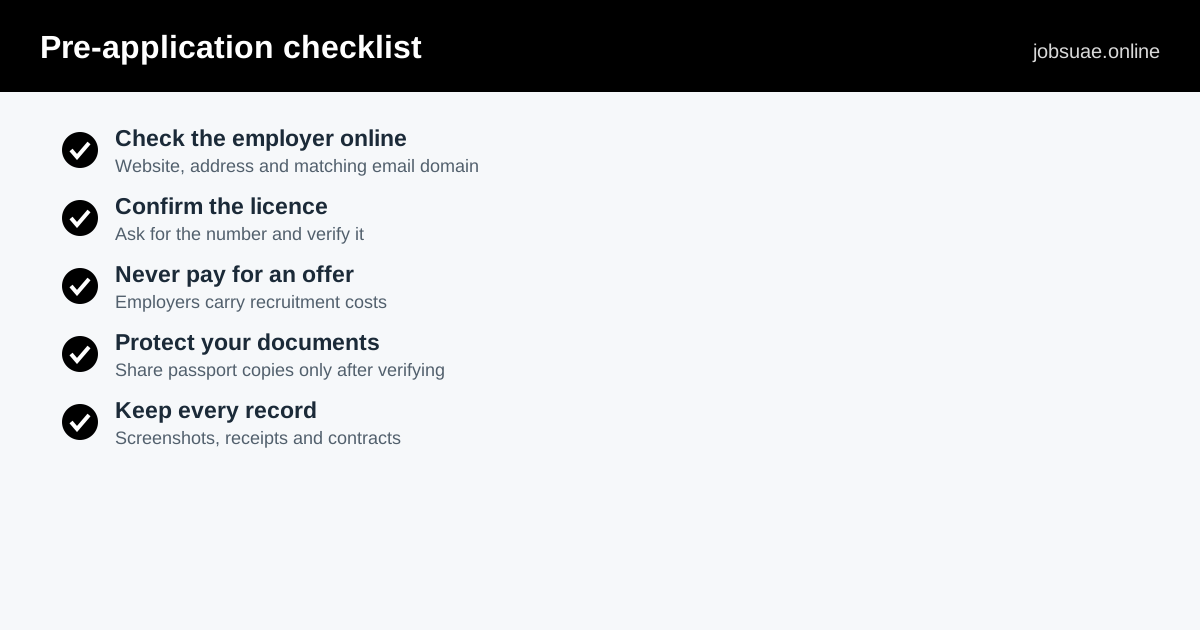
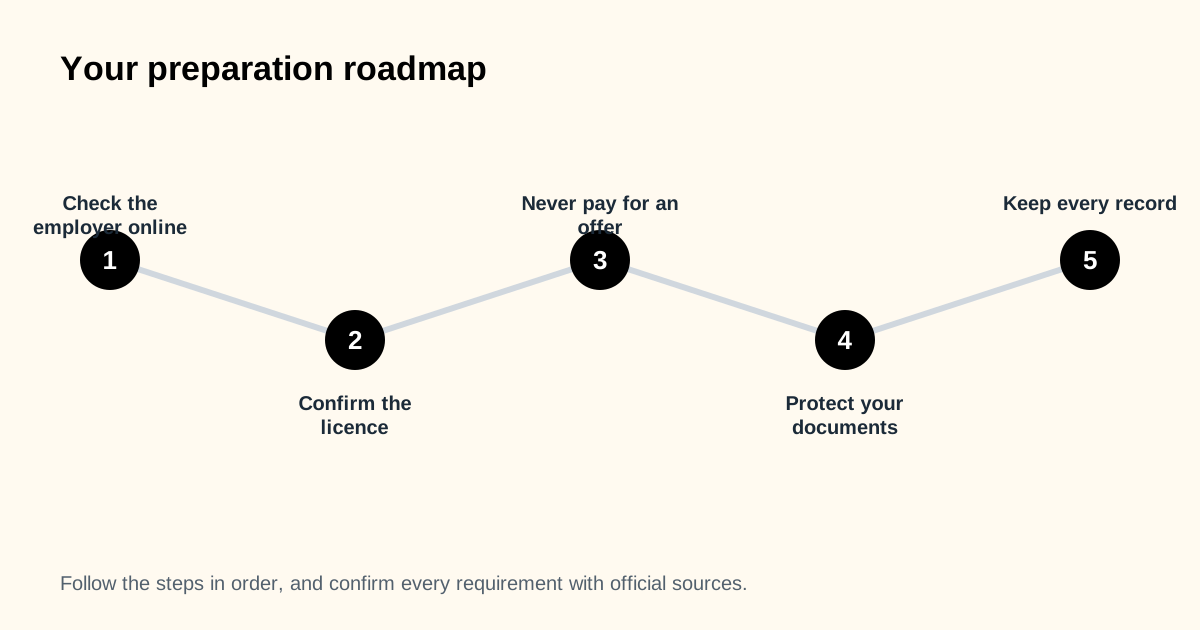
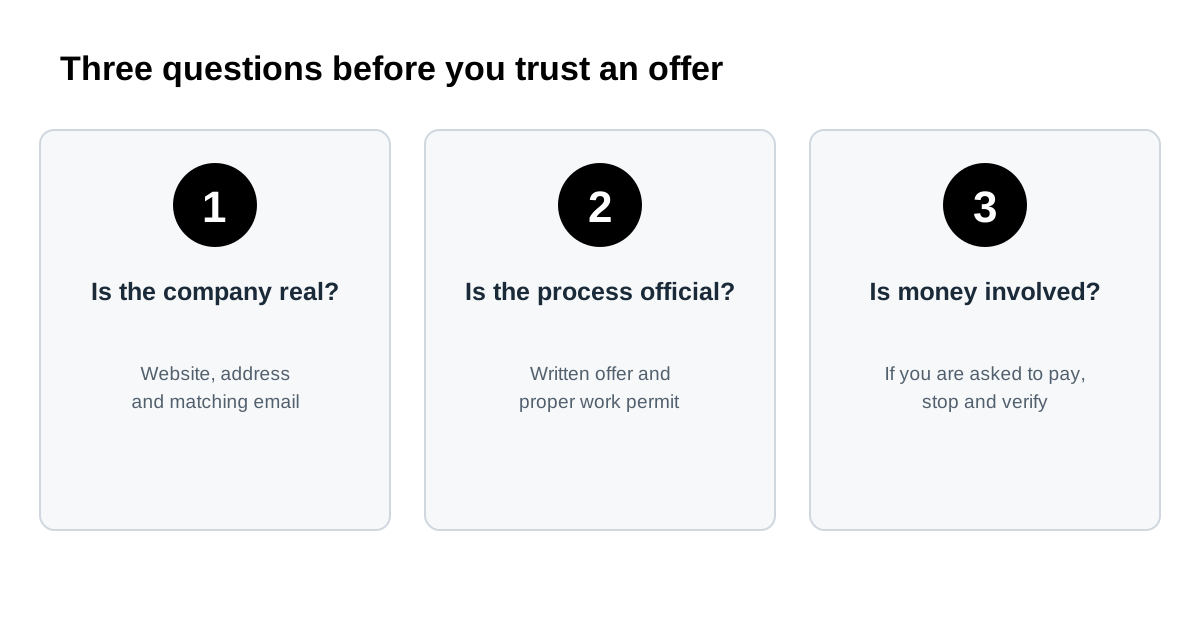
- Find the company yourself. Search its name, open its own website and compare the email domain with the offer.
- Check the licence. Ask for the trade licence number and verify it with the relevant licensing authority.
- Check the recruiter. Ask which licensed employer the agency represents, and in whose name the contract will be.
- Read the money. Rules place recruitment costs on the employer. Confirm the current position with MOHRE before paying anything.
- Check the process. A real offer follows an official work permit process, and the written contract should match what you were told.
Scam types in detail
The cloned company. Scammers copy a real firm's logo and staff names. Contact the real company through the number on its official website, not the one in the message.
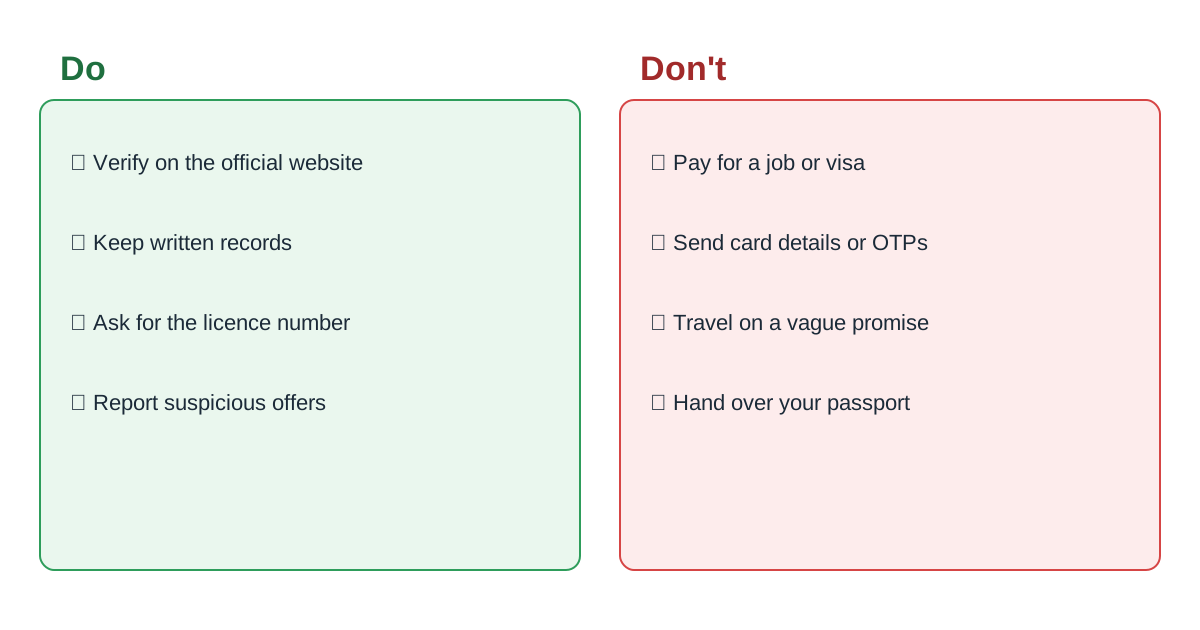
The online interview that asks for card details. Genuine employers do not need your card number, one-time passwords or online banking login. If asked, stop.
The training or attestation fee. You are told a job is guaranteed after paying a partner for a course or document service. Treat any job-linked payment as a red flag until an official source confirms it.
The visit visa trap. People travel on a visit visa for a promised job, then find none and become stranded. Confirm the work permit process in writing first.
If you have already paid or shared documents
Stop paying, even if told the payment will be refunded. Save screenshots, receipts, phone numbers and the offer. Contact your bank if card or account details were shared. Report the case to the police or the official reporting channels listed on the UAE Government portal. If your passport or wages are withheld while you are in the UAE, contact MOHRE.
Protecting your documents
Share a passport copy only after verifying the employer, and write the purpose on the copy where possible. Never send photos of bank cards or Emirates ID to unverified contacts. Use different passwords for email and job sites, and enable two-step verification.
Final advice
Scammers rely on urgency and hope. A slow, documented process protects you. Verify the employer, refuse to pay for offers and keep records.
A realistic case: the "airport job" message
A man in his twenties receives a message offering an airport job with a high salary, free accommodation and a visa, if he pays a "processing fee" today. The letter looks official, with a logo and signature. He replies that he wants to check, and the sender becomes urgent and says only two seats are left. This is the classic pressure pattern. A calm check shows that the email domain is free, the company's real careers page lists no such role, and no licence number is offered. He stops, saves the messages and reports them. The lesson is that the paperwork looked professional, but the process did not.
How to talk to family about it
Scam victims often feel ashamed and delay reporting. If a relative has been affected, focus on the next steps rather than blame: save evidence, stop payments, notify the bank and report. Early action improves the chance of limiting damage.
Helping others
If you spot a fake advert, report it to the platform and warn your community without sharing personal data. Sharing our scam checker is an easy way to help.
Frequently asked questions
Does a real employer ever ask for money?
Rules place recruitment costs on the employer. If you are asked to pay for an offer, visa or training linked to a job, stop and confirm with MOHRE before sending anything.
How do I check a company licence?
Ask for the trade licence number and look it up on the licensing authority of the relevant emirate. Do not rely on a screenshot sent by the recruiter.
What if the scammer already has my passport copy?
Tell your bank if financial details were shared, keep records, and report the case through official channels. Be alert for attempts to use your identity.
Are WhatsApp job offers always fake?
No, but they are a common route for fraud. Treat them as unverified until you confirm the employer independently.