Construction Jobs in the UAE: Common Roles, Skills, and Safety Requirements
The UAE skyline is a constant reminder of how much building takes place here. Towers, villas, roads, bridges, factories and infrastructure projects all need large teams of skilled and general workers, from labourers and carpenters to engineers and site managers. Construction offers real opportunities, but it is also one of the most physically demanding and risky sectors, and one where job seekers are often targeted by misleading offers. This guide explains common roles, the skills and tests employers look for, safety expectations, how working in the heat is regulated in general terms and how to check an offer before you commit.
It does not list vacancies or salary figures, and it cannot promise placement. Rules and employer terms change, so confirm everything in writing and through official sources.
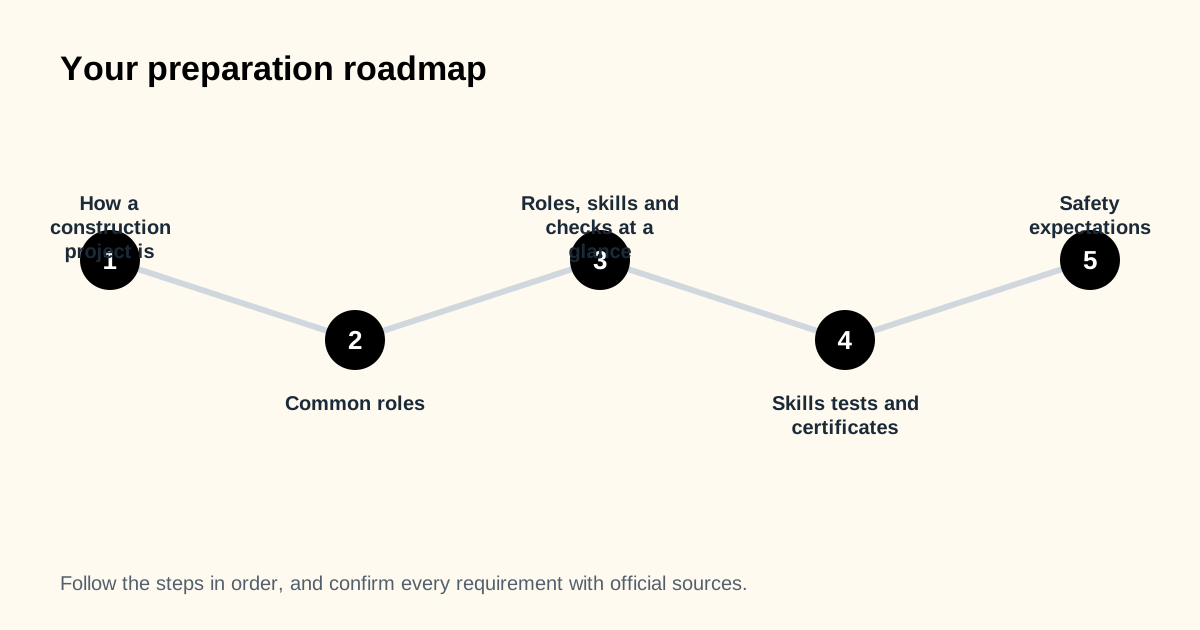
How a construction project is organised
Understanding the structure helps you know whom you are working for. A client or developer commissions a project. A main contractor manages construction and hires subcontractors for specific trades such as electrical, plumbing, steel, painting or finishing. Workers may be employed directly by the main contractor or by a subcontractor, and responsibility for permits, accommodation and safety depends on the employer. Ask who your employer is and who will supervise your daily work.
Common roles
General labourer and helper
Labourers move materials, clean sites, assist skilled workers and carry out manual tasks. It is a common entry point, requires stamina and safety discipline and can lead to skilled trades with training and experience.
Skilled trades
Carpenters, masons, steel fixers, welders, electricians, plumbers, painters, tile fitters and HVAC technicians perform specialised work. Employers may require proof of experience and sometimes practical tests.
Machine and equipment operators
Operators drive and control excavators, cranes, loaders, forklifts and other machinery. These roles need specific training and authorisation, and mistakes can be dangerous. Never claim operating skills you do not have.
Supervisors and foremen
Foremen lead teams, organise tasks, check quality and communicate with engineers. They need experience, leadership and a strong understanding of safety.
Technical and professional roles
Site engineers, surveyors, quantity surveyors, planners and project managers need relevant qualifications and experience. They coordinate work, drawings, schedules and budgets.
Safety officers
Safety officers monitor sites, run briefings, inspect equipment and investigate incidents. They usually require specific safety training and experience.
Roles, skills and checks at a glance
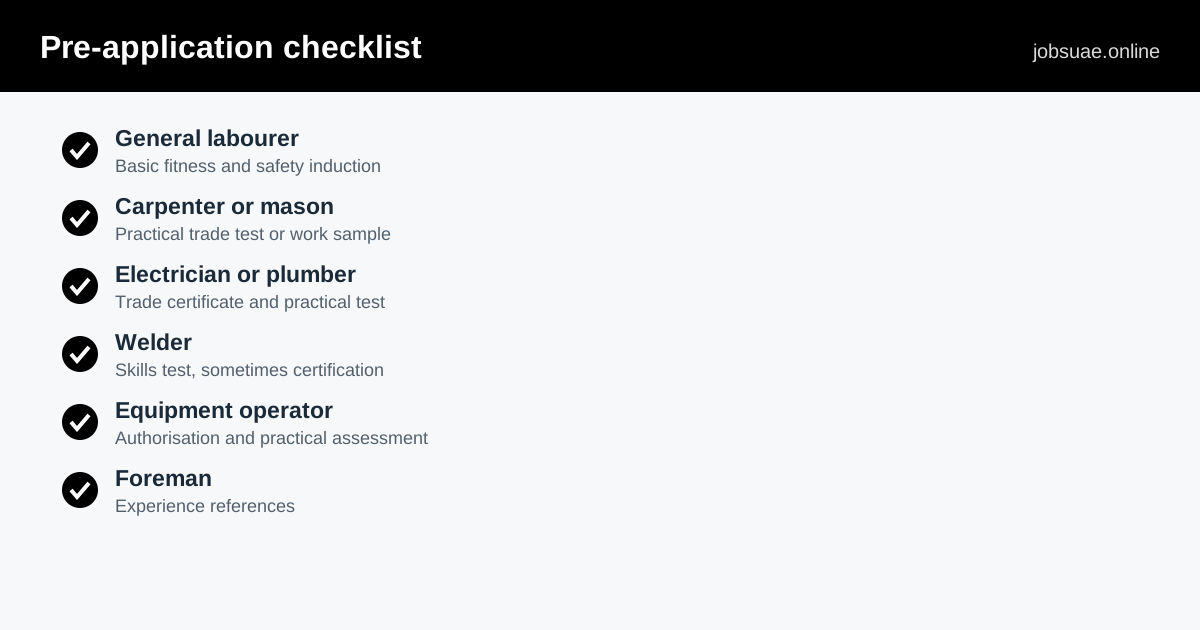
The table below summarises typical roles. It is general guidance, and each employer sets its own standards.
| Role | Key skills | Common checks |
|---|---|---|
| General labourer | Stamina, safety discipline, teamwork | Basic fitness and safety induction |
| Carpenter or mason | Trade skill, reading simple plans | Practical trade test or work sample |
| Electrician or plumber | Technical knowledge, safe procedures | Trade certificate and practical test |
| Welder | Welding methods, material knowledge | Skills test, sometimes certification |
| Equipment operator | Machine control, signals, safety | Authorisation and practical assessment |
| Foreman | Leadership, quality control, planning | Experience references |
| Site engineer | Drawings, coordination, problem solving | Degree and verified experience |
| Safety officer | Risk assessment, training, reporting | Relevant safety qualifications |
Skills tests and certificates
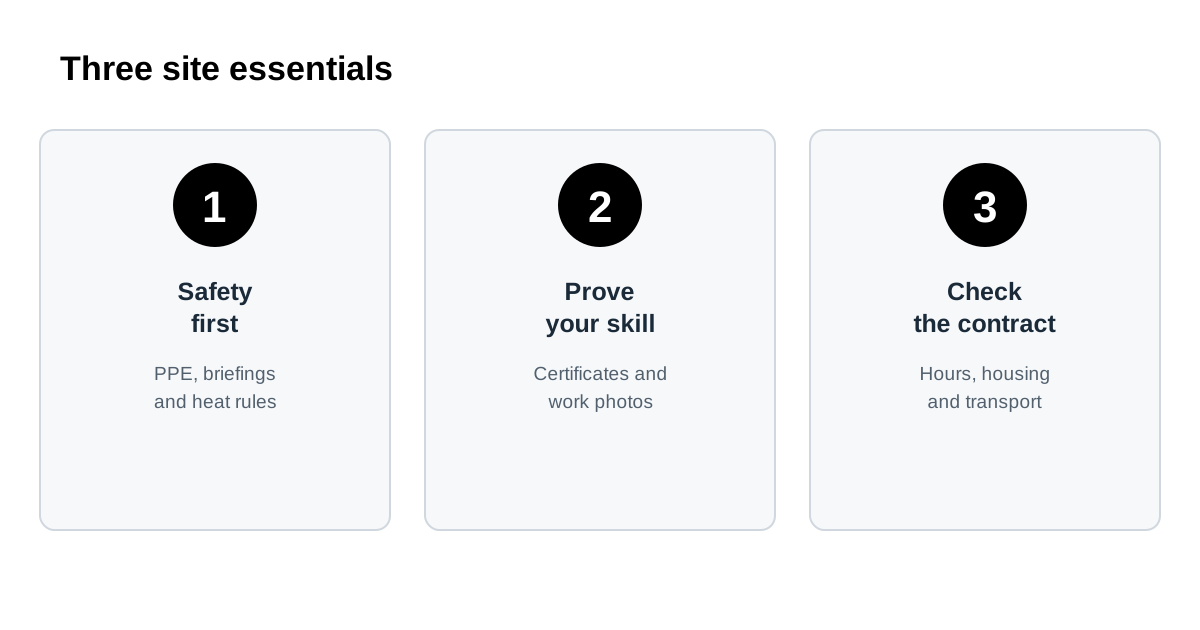
Many trades are assessed through practical tests. A welder may be asked to complete a sample weld, a carpenter may build a small structure and an electrician may answer technical questions or complete a simple installation. Bring any certificates you hold and be honest about your level. If a certificate is from another country, ask the employer how it will be recognised, and never pay anyone who offers to supply a certificate without testing.
Safety training is often required before you start work on site. Employers usually arrange site inductions, and some roles need specialised courses, for example working at height or confined spaces. Ask who arranges and pays for training, and confirm that providers are recognised before you pay for any course yourself.
Safety expectations
Construction is a high-risk environment, and safe practice is a professional obligation. Typical rules include wearing the required protective equipment such as helmet, safety shoes, high-visibility clothing, gloves and eye protection, using harnesses when working at height, keeping walkways clear, following lifting procedures, staying away from moving machinery and reporting hazards immediately. Never remove guards, ignore warnings or work under suspended loads.
If you are asked to do something you believe is unsafe, say so and ask for guidance. A good employer listens. If you are injured, report it at once and seek medical help. Keep copies of any report, and ask for information about insurance and compensation processes.
Working in the heat
The UAE summer is severe, and outdoor construction workers face real heat risks. Authorities typically restrict outdoor work during the hottest part of the day in the summer months and require shade, water and rest provisions. The exact dates and times can change from year to year, so check current guidance from MOHRE, and ask your employer how heat is managed on site.
Protect yourself by drinking water regularly, taking breaks in shade, wearing light protective clothing and learning the signs of heat illness: dizziness, headache, nausea, heavy sweating followed by hot dry skin, and confusion. If you or a colleague show these signs, stop work, move to a cool place and call for help.
Accommodation, transport and living conditions
Many construction employers provide accommodation and transport. Conditions vary, so ask about room sharing, distance to site, meals, laundry, cooling and cleanliness. Ask whether accommodation costs are covered by the employer or deducted from pay, and whether transport is included. Request answers in writing.
Your passport and documents belong to you. Practices that involve employers holding workers' passports are not acceptable, and you should seek guidance from official channels if this is requested. Keep copies of your documents and your contract.
Preparing your application
A construction CV should be clear and practical. List your trade, years of experience, the types of projects (such as villas, towers or roads), tools and equipment, certificates and languages. For example: "Tile fitter with five years of experience on residential projects, working with floor and wall tiles, waterproofing and finishing." Include safety training and any supervisory experience. You can refine this further with the advice in how to write a UAE-style CV.
Prepare photographs of past work if you have them, and references from previous supervisors. Be honest about your skills, because a practical test will reveal the truth.
Where to look and how to avoid scams
Construction companies publish roles on their own websites, and licensed recruitment agencies place many workers. For a wider search plan, read how to find jobs in Dubai. Be extremely cautious with adverts promising large salaries, free visas and fast travel in exchange for a fee. Our guide to avoiding recruitment scams lists warning signs, and it applies especially to construction, where recruitment fees and false offers are common risks.
Contracts and conditions
Insist on a written contract that you understand, in a language you read. Check the job title, trade, salary, overtime terms, working hours, rest days, accommodation, transport, medical coverage, notice period and who pays for travel. Confirm that the offer matches what was promised, and do not travel until the process is verified through official channels. Current contract and permit rules are explained by MOHRE and on the u.ae portal.
Career growth
Construction careers can progress from helper to skilled worker, foreman, supervisor and site manager. Technical workers can move into planning, estimating, quality or safety roles. To progress, learn the trade properly, take safety training, improve your English, keep your certificates and build a reputation for reliability and careful work.
A day on a construction site
A typical day starts early. Workers gather for a safety briefing, check their protective equipment and receive task instructions from the foreman. Materials are moved, tools are inspected and work begins in the cooler hours. During the day, teams coordinate with each other, supervisors check quality and safety officers walk the site. Breaks are taken in shaded areas, and tasks are adjusted as conditions change. At the end of the shift, tools are stored, the area is cleared and the team reports progress.
Teamwork and communication are central, because many workers speak different languages. Simple clear instructions, hand signals where appropriate and a habit of asking when unsure prevent accidents. Newcomers who ask questions and follow safety rules are usually respected.
Sending money home and managing your finances
Many construction workers support families abroad, so planning matters. Ask how and when wages are paid, whether payment is made through a bank, and what deductions apply. Keep records of your payslips and receipts. Use official, regulated channels to send money home, and be wary of informal arrangements. Avoid borrowing from recruiters or agents at high cost to finance your travel, because debts can trap workers in difficult situations. If you are unsure about a payment term, seek advice from official channels before you sign.
Mistakes construction applicants often make
Some applicants pay recruiters for jobs that do not exist. Others claim trades they cannot perform and fail tests. Some ignore safety instructions or accept sites with poor protection. A few accept offers without checking accommodation or pay terms. To avoid these problems, verify the employer, be honest about your skills, put safety first and get terms in writing.
Safety, heat and your rights
Construction sites carry real risks, so employers should provide protective equipment, safety briefings and supervision. UAE rules restrict outdoor work during the hottest hours of summer, but the exact dates and times can change, so confirm the current midday work rules on the MOHRE website. If you feel unwell in the heat, stop, drink water, move to shade and report it.
Trades, certificates and skill tests
Skilled trades such as electricians, welders, masons and plumbers may be asked for trade tests or proof of experience. Keep certificates, past contracts and photos of work you can legally share. Do not accept a skilled-trade title if you cannot do the job, because tests quickly reveal gaps and can lead to termination.
Read the contract carefully
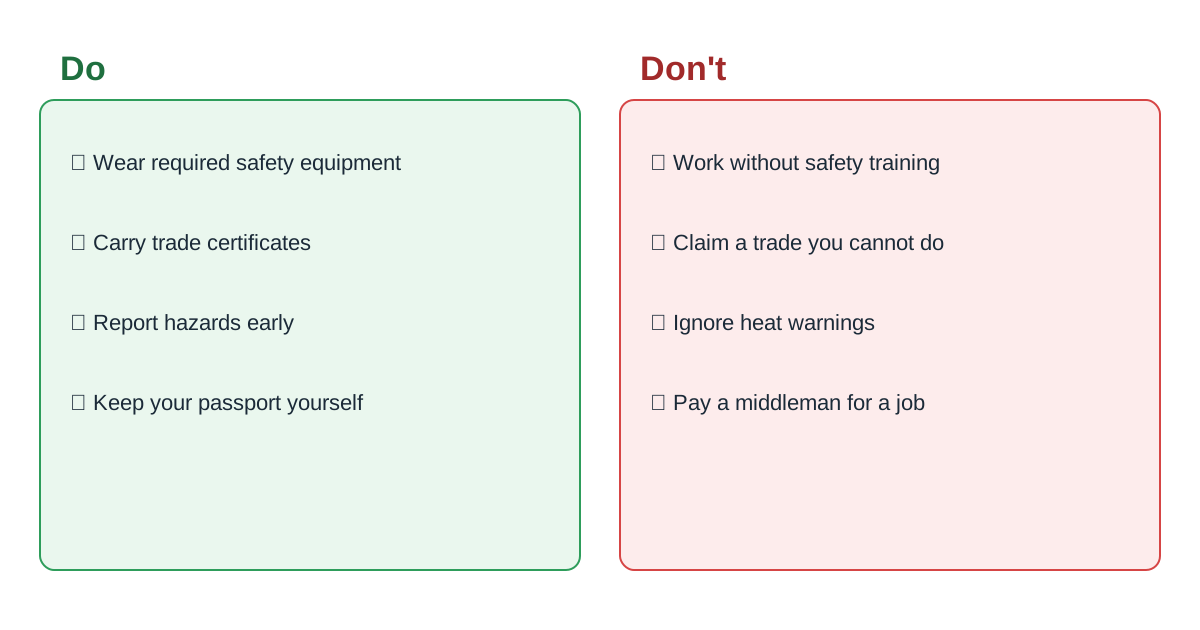
Check the site location, working hours, overtime, accommodation standards, transport and who pays for visa and flight costs. Keep your passport yourself, and do not pay a middleman for a job offer.
Conclusion
Construction jobs in the UAE offer work for many skill levels, but they require stamina, discipline and a strong commitment to safety. Understand the role, prepare honestly, check the employer and read every contract before you travel or sign. Rules on contracts, permits and summer working hours are published by MOHRE and the UAE Government portal, so check them before you accept a site job. Careful preparation protects your health, your money and your future in the industry.
Reading a site safety briefing
A good briefing covers hazards, emergency exits, equipment rules and who to call if something goes wrong. Ask questions if anything is unclear, and never operate machinery you are not trained for. Workers who speak up early prevent most serious accidents.
Moving from labour to skilled work
Many workers start as helpers and progress by learning one trade deeply, such as electrical work, welding or masonry. Ask experienced colleagues to show you tasks, keep a notebook of procedures and photograph completed work where allowed. A documented skill record helps you negotiate better pay and a safer role over time.
Frequently asked questions
Do construction jobs require trade tests?
Skilled trades often do. Keep proof of experience and be ready for a practical test.
What about summer heat?
Outdoor work rules can restrict hours in hot months. Confirm current rules on the MOHRE website.
Who provides accommodation?
Many employers provide it, but standards differ. Ask for details in writing before accepting.