Warehouse Helper Jobs in the UAE: Skills, Duties, and Career Opportunities
Behind every shop shelf, online parcel and construction site in the UAE is a warehouse. Goods arrive from ports and airports, are checked, stored, picked and sent out again, and the people who do much of this physical work are warehouse helpers. The job is often described as simple, yet it asks for stamina, care, honesty and an understanding of safety. Candidates who understand what the work really involves, and who present themselves clearly, have a better chance of being taken seriously. This guide explains the daily duties, the skills employers value, the safety rules that matter, and the paths that can lead beyond an entry-level post.
It does not list vacancies and cannot promise that any employer is hiring. Conditions differ between companies, so confirm every detail in writing before accepting an offer.
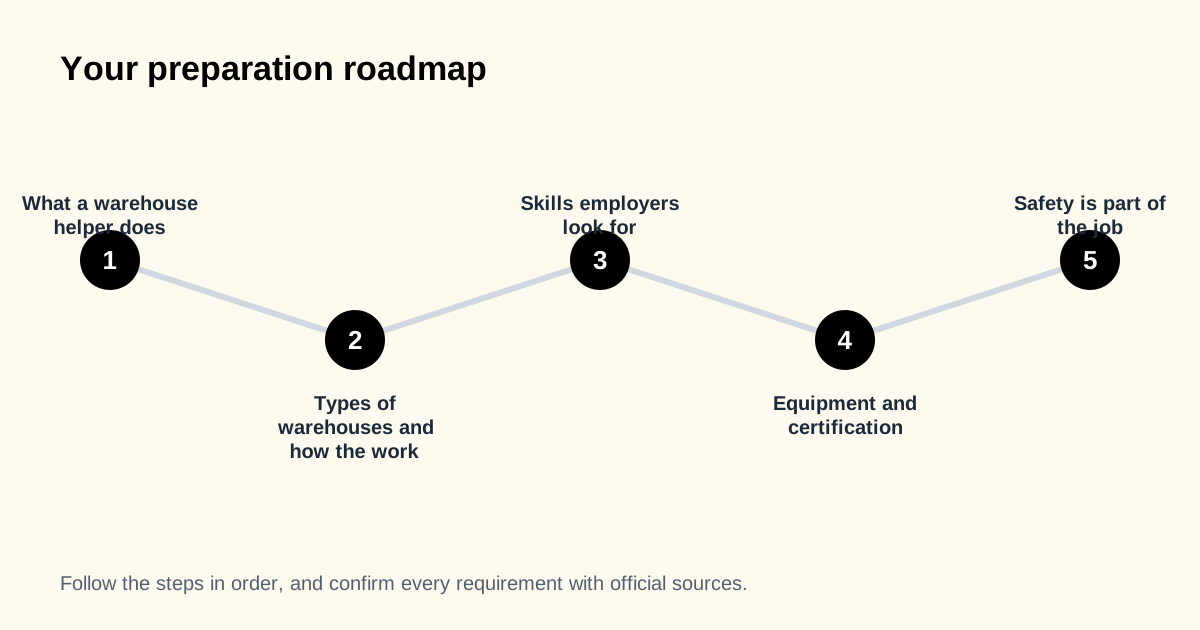
What a warehouse helper does
A helper supports the warehouse team in moving goods safely and accurately. The exact tasks depend on the company, but they usually include unloading trucks and containers, checking deliveries against paperwork, sorting items, placing stock in the correct location, picking orders, packing parcels, labelling cartons, loading outgoing vehicles and keeping the work area clean. In larger facilities, helpers also scan items with handheld devices and report damaged or missing stock.
Accuracy matters as much as strength. A carton placed in the wrong aisle can delay an order for hours, and a miscounted delivery can cause a dispute with a supplier. Employers prefer people who double-check labels, follow instructions and tell a supervisor when something looks wrong.
Types of warehouses and how the work differs
Retail and distribution warehouses
These facilities supply supermarkets, shops and online stores. Work is fast, order-driven and often uses scanners and numbered locations. Peak periods, such as major sales and holiday seasons, can bring longer hours.
Cold storage and food warehouses
Food and pharmaceutical goods may need temperature control. Helpers in these warehouses follow hygiene and handling rules, wear protective clothing and pay close attention to expiry dates and storage conditions.
Industrial and construction supply warehouses
Here helpers handle heavy or bulky items such as pipes, tiles, tools and building materials. Lifting technique, safe stacking and awareness of moving equipment are especially important.
Logistics and freight hubs
Near ports, airports and free zones, helpers handle cargo in transit. The work can involve pallets, customs paperwork support and tight loading schedules, so reliability and attention to detail are critical.
Skills employers look for
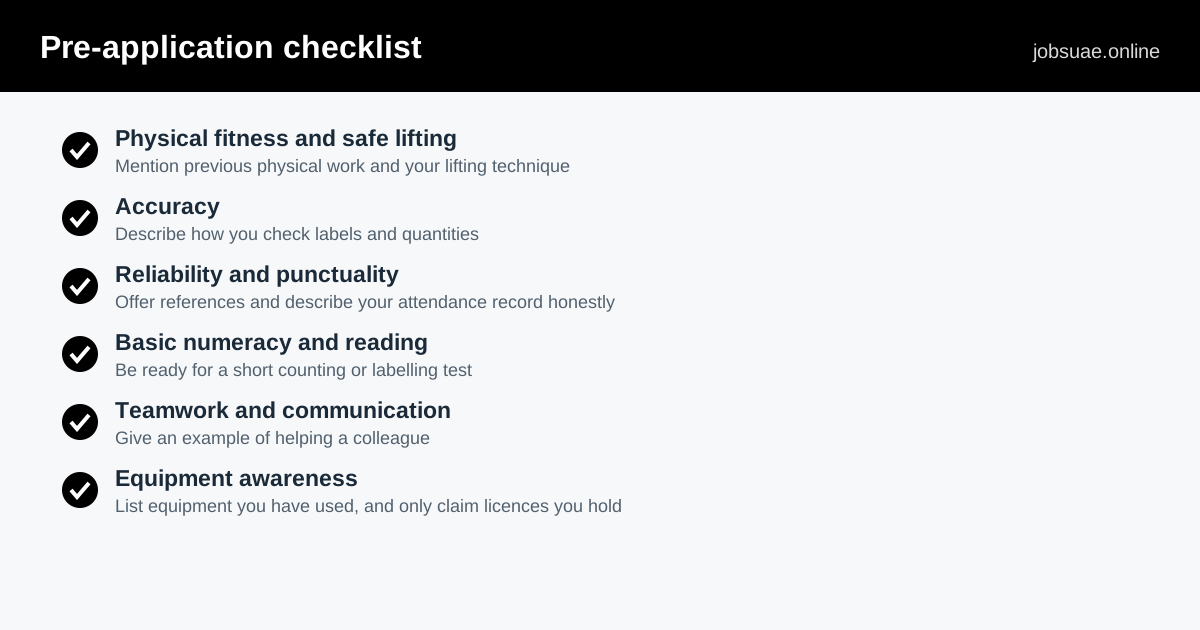
The table below shows common skill areas and how to demonstrate them. It is general guidance, and each employer sets its own expectations.
| Skill or habit | Why it matters | How to show it |
|---|---|---|
| Physical fitness and safe lifting | The work involves lifting, walking and standing | Mention previous physical work and your lifting technique |
| Accuracy | Wrong picks and counts create costly errors | Describe how you check labels and quantities |
| Reliability and punctuality | Shifts depend on every team member | Offer references and describe your attendance record honestly |
| Basic numeracy and reading | Counting stock and reading labels is routine | Be ready for a short counting or labelling test |
| Teamwork and communication | Loading and unloading is done together | Give an example of helping a colleague |
| Equipment awareness | Pallet jacks and forklifts are common | List equipment you have used, and only claim licences you hold |
| Safety discipline | Warehouses carry real risk of injury | Describe protective equipment and rules you followed |
Equipment and certification
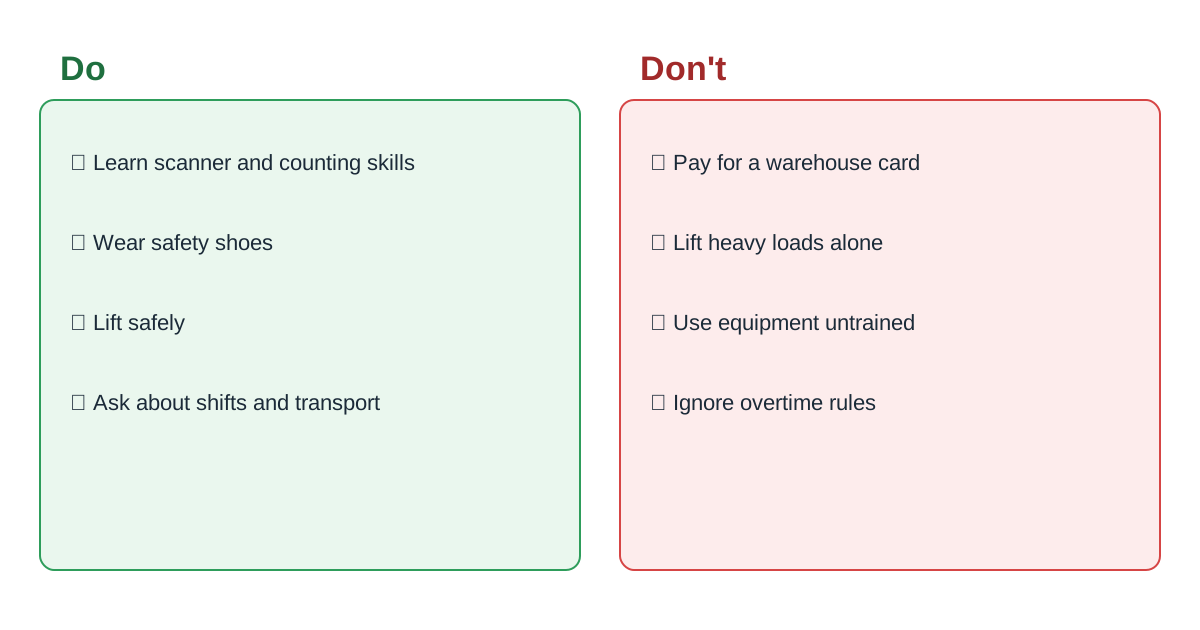
Many helpers start by using hand trolleys and manual pallet jacks. Operating a forklift or reach truck normally requires specific training and authorisation from the employer, and you should not claim this skill unless you are properly trained. Ask whether the company provides equipment training, and be cautious about paying outside providers for certificates before checking that the employer will accept them. If you have a licence or certificate from another country, ask how it will be recognised rather than assuming it will be accepted.
Safety is part of the job
Warehouse injuries often come from rushing, poor lifting and unsafe stacking. Safe habits are valued by employers because accidents cost time and money. Good practice includes wearing the required protective equipment, such as safety shoes, gloves and a high-visibility vest, bending the knees when lifting, asking for help with heavy items, keeping aisles clear and staying away from moving vehicles.
Heat is a particular concern in the UAE summer, especially in warehouses without strong cooling. Drink water regularly, take authorised breaks and tell your supervisor if you feel unwell. Reporting hazards, such as a damaged pallet or a spill, early is part of professional conduct, not a sign of weakness.
Preparing your application
Your CV should be simple and honest. List your previous warehouse, factory, retail or loading work, the tasks you performed, any equipment you have used, languages and your availability for shifts. If you have little formal experience, describe relevant situations: helping at a family shop, unloading goods or working in a physical job. See the UAE-style CV guide for a section-by-section approach.
Keep documents ready, but send sensitive ones, such as a passport copy, only to employers you have verified, and only when the stage requires them. A legitimate employer or licensed agency does not ask helpers to pay for a job. Read our guide to avoiding recruitment scams before sending money or documents.
Where to look
Many large companies advertise on their own career pages, and some use licensed recruitment agencies. Facilities management firms, logistics providers, supermarkets and e-commerce operators often hire for warehouse roles. Our broader guide to finding jobs in Dubai explains how to search through verifiable channels and track your applications. Be careful with advertisements that hide the company name, promise very high pay for unskilled work or ask you to message a personal number.
The interview or trial
Interviews for helpers are often short and practical. Expect questions about previous work, your availability, your ability to lift and work in heat, and how you would handle a mistake. You may also be asked to count items, read labels or demonstrate lifting. A good answer to "what would you do if you noticed a wrong delivery?" is to stop, check the paperwork, tell the supervisor and record the issue rather than guessing.
Ask useful questions too: the shift pattern, the break schedule, whether safety equipment is provided, how overtime is recorded, and what training is offered. Clear answers show that the employer is organised.
Contracts, pay and conditions
Do not rely on a verbal promise. Ask for a written offer that states the job title, salary, working hours, rest days, overtime terms, accommodation or transport if offered, and who pays for equipment or uniform. Check whether any deductions are described, and ask about the notice period. If the employer or an agent asks you to pay a recruitment or visa fee as a condition of the job, treat it as a serious warning. For the official position on contracts and permits, go to MOHRE and u.ae rather than relying on a recruiter.
Career opportunities beyond entry level
Warehouse work can lead somewhere if you build skills deliberately. Helpers who learn inventory systems may become stock controllers or inventory clerks. Those who gain equipment training can become forklift operators. Reliable team members may be promoted to team leader, shift supervisor or warehouse supervisor. Some move into dispatch, transport coordination or procurement support.
To grow, ask for cross-training, learn the warehouse management system, improve your spoken English and keep a record of your achievements, such as accuracy rates or safety training completed. Employers notice people who show initiative and keep calm under pressure.
Mistakes warehouse applicants often make to avoid
Applicants sometimes claim forklift skills they do not have, and a practical test quickly exposes the claim. Others ignore safety instructions in the interview, saying they can lift anything, which suggests risk rather than strength. Some accept a job without confirming accommodation, transport or overtime, and then discover that the real conditions differ. Others pay an agent for a placement that never appears. To avoid these problems, be accurate about your skills, ask direct questions, get terms in writing and verify the employer.
Safe lifting and shift basics
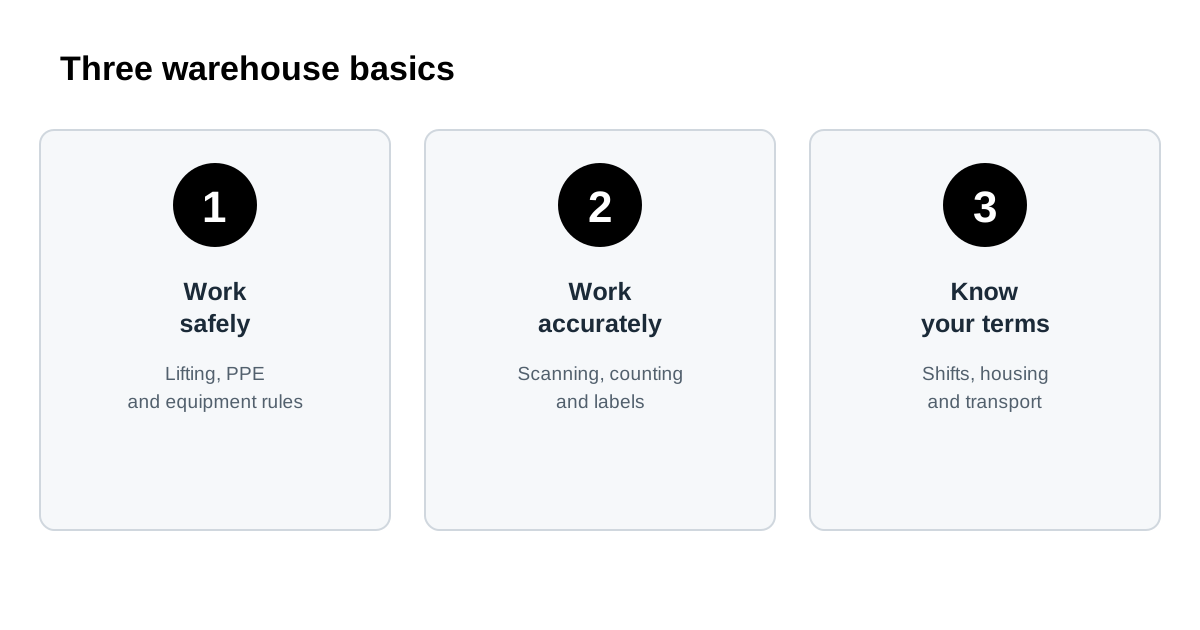
Warehouse work involves lifting, scanning and packing. Learn to lift with your legs, wear safety shoes and use equipment only with training. Ask about shift length, overtime, accommodation and transport, and be wary of any job that asks you to pay for a "warehouse card".
Skills that lead to better warehouse roles
Helpers who learn barcode scanning, stock counting and basic inventory software can move into picker, checker or storekeeper roles. Ask about forklift or safety training and whether it is recognised. Keep a record of your attendance, accuracy and any safety certificates, because supervisors promote reliable staff first.
Conclusion
Warehouse helper jobs in the UAE are demanding, but they offer a realistic way into the logistics and retail sectors. Understand the duties, protect your body with safe habits, present your experience honestly and read every offer carefully. Contract and permit rules are explained on the UAE Government portal and by MOHRE, so verify an offer there before you travel or pay a fee. Reliable work, steady learning and a good safety record are the qualities that can turn an entry-level post into a career.
Accuracy routines that prevent errors
Check labels twice, scan before moving items, report damaged goods straight away and keep your area tidy. Many shipment errors come from rushed picking, so a steady routine is better than speed alone. Supervisors promote helpers who make fewer mistakes.
Protecting your health
Take scheduled breaks, drink water and use lifting aids. Report injuries immediately and keep a copy of any report. Ignoring pain often turns a minor problem into a serious one.
Frequently asked questions
Do helpers need experience?
Many roles train new staff. Show reliability and willingness to learn.
Is forklift training available?
Some employers offer it. Ask whether the certificate is recognised.
How hot do warehouses get?
It depends on the site. Ask about ventilation, breaks and water access.