Delivery Driver Jobs in Dubai: Licence, Eligibility, and Practical Considerations
Delivery has become a familiar part of daily life in Dubai. Food arrives from restaurants in minutes, groceries come to apartment doors, parcels move between warehouses and homes, and a large workforce of riders and drivers makes it possible. For job seekers it looks like an easy entry point, and in some ways it is, but the details of how the work is arranged make a big difference to your safety, income and legal position. This guide focuses on the practical questions around delivery work: the different kinds of arrangements, what licence and permit checks to expect, what costs to consider and how to avoid offers that sound better than they are. For a broader look at driving careers, see our guide to driver jobs in Dubai.
It does not give earnings figures or list vacancies, and it cannot promise placement. Rules and company terms change, so confirm everything in writing.
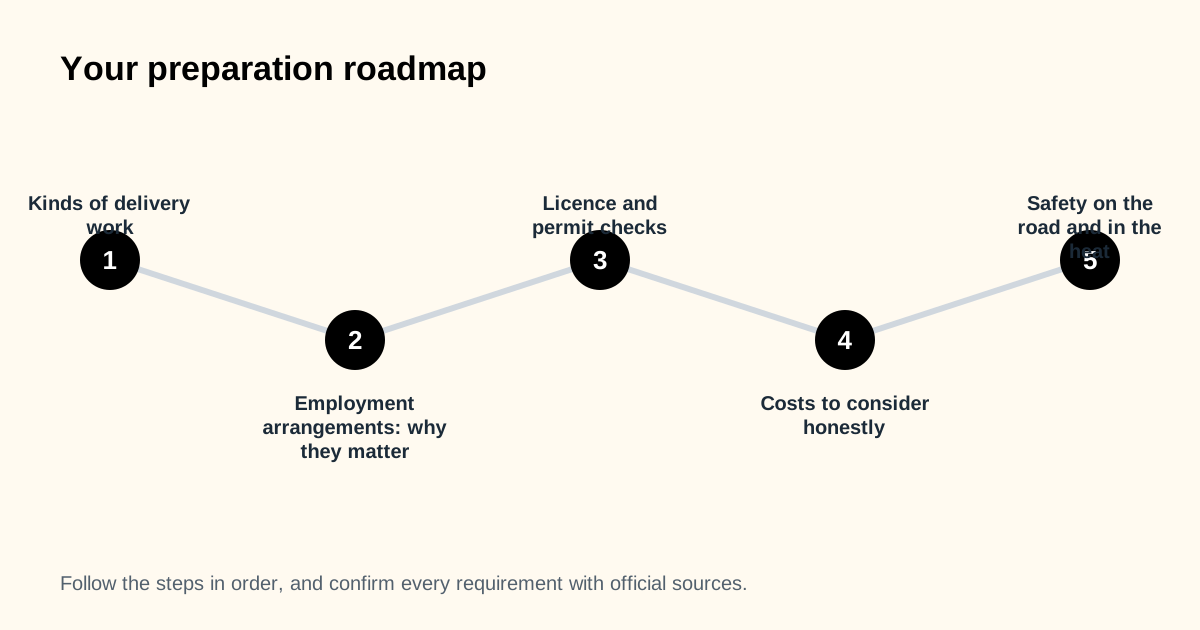
Kinds of delivery work
Food and grocery delivery
Riders and drivers collect orders from restaurants or stores and deliver them to customers, usually through a mobile app. Work is time-sensitive, weather and traffic matter, and customer ratings can affect your access to orders.
Courier and parcel delivery
Couriers move parcels, documents and packages between businesses and homes. Routes may be planned in advance, and drivers often use vans or small trucks. The work involves scanning, signatures and handling many drops in a shift.
Last-mile logistics for retailers
Some retailers and logistics firms employ their own drivers to deliver furniture, appliances or bulky goods. These roles may involve loading, carrying and assembling, and they usually follow set schedules.
Motorbike, bicycle and car delivery
The vehicle you use shapes the job. Motorbike riders cover short distances quickly but face the most exposure to traffic and heat. Car and van drivers carry more but spend more on fuel and parking. Cycling or other light vehicles may be limited by rules and distances. Check what vehicle types and permits the employer allows.
Employment arrangements: why they matter
Before you apply, work out how the arrangement is structured, because it affects pay, costs and protections. In some cases you are employed directly by a company that provides a vehicle, uniform and fixed salary. In others, a delivery platform works through a contracting company or fleet partner that employs the riders. Some arrangements put more costs on the rider, such as fuel, maintenance or fines. Ask who your employer is, who arranges your permit and residency, and who pays for what.
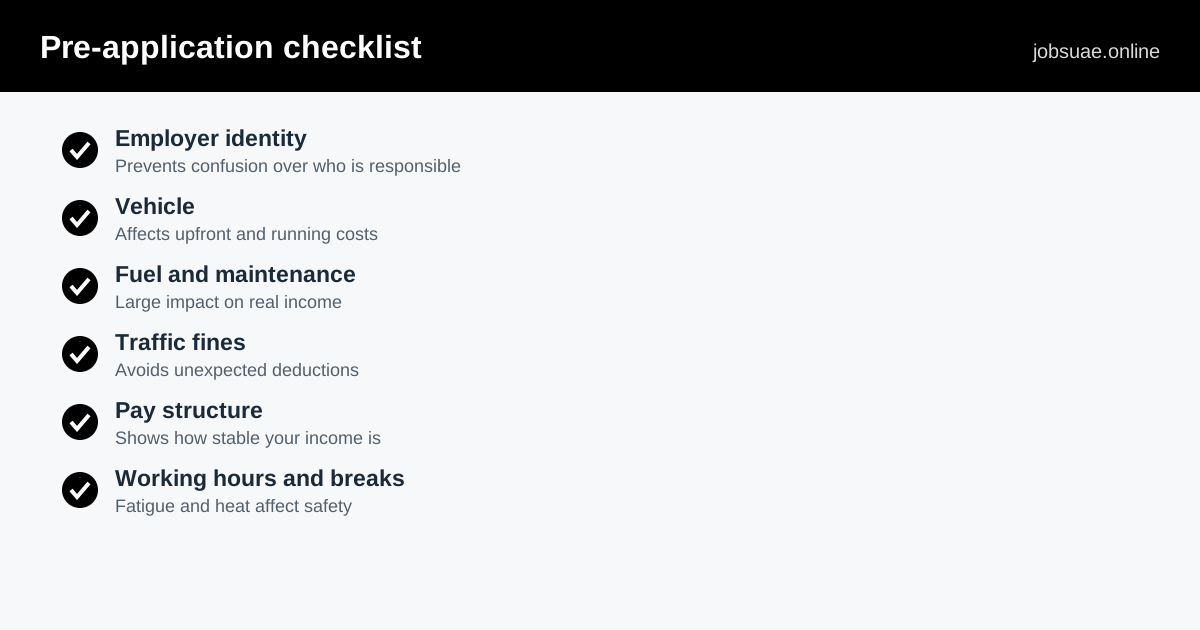
The table below lists key questions to ask. It is a checklist, not a statement of what any employer offers.
| Topic | What to ask | Why it matters |
|---|---|---|
| Employer identity | Which legal company employs me, and who arranges my permit? | Prevents confusion over who is responsible |
| Vehicle | Is a vehicle provided, or must I supply my own? | Affects upfront and running costs |
| Fuel and maintenance | Who pays for fuel, servicing and repairs? | Large impact on real income |
| Traffic fines | Who pays fines and how are they handled? | Avoids unexpected deductions |
| Pay structure | Is there a fixed salary, per-delivery pay or both? | Shows how stable your income is |
| Working hours and breaks | What are shift lengths, rest days and break rules? | Fatigue and heat affect safety |
| Insurance and safety | What insurance and safety equipment are provided? | Protects you after an accident |
| Written contract | Is everything in writing and in a language I understand? | Written terms protect both sides |
Licence and permit checks
A valid driving licence for the vehicle class is the starting point, and the licensing authority in each emirate sets the rules. In Dubai, the Roads and Transport Authority (RTA) regulates driver licensing and many transport activities. Delivery riders on motorbikes may need specific permits, training or authorisation, and these requirements can change, so check current information with the RTA or the relevant authority and ask your employer to explain what they will arrange.
If you hold a foreign licence, do not assume it is valid for delivery work in the UAE. Whether it can be used or converted depends on several factors, and employers may need a UAE licence before you start. Never pay a stranger who promises a "guaranteed licence" or "ready permit". Official testing and permits are handled through the authorities, usually with the employer's guidance.
Costs to consider honestly
Delivery income should be judged after costs. If you must use your own vehicle, add the cost of fuel, servicing, tyres, insurance and parking, and remember that repairs can arrive unexpectedly. If a company provides the vehicle, ask what happens if it is damaged and whether you are charged. Factor in phone data, a phone holder and a power bank, since you will rely on your phone for orders and navigation.
Compare offers on net earnings, not headline claims. If a recruiter quotes a high figure, ask how many hours, days and deliveries it requires and what costs you will bear. Treat vague answers as a warning sign.
Safety on the road and in the heat
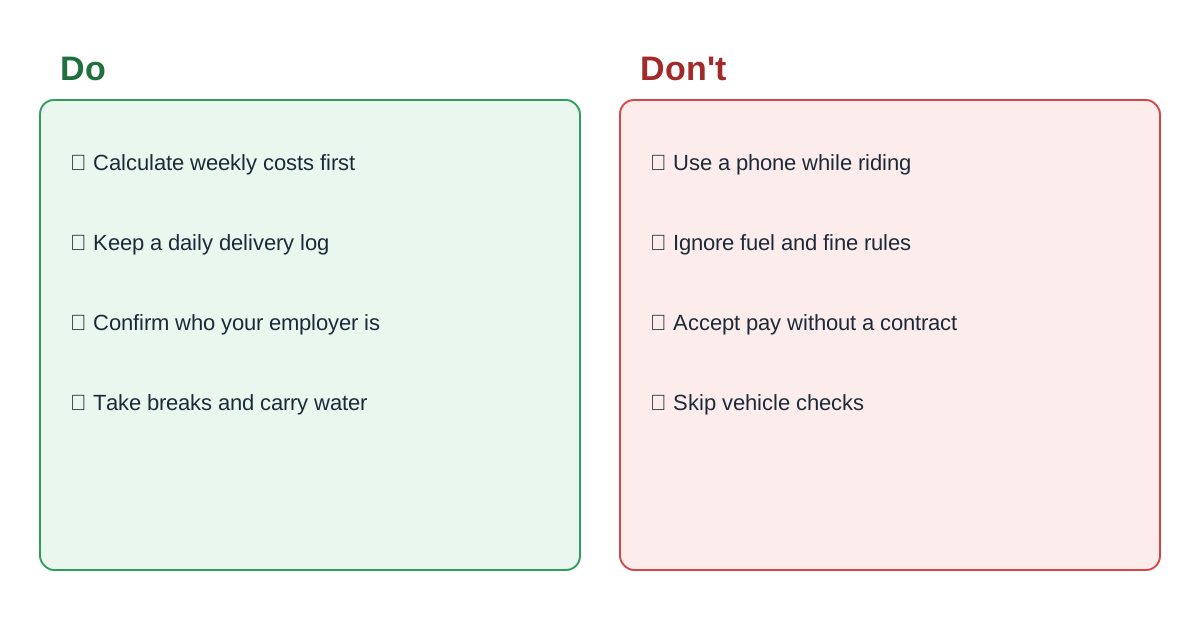
Delivery work carries real safety risks. Speed pressure can tempt riders to take chances, but accidents harm you and others. Follow traffic rules, wear a helmet and protective gear where required, keep your vehicle maintained and avoid using your phone while riding. Plan routes before moving and stop in safe places to check messages.
Summer heat can be severe. Drink water often, take authorised breaks in shade or cooled areas, wear light protective clothing and learn the signs of heat illness, such as dizziness, headache and confusion. If you feel unwell, stop and seek help. Good employers set reasonable schedules and provide guidance. Ask about heat-related policies before you accept.
Customer service on the doorstep
Even a short delivery is a customer interaction. Greet politely, confirm the name or order number, handle food and parcels with care and follow the customer's instructions where safe. If you cannot find an address, call the customer before the delay grows. If an order is damaged or incorrect, report it through the proper channel and avoid arguments. Ratings and complaints can affect your work, so a courteous, calm approach helps.
Respect privacy and local etiquette. Do not share customer details, take photographs of homes without permission or enter private areas. Keep a record of delivery confirmations in case of disputes.
Preparing your application
Your CV should highlight practical details: licence category and expiry, vehicles you have driven or ridden, delivery or courier experience, navigation app skills and languages. State your availability for shifts and your location. A clear, honest one-page CV works best. Before sending anything, compare your document with the checklist in our CV guide.
Keep documents ready, but share passport and licence copies only with verified employers, and only when the stage requires them. Never hand over your passport to be held by a recruiter or employer.
Where to look and how to avoid scams
Reputable employers publish roles on their own sites, and licensed agencies place many drivers. To organise your applications, see finding jobs in Dubai. Be careful with adverts promising very high earnings, "free visa" or "guaranteed bike" in exchange for a fee, or asking you to pay for a uniform, app registration or a deposit. Our guide to avoiding recruitment scams lists warning signs and what to do if you have already paid.
Contracts and legal basics
Ask for the contract in writing, check that it matches what was promised and read the sections on pay, deductions, hours, notice period and termination. Confirm who arranges the work permit and residency, and do not accept arrangements that avoid proper permits. If something is unclear, ask for an explanation before you sign. The u.ae portal and MOHRE are the places to check contract and permit rules before you sign.
Career paths
Delivery experience can lead to team leader, dispatcher, fleet supervisor or operations coordinator roles. Others move into heavier vehicle driving, warehouse work or logistics administration. To progress, keep a clean safety record, learn the apps and routes well, treat customers with respect and build relationships with supervisors.
Mistakes delivery applicants often make
Some applicants focus on advertised earnings and ignore costs, then find their real income is lower. Others accept work without understanding who employs them or who arranges permits. Some pay for guaranteed placement and lose money. A few ignore safety and pay the price. To avoid these problems, ask detailed questions, calculate net income, prioritise safety and verify the employer.
Working out what a delivery job really pays you
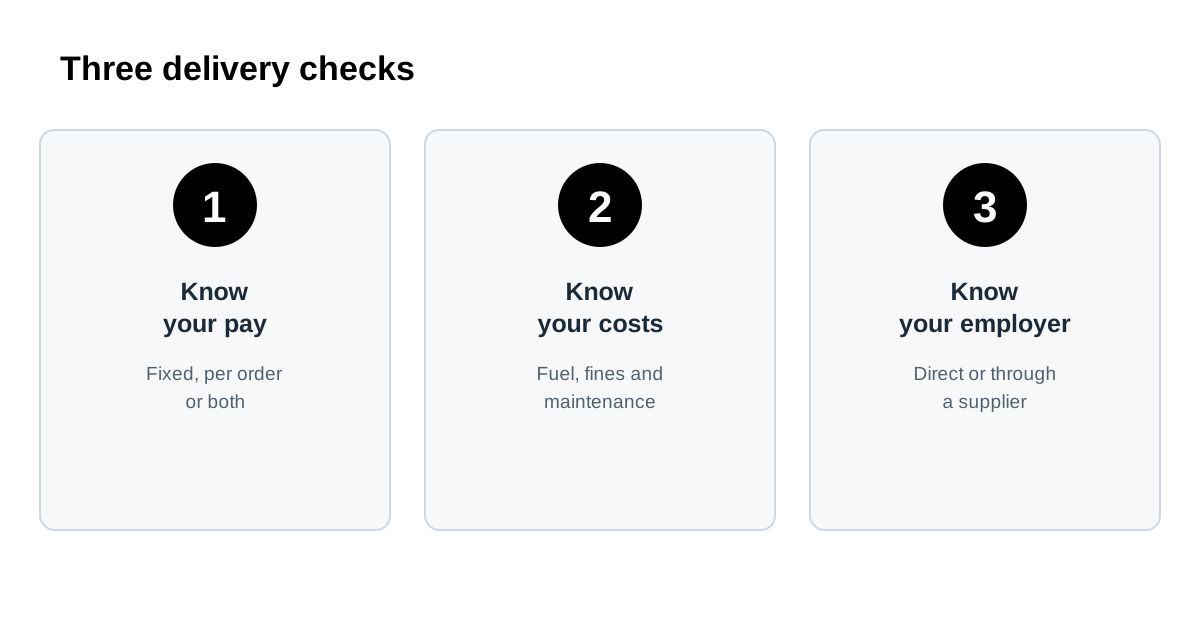
Delivery offers can look attractive but hide costs. Before accepting, write down the pay structure: fixed salary, per-delivery rate or both. Then ask who pays for fuel, vehicle maintenance, insurance, phone data, fines and uniform. If you use your own vehicle, estimate fuel and servicing per week and subtract them from the expected income. Only then compare offers.
Work habits that protect you
Keep a simple daily log of orders, hours and any incidents. Take photos of delivered parcels where the company allows it, report accidents immediately, and never use your phone while riding or driving. In summer, carry water and take breaks in shade.
Check the employer type
Some riders are employed directly, while others work through a third-party supplier. Ask for the contract in writing and confirm who your actual employer is.
Conclusion
Delivery driver jobs in Dubai can be a practical way into work, but only when you understand the arrangement, the costs and the safety demands. Check licence and permit requirements with the authorities, compare offers on net income, protect your health in the heat and read every contract before you sign. Check licence and permit requirements with the transport authority, read the contract against MOHRE guidance and see the UAE Government portal for general rules. Careful preparation protects both your income and your safety.
A weekly income check
Write down expected weekly earnings, then subtract fuel, servicing, phone data and likely fines. If the remaining amount is far below the advertised figure, the offer is weaker than it looks. Repeat the check after your first month using real receipts, and adjust your plan if needed.
Frequently asked questions
Do I need my own vehicle?
Some employers provide vehicles and others expect you to use your own. Ask in writing, along with who pays maintenance.
Is app-based delivery the same as a salaried job?
No. Terms, income stability and responsibilities can differ. Compare contracts carefully.
What should I record daily?
Keep orders, hours, distance and any incidents. It helps resolve pay or fine disputes.