Hotel Jobs in Dubai: Departments, Qualifications, and Career Paths

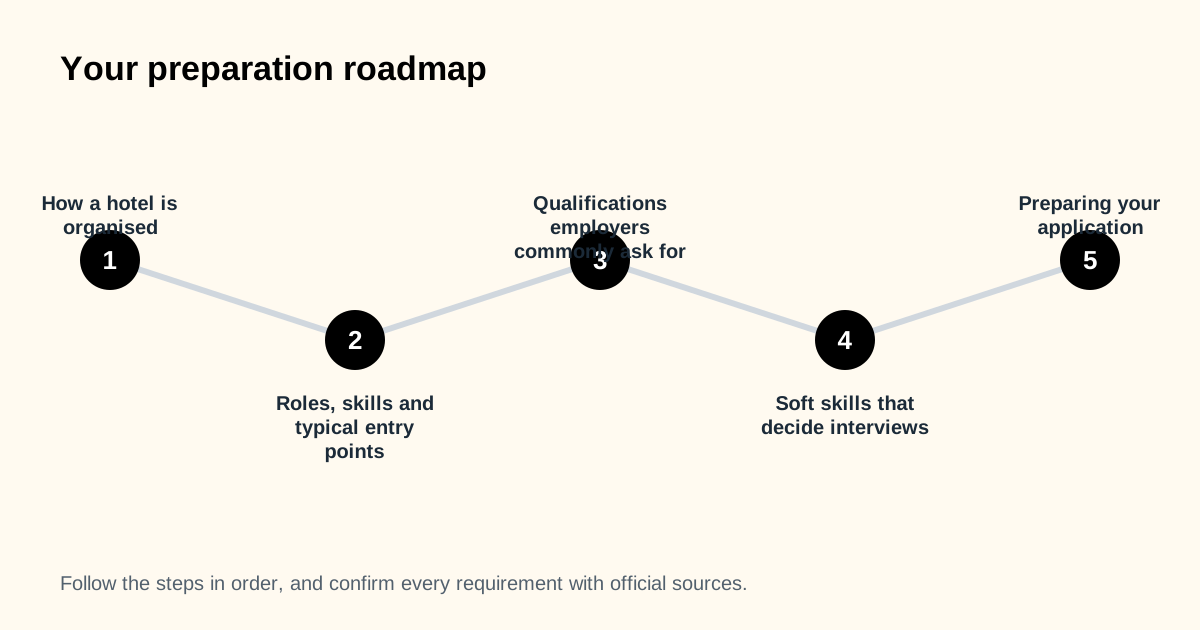
Dubai is built around visitors, and hotels sit at the centre of that system. Resorts, city business hotels, serviced apartments and boutique properties employ people in dozens of roles, from the receptionist who greets a guest at midnight to the engineer who keeps the air conditioning running in August. Because hospitality is a broad field, job seekers often apply blindly and wonder why they receive no replies. This guide explains how a hotel is organised, what each department does, what qualifications and personal qualities employers usually look for, and how to build a hospitality career step by step.
It does not list vacancies, and it cannot promise that any employer is hiring. Treat it as preparation, and always confirm an opening on the hotel's own career page or through a verified recruiter.
How a hotel is organised
A hotel is a collection of departments that must cooperate every hour of the day. Guests only see a small part of it. Understanding the structure helps you aim at the right department for your skills rather than applying for "any hotel job".
Front office
The front office includes reception, concierge, bell staff, reservations and the guest relations team. These employees check guests in and out, answer questions, solve problems and represent the hotel's first and last impression. Strong communication, patience, grooming and comfort with property management software are central. Languages help, particularly English plus Arabic or another widely spoken language. Our guide to writing a UAE-style CV shows how to present these strengths clearly.
Housekeeping
Housekeeping teams clean rooms and public areas, replace linens, restock supplies and report maintenance issues. The work is physical and detail-focused, and standards are checked by supervisors. Experienced housekeepers can progress to floor supervisor, inspector or executive housekeeper.
Food and beverage
This department covers restaurants, bars, in-room dining, banquets and kitchens. Service roles include waiters, hosts, baristas and bartenders, while kitchen roles run from commis and cooks to sous chefs and chefs de partie. Food safety knowledge is essential, and many employers expect basic hygiene training. Our separate guide on restaurant careers goes deeper into this area.
Engineering and maintenance
Engineers and technicians look after electrical systems, plumbing, cooling, lifts and equipment. These roles often ask for trade qualifications and practical experience, and they can be suited to people who prefer technical work to guest contact.
Sales, marketing and events
Sales teams promote rooms, meeting spaces and weddings, while marketing teams manage the hotel's online presence and promotions. Events staff coordinate conferences and banquets. These roles usually favour people with communication and organisational skills, and often a degree or relevant experience.
Security, finance, human resources and other support teams
Behind the scenes, accountants process invoices and revenue, human resources teams manage hiring and staff records, purchasing staff order supplies, and security officers protect people and property. These roles overlap with other sectors, so experience from outside hotels can transfer well.
Roles, skills and typical entry points
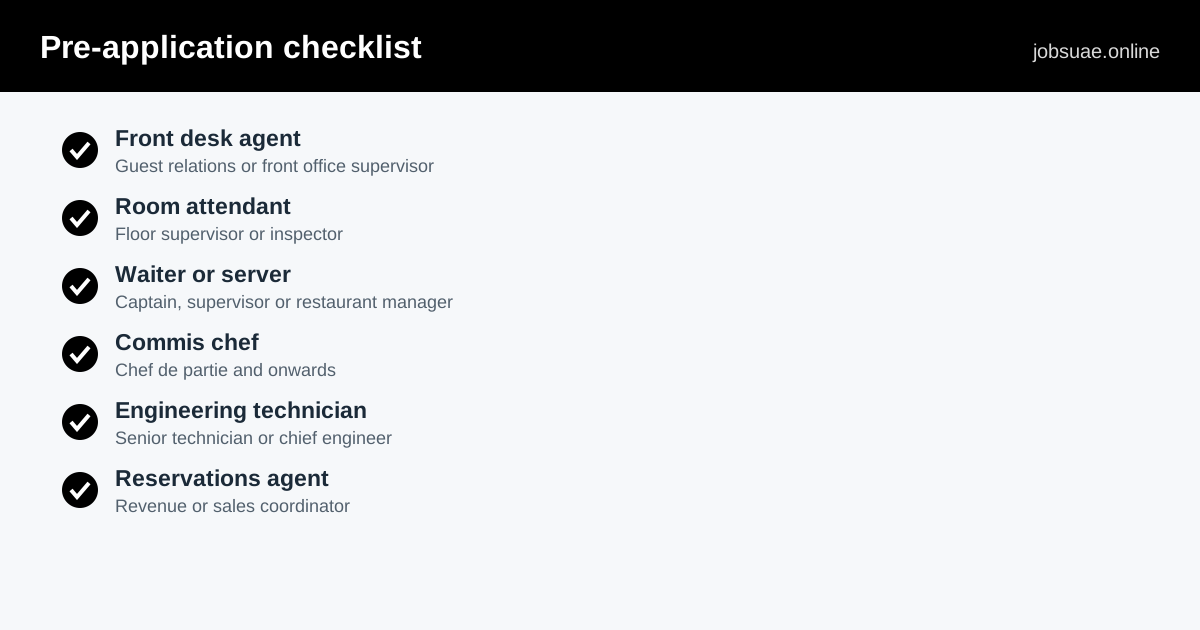
The table below summarises common entry-level roles and what they ask for. It is a general guide, and each employer sets its own standards.
| Role | Core skills | Possible next step |
|---|---|---|
| Front desk agent | Communication, systems, problem solving | Guest relations or front office supervisor |
| Room attendant | Cleanliness standards, stamina, reliability | Floor supervisor or inspector |
| Waiter or server | Menu knowledge, teamwork, courtesy | Captain, supervisor or restaurant manager |
| Commis chef | Food safety, knife skills, discipline | Chef de partie and onwards |
| Engineering technician | Trade skills, safety awareness | Senior technician or chief engineer |
| Reservations agent | Accuracy, phone manner, software | Revenue or sales coordinator |
| Bell attendant or concierge | Local knowledge, courtesy, memory | Head concierge or guest services lead |
Qualifications employers commonly ask for
Hospitality is one of the few fields where attitude and experience can matter as much as formal education. Many entry-level roles ask for a school certificate, basic English and evidence of customer-facing or practical work. Supervisory and management roles often prefer a diploma or degree in hospitality, business or a related field, along with several years of experience. Specialist roles, such as chefs, engineers or accountants, ask for relevant training or trade certificates.
Do not assume that a qualification is needed or sufficient without checking the advert. If a role asks for certificates you hold in another country, confirm with the employer how they will be verified, and avoid paying anyone who promises to "arrange" attested documents. Short courses in food hygiene, first aid or customer service can strengthen an application, provided the provider is recognised.
Soft skills that decide interviews
Hotel employers hire people who can stay calm and courteous when guests are tired, impatient or confused. They look for punctuality, grooming, teamwork and the willingness to work shifts, including weekends and public holidays. Cultural awareness is important in a city where guests and colleagues come from many countries, and respectful, patient communication is valued everywhere in the building.
You can show these qualities through examples. Describe a time when you solved a customer problem, handled a rush, or helped a colleague cover a shift. Keep the examples truthful and short, and focus on what you did and what happened.
Preparing your application
Choose the departments that match your skills and write a CV for each. For a front-office role, lead with languages, systems and customer-service experience. For a kitchen role, list the sections you have worked, types of cuisine and any food-safety certificates. For housekeeping, emphasise standards, speed and attention to detail. Use clear dates and honest descriptions. A photograph is optional unless the employer states a preference, but if you add one it should be professional.
Apply through the hotel's career page, a known hotel group portal or a licensed agency. A genuine employer or agency does not charge candidates for placement. If an advert asks for money, or hides the hotel's name while promising high pay, read our guide on avoiding recruitment scams before replying.
The interview and trial
Hotel interviews often include a short conversation, a role-play or a practical trial. A front-desk interviewer may ask how you would respond to a guest whose room is not ready. A good answer apologises sincerely, explains the situation, offers a practical option such as luggage storage or a lounge, and keeps the guest informed. A kitchen trial may ask you to prepare a simple dish or demonstrate knife skills and hygiene. Arrive early, dress neatly, listen carefully and ask questions about shifts, uniform, accommodation and training.
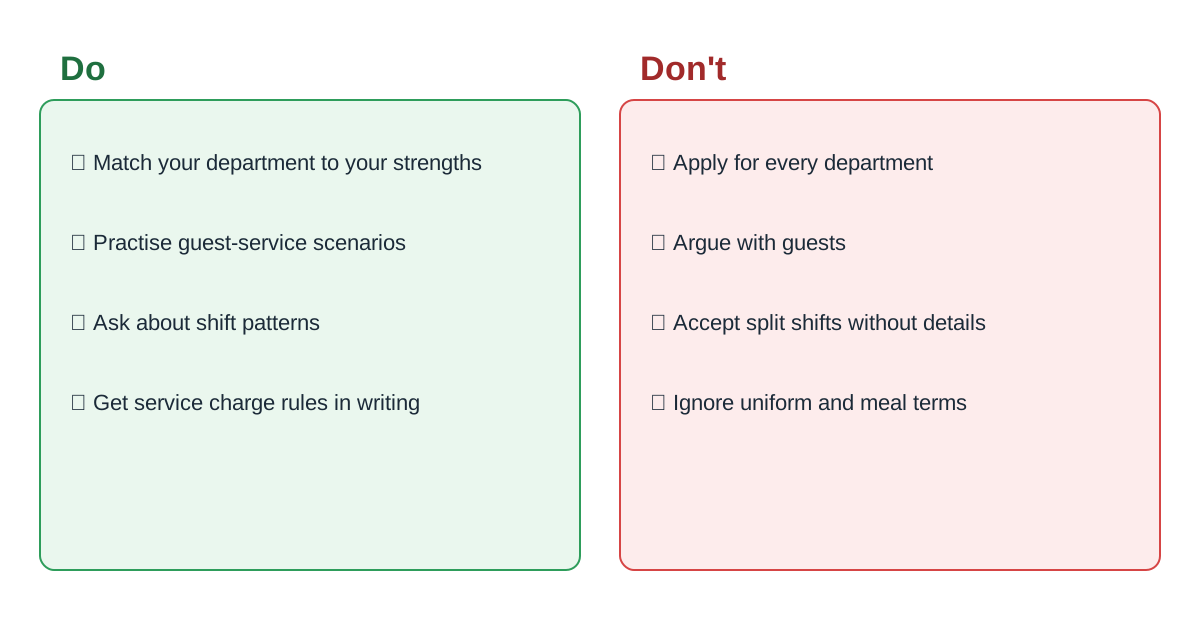
Understand the working conditions as well. Hospitality usually involves split shifts, long standing hours, weekend and holiday work, and peak seasons when leave is limited. Ask how overtime and rest days are handled, and request the answers in writing.
Seasonality and working life
Hotel demand is not constant. Winter is usually the busiest period, with events, conferences and holiday travel filling rooms, while summer can be quieter in some properties. Staffing and leave rules reflect this, so ask how holidays are scheduled and what peak-season expectations are. Staff members also rely on teamwork during busy periods, so a candidate who shows flexibility and a cooperative attitude is often preferred.
Contracts, benefits and expectations
Before accepting, check the job title, salary, allowances, working hours, probation period, notice period and any accommodation, meals or transport. Some hotels provide staff accommodation or meals, which affects your real income, but terms differ. Compare the written contract with what was promised verbally, and do not sign documents you do not understand. For official information on employment contracts and work permits, consult MOHRE and the UAE Government portal. Never rely on a recruiter's claim about fees or visa processes without an official source.
Building a career path
A hotel career can move in several directions. Someone who starts as a room attendant may become a supervisor, then a housekeeping manager. A server may become a restaurant supervisor, then a food and beverage manager. A receptionist may move into guest relations, sales or revenue management. Moving between hotels is common, and so is moving between departments to broaden experience.
Plan your growth. Learn a second language, take courses in your department's systems, ask for cross-training and keep records of achievements such as guest compliments or training completed. Strong performance and reliability are usually noticed.
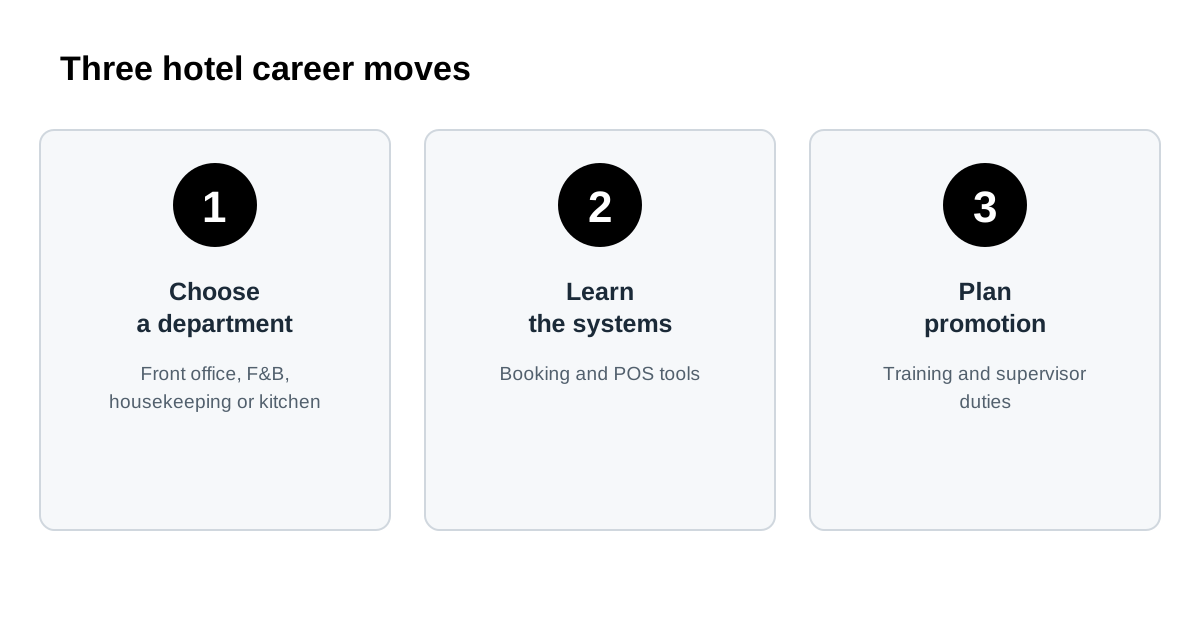
Choosing the right department
Hotel work covers very different jobs. Front office and concierge need clear communication and calm under pressure. Housekeeping rewards speed, attention to detail and physical stamina. Food and beverage means shift work, teamwork and often tips or service charge policies, so ask how they are shared. Kitchen roles value hygiene and consistency. Choose the department that matches your real strengths, and tailor your CV to its language.
What hotels test in an interview
Expect a role-play such as handling a complaint. A strong answer is simple: listen, apologise for the inconvenience, offer a practical solution, and follow up. Also ask about rotating shifts, split shifts, accommodation, staff meals and transport, and get the answers in writing before accepting.
Conclusion
Hotel jobs in Dubai suit people who enjoy teamwork, service and structured routines, and the sector offers many starting points and routes upward. Choose a department that fits your strengths, prepare a clear and honest CV, practise for interviews and trials, and read every contract before you accept. Hotels that recruit properly will explain permits and terms in writing, and you can double-check those explanations on MOHRE and the UAE Government portal. With patience and preparation, you can present yourself as a reliable candidate in one of the UAE's most visible industries.
A guest-complaint role-play you can practise
A guest says their room is not clean. Listen without interrupting, apologise for the inconvenience, note the room number, offer a practical fix such as immediate cleaning or a room change, and follow up within a set time. Interviewers look for calm tone, ownership and a clear next step, not long speeches.
Moving up
Hospitality careers often grow through supervisor and department-lead roles. Learn the property management or point-of-sale systems, ask for cross-training and keep a record of guest compliments. These details strengthen promotion discussions and future CVs.
Frequently asked questions
Do I need experience for entry-level hotel work?
Some entry-level roles accept beginners, especially housekeeping and service support. Show reliability and willingness to learn.
How are tips and service charge shared?
Policies vary by property. Ask how they are calculated and distributed before accepting.
What are typical shifts?
Hotels often use rotating shifts including evenings and weekends. Ask for a sample roster.