Restaurant Jobs in the UAE: Kitchen, Service, and Hospitality Careers

Restaurants are everywhere in the UAE, from small cafés and food courts to fine-dining rooms and large hotel kitchens. They employ cooks, servers, baristas, hosts, dishwashers, managers and many other staff, and they attract people from across the world who want to build a career in food and service. The work is fast, social and demanding, and careers can progress quickly for those who are reliable and curious. This guide explains the main roles, what food safety means in practice, how trial shifts and interviews usually work, and how to check conditions before you accept an offer. For hotel-based roles, our guide to hotel jobs in Dubai explains how restaurants fit into the larger hotel structure.
It does not list vacancies or salary figures, and it cannot promise placement. Employers differ, so confirm every important detail in writing.
Kitchen roles
Kitchen assistant and dishwasher
The kitchen assistant keeps the kitchen running by washing dishes and equipment, cleaning surfaces, moving supplies and helping cooks with basic tasks. It is often the first role in a kitchen and a place to learn how a professional team works.
Commis and line cook
Commis cooks prepare ingredients, assist chefs and work at a station. Line cooks prepare dishes during service, following recipes and timings. Skills include knife work, organisation, speed under pressure and food safety.
Chef de partie and sous chef
Chefs de partie run a station and supervise junior staff, while sous chefs support the head chef by managing the kitchen, ordering supplies and checking quality. These roles usually require several years of experience and leadership skills.
Pastry, baking and specialist roles
Some kitchens employ pastry chefs, bakers, butchers or cuisine specialists, such as sushi or grill chefs. Experience in the specific style is often necessary.
Service roles
Host and cashier
Hosts greet guests, manage reservations and seat parties. Cashiers handle payments and receipts. Both need polite communication, calm manner and accuracy.
Waiter and barista
Servers take orders, serve food and drinks, answer questions and handle payments or bills. Baristas prepare coffee and other drinks, and keep the counter clean. Product knowledge, memory, teamwork and courtesy matter.
Supervisor and restaurant manager
Supervisors guide the floor team during service, while managers handle scheduling, budgets, ordering, quality and guest relations. These roles need experience, leadership and the ability to solve problems quickly.
Roles at a glance
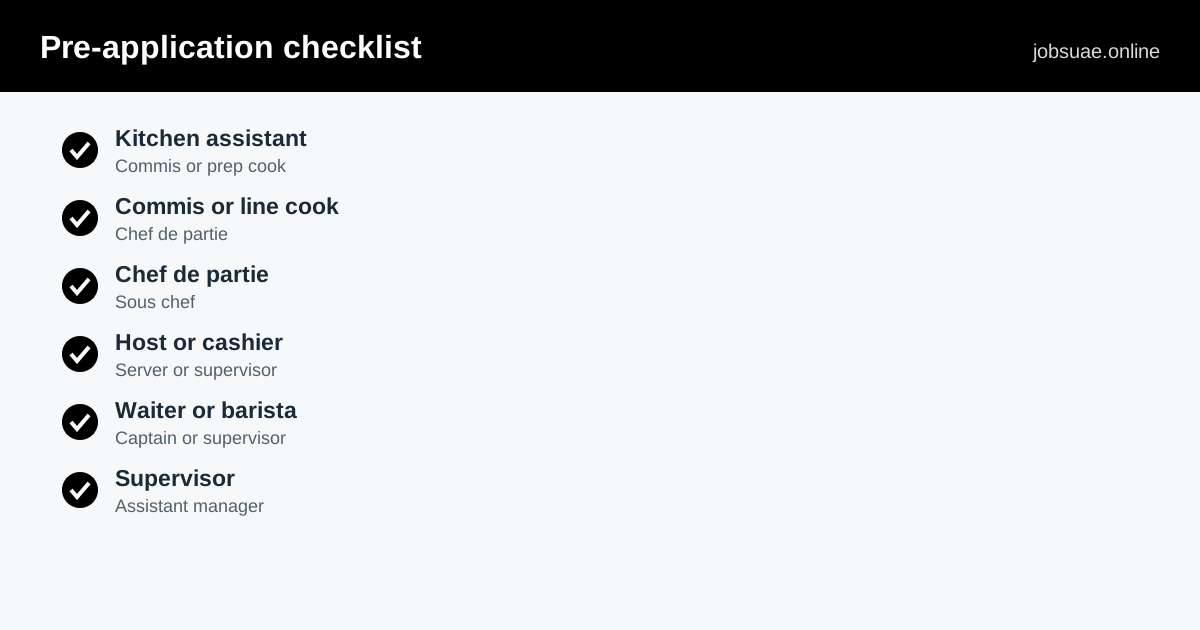
The table below summarises typical roles and what employers look for. It is general guidance.
| Role | Core skills | Possible next step |
|---|---|---|
| Kitchen assistant | Cleanliness, stamina, willingness to learn | Commis or prep cook |
| Commis or line cook | Knife skills, speed, food safety | Chef de partie |
| Chef de partie | Station management, consistency, leadership | Sous chef |
| Host or cashier | Courtesy, accuracy, calm under pressure | Server or supervisor |
| Waiter or barista | Product knowledge, memory, teamwork | Captain or supervisor |
| Supervisor | Coordination, training, problem solving | Assistant manager |
| Restaurant manager | Planning, budgeting, leadership | Area or operations manager |
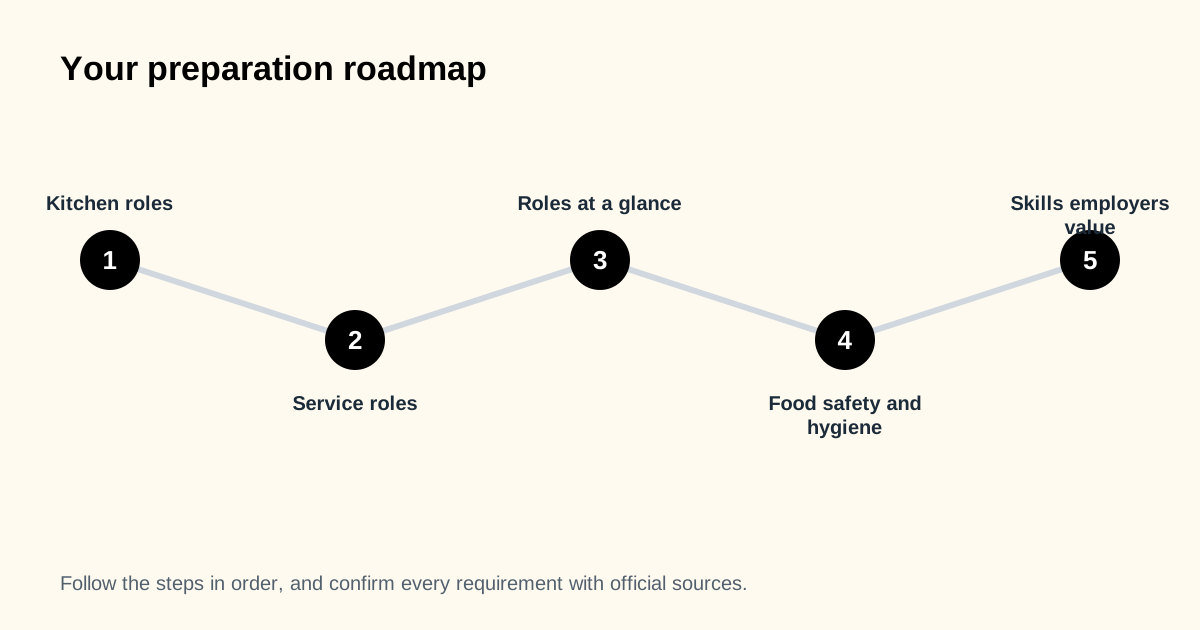
Food safety and hygiene
Food safety is not optional. Employers expect staff to wash hands properly, wear clean uniforms, keep raw and cooked foods separate, store food at the correct temperature and follow cleaning routines. Authorities in each emirate set food safety rules, and restaurants may require staff to complete approved training or hold relevant certificates. Rules vary and can change, so ask the employer which training or documents are needed and who arranges them.
Be careful about paying for food safety certificates from unknown sellers. Ask your employer which provider is accepted, and check with the relevant municipality or authority if you are unsure. A genuine employer will usually explain the requirement during the hiring process.
Skills employers value
Technical skills matter, but so does attitude. Employers look for punctuality, teamwork, calm behaviour in busy periods, a willingness to take instructions and the ability to keep working at a steady pace. In service roles, communication and courtesy are central. In kitchens, discipline and cleanliness are essential. Languages help, especially English, and Arabic or other languages can be an advantage with guests.
Physical stamina is part of the job. You may stand for long hours, carry trays or heavy pots and work in hot kitchens. Think honestly about whether you can sustain this, and ask about breaks and shift lengths.
Trial shifts and interviews
Many restaurants use trial shifts or practical tests. A kitchen may ask you to prepare a simple dish or demonstrate knife skills, hygiene and organisation. A service trial may involve shadowing a server, carrying plates or practising a greeting. During a trial, arrive early, wear clean clothes, listen carefully, ask questions and stay calm.
Interview questions may include how you handle pressure, what you would do if a guest complained or how you would respond to a colleague who was behind. Good answers are practical and polite: listen, apologise sincerely, fix the problem or call a supervisor. Ask about shift patterns, uniform, meals, transport, training and who pays for any certificates.
Preparing your CV
A restaurant CV should be clear and specific. List where you have worked, the type of restaurant, your role and the tasks you performed. For example: "Line cook in a 60-seat Italian restaurant, prepared pasta and grill dishes during service and followed daily cleaning checklists." Include languages, certificates, availability for evenings and weekends and any training. Our CV writing guide shows what to include and what to leave out.
If you are new to the industry, mention relevant experience such as cooking at home for a large family, working in a shop or volunteering at events, and be honest about what you have not done.
Where to look and how to be careful
Restaurant groups, hotel kitchens, cafés and catering companies publish roles on their own sites and through licensed agencies. Walk-in applications are also common in some places, but check that the business is genuine. The general search routine is described in our Dubai job search guide.
Be cautious with adverts that promise high pay and free accommodation for unskilled work in exchange for a fee, or ask for a deposit before you start. Our guide to avoiding recruitment scams lists the warning signs.
A typical service from start to finish
Understanding a busy service helps you prepare. Before opening, the team cleans, sets tables, preps ingredients and holds a briefing about specials, shortages and reservations. When doors open, hosts seat guests, servers take orders and the kitchen works in sequence: tickets arrive, stations prepare their parts and the pass checks each plate before it leaves. At the peak, communication is short and clear, and everyone depends on timing. After service, the team cleans stations, stores food correctly, counts stock and records waste.
The rhythm rewards people who stay calm, speak up when they are behind and help colleagues without being asked. Many managers say they would rather hire a cooperative beginner than a brilliant cook who refuses to work in a team.
Guest complaints and mistakes
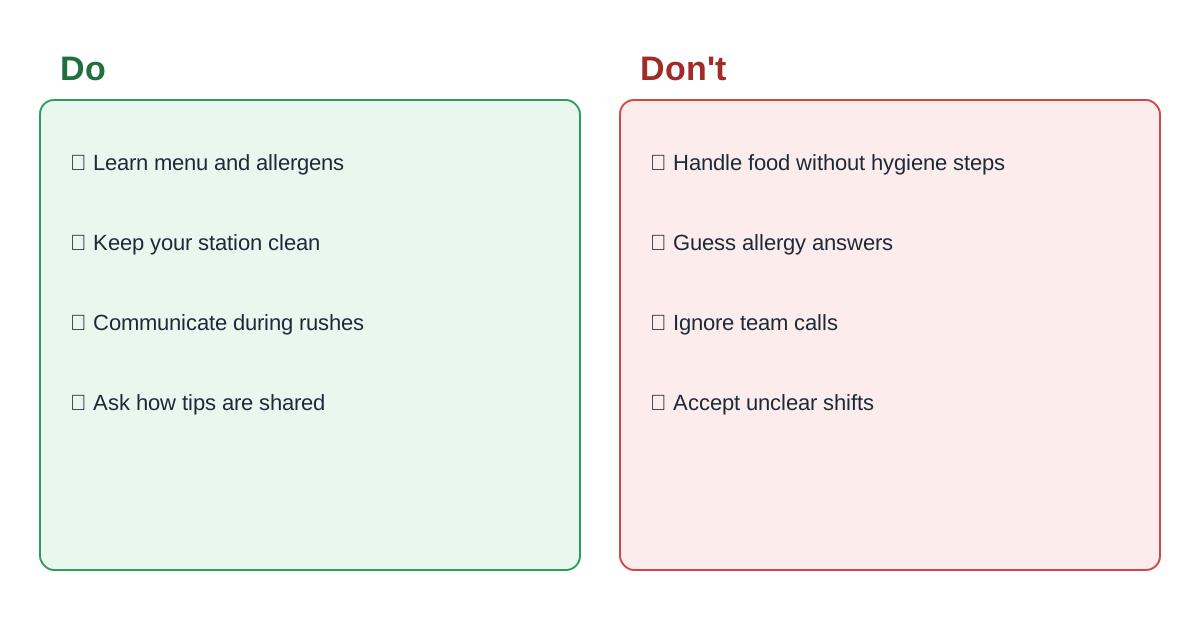
Every restaurant makes errors. A dish arrives late, an allergy is missed or a bill is wrong. What matters is the response. Listen without interrupting, apologise sincerely, and take responsibility for finding a solution. For allergy concerns, always take the issue seriously, inform the kitchen and manager immediately and never guess about ingredients. If you are unsure of something on the menu, say so and check rather than inventing an answer. Handling complaints well turns a problem into a sign of professionalism.
Working conditions and contracts
Restaurant work often includes split shifts, evenings, weekends and holidays. Before accepting, check the job title, salary, working hours, rest days, overtime terms, meals, accommodation, transport, probation and notice period. Ask whether tips, if any, are shared and how, and get the answer in writing. Do not accept a verbal promise as a contract. Current contract and permit rules are explained by MOHRE and on the u.ae portal.
Career growth
Restaurant careers can grow quickly. A kitchen assistant can become a commis, a cook and eventually a chef. A server can become a supervisor and manager. Some move into catering, hotel operations, food and beverage purchasing or training. Learn from colleagues, ask for feedback, keep your station clean and show reliability. Some people eventually open their own businesses, but that requires licensing, planning and capital, and should be approached with careful research.
Mistakes restaurant applicants often make
Some applicants claim skills they cannot show in a trial. Others ignore hygiene rules and lose the job quickly. Some accept roles without asking about shifts, meals or transport and later find the conditions hard. A few pay agents for placements that never appear. To avoid these problems, be honest, learn the basics of food safety, ask questions and verify the employer.
Hygiene, speed and service
Restaurants value food hygiene, teamwork and speed under pressure. Learn basic safe food handling, and be honest about your station experience. Ask how service charge and tips are shared, what the shift pattern is, and whether staff meals, uniform and transport are provided.
Rush-hour thinking for servers and kitchen staff
Busy services reward preparation. Servers should memorise the menu, allergens and daily specials before the shift, and repeat orders back to the guest. Kitchen staff should set up their station, label and date ingredients, and clean as they go. In an interview, explain how you handled a rush: what you prepared, who you told when you fell behind, and what you changed afterwards.
Conclusion
Restaurant jobs in the UAE offer a lively environment and real opportunities for people who are reliable, hygienic and willing to learn. Understand the roles, prepare for trials, take food safety seriously and read every offer before you accept. Ask the employer which food safety documents are accepted, and confirm contract terms on MOHRE and the UAE Government portal. Consistent effort and good habits are the foundation of a lasting career in food service.
Allergen safety
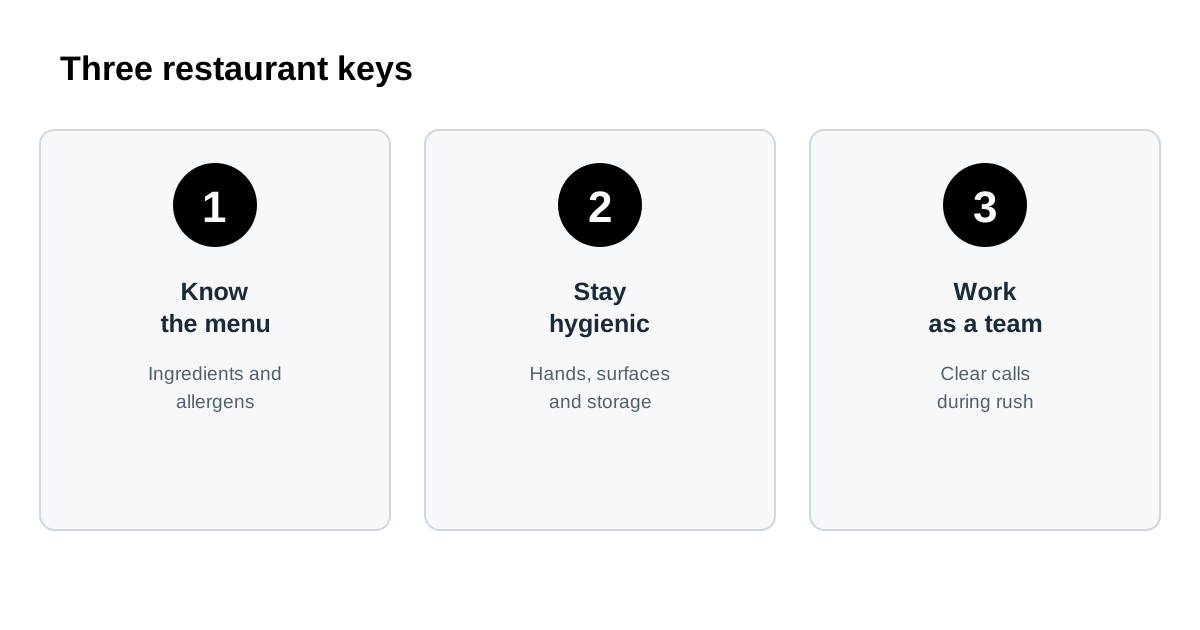
If a guest mentions an allergy, do not guess. Check the recipe with the kitchen, tell the guest what you found and follow the restaurant procedure to prevent cross-contact. Accuracy here protects guests and your job.
Frequently asked questions
Do I need food hygiene training?
Many employers require it for food handling. Ask what training is needed and who pays.
How are tips handled?
Policies differ. Ask for the rule in writing.
Are split shifts common?
Some restaurants use them. Ask for the roster and transport support.