Retail and Supermarket Jobs in the UAE: How to Prepare a Strong Application

Retail is one of the largest employers in the UAE. Malls, neighbourhood supermarkets, hypermarkets, electronics shops, fashion stores, pharmacies and convenience outlets all need staff to serve customers, handle stock and keep shelves in order. The sector is visible and always changing, which makes it a common first step for newcomers and a stable career for many others. Because so many people apply, employers can be selective, and a thoughtful application makes a real difference. This guide explains the main roles, what retailers look for, how to prepare a CV and interview, and how to check an offer carefully.
It does not list vacancies or salary figures, and it cannot promise placement. Employers differ, so confirm important details in writing.
Types of retail and supermarket work
Sales associate and shop assistant
Sales associates greet customers, answer questions, suggest products, keep displays tidy and process purchases. In specialist stores, such as electronics or fashion, product knowledge is important, and some roles include sales targets.
Cashier
Cashiers scan items, handle payments, give receipts, manage queues and balance their till at the end of a shift.
Stock and shelf staff
Stock staff receive deliveries, check goods, label items and fill shelves. In supermarkets, they also watch expiry dates and rotate stock so that older items are sold first. The work is physical and requires care with fresh and chilled products.
Customer service desk
Staff at the service desk handle returns, complaints, enquiries and special orders. Calm communication and knowledge of store policy matter most. Our guide to customer service jobs in Dubai explains skills that apply here.
Department specialists
Supermarkets employ butchers, fishmongers, bakers, deli staff and produce handlers. These roles require specific skills and food safety knowledge.
Supervisors and managers
Supervisors guide teams, schedule shifts, handle cash and solve problems on the floor. Store managers oversee operations, targets, staffing and stock control. These roles need experience and leadership.
What retailers look for
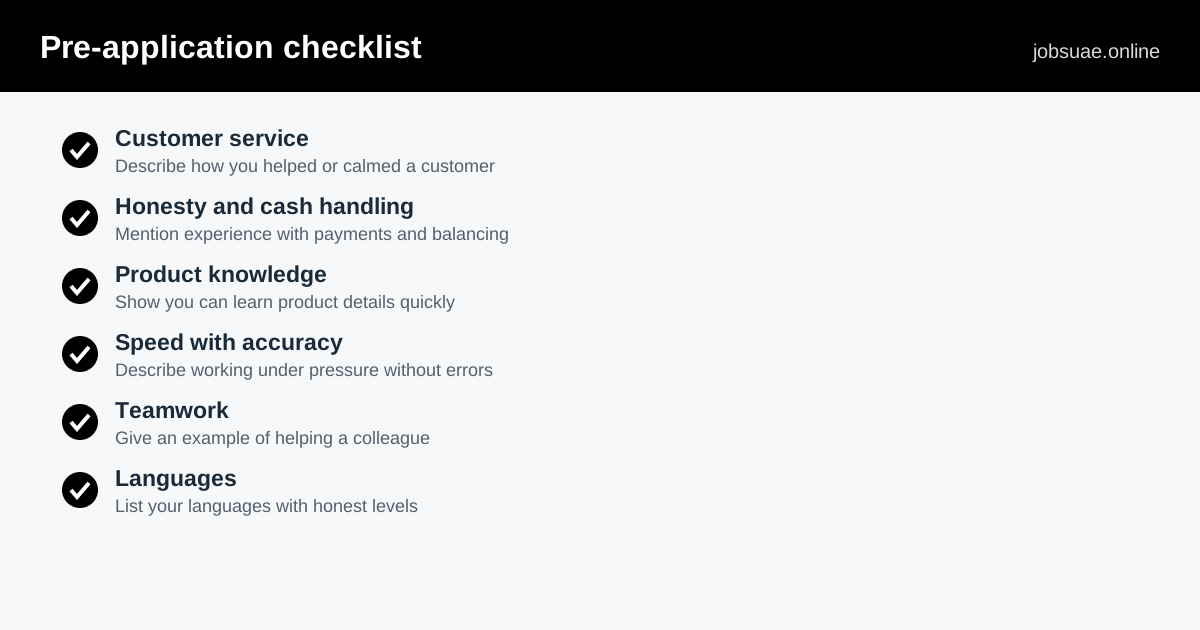
The table below summarises common expectations and how to show them. It is general guidance.
| Skill | Why it matters | How to show it |
|---|---|---|
| Customer service | Shoppers choose stores based on how they are treated | Describe how you helped or calmed a customer |
| Honesty and cash handling | Tills and stock represent real money | Mention experience with payments and balancing |
| Product knowledge | Customers expect accurate answers | Show you can learn product details quickly |
| Speed with accuracy | Queues and busy hours test staff | Describe working under pressure without errors |
| Teamwork | Shifts depend on cooperation | Give an example of helping a colleague |
| Languages | Shoppers speak many languages | List your languages with honest levels |
| Appearance and reliability | Staff represent the brand | Arrive neat and on time to every interview |
Retail working life
Retail hours often include evenings, weekends and public holidays, because that is when customers shop. Shifts can be long, and standing for most of the day is normal. Peak seasons, such as sales periods and festival times, can bring extra hours and high pressure. Ask during the interview how shifts are scheduled, how many days off you receive and how overtime or extra hours are handled.
The environment is social. You will meet customers from many backgrounds and work with colleagues from many countries, so patience, respect and adaptability are valued. Learning a few key phrases in other languages can create goodwill, but only use them if you are confident.
Preparing a strong application
A retail CV should be concise and honest. Begin with a short summary, then list previous jobs with duties and any results you can state accurately, such as "Operated a till in a supermarket handling cash and card payments, balancing the drawer at the end of each shift." If you are new to retail, use relevant experience from a family business, volunteering or customer-facing work.
Include languages, availability for shifts, relevant certificates and any systems you have used, such as point-of-sale software. Before sending anything, compare your document with the checklist in our CV guide.
Check the spelling of the store and the role. Employers notice carelessness, and retail depends on attention to detail.
Where to find retail jobs
Large retailers publish roles on their own career pages and through licensed recruitment agencies. Some stores accept walk-in applications, and managers sometimes hire through referrals. To organise your applications, see finding jobs in Dubai.
Be cautious with adverts that promise high pay for no experience, hide the company name or ask you to pay for training, uniforms or registration. Our guide to avoiding recruitment scams lists warning signs and explains what to do if you have already paid.
Interviews and trial shifts
Retail interviews are usually short and practical. You may be asked how you would help a customer who cannot find a product, handle a complaint, deal with a busy queue or respond when a till is short. Strong answers are calm, honest and customer-focused. For example, if a customer is angry about a price, you would listen, check the shelf label and the system, explain the situation politely and call a supervisor if needed.
Some stores use trial shifts or role-plays. Arrive early, dress neatly, greet people with a smile and listen carefully. Ask about training, uniform, store targets, breaks and how performance is reviewed.
Food safety and fresh produce
Supermarket staff who work with food should learn basic hygiene: washing hands, keeping chilled items cold, separating raw and cooked foods and following cleaning schedules. Authorities in each emirate set food safety rules, and employers may require training or health documentation for some roles. Ask which requirements apply and who arranges them, and do not pay unknown sellers for certificates.
Contracts and conditions
Before accepting, check the job title, salary, any commission or targets, working hours, days off, probation, notice period and who pays for uniforms and transport. Ask whether the role includes tasks beyond the job description, such as heavy stock work, and get the answer in writing. Be cautious if you are asked for a fee. To confirm how contracts and permits should work, read the official pages of MOHRE.
Career paths
Retail offers a clear ladder. A sales associate may become a senior associate, team leader, assistant manager and store manager. Others move into merchandising, buying, training, e-commerce operations or area management. To progress, learn the products and systems, take on small responsibilities, accept training and keep a record of achievements such as customer compliments or sales targets met.
A typical shift on the shop floor
A retail day follows a pattern. Before opening, staff check displays, restock shelves, clean the area and confirm prices and promotions. When customers arrive, associates greet them, help them find items and answer questions. Cashiers process payments and keep queues moving, while stock staff replenish products and handle deliveries. During quiet periods, the team tidies, labels items and prepares for the next rush. At closing, tills are counted, floors are cleaned and the next day's tasks are noted.
The key skill is switching between tasks without losing courtesy. A customer should never feel that a stocking job is more important than their question. Staff who learn to prioritise politely tend to progress faster.
Handling difficult customers and common situations
Retail staff face frequent problems: a product is out of stock, a price on the shelf differs from the system, a customer wants a refund without a receipt or a shopper is upset about a long wait. The safest approach is to stay calm, listen fully, apologise where appropriate and explain what you can do. Follow the store's policy, and ask a supervisor if you are unsure. Avoid arguing, and never make promises you cannot keep. If a customer becomes abusive, inform a supervisor or security according to store procedure.
Honesty matters in every case. If you do not know the answer, say that you will check. If you have made an error at the till, report it quickly. Employers trust staff who admit mistakes early.
Building product knowledge
Product knowledge turns an average associate into a valued one. Spend time learning the products in your department: what they do, how they compare and what common questions customers ask. Read labels, ask colleagues and use any training provided. In a supermarket, learn the layout, the origin of fresh items and common dietary needs, such as allergens and halal or vegetarian options. In electronics, learn the main features of popular models. Keep a small notebook of useful facts, and review it before your shift.
Mistakes retail applicants often make
Some applicants send the same CV to every store without any detail. Others overstate their experience and are exposed in a trial. Some accept jobs without checking hours or transport and later struggle. A few pay agents for placement and lose money. To avoid these problems, tailor your application, be honest, ask questions and verify the employer.
What retail employers watch
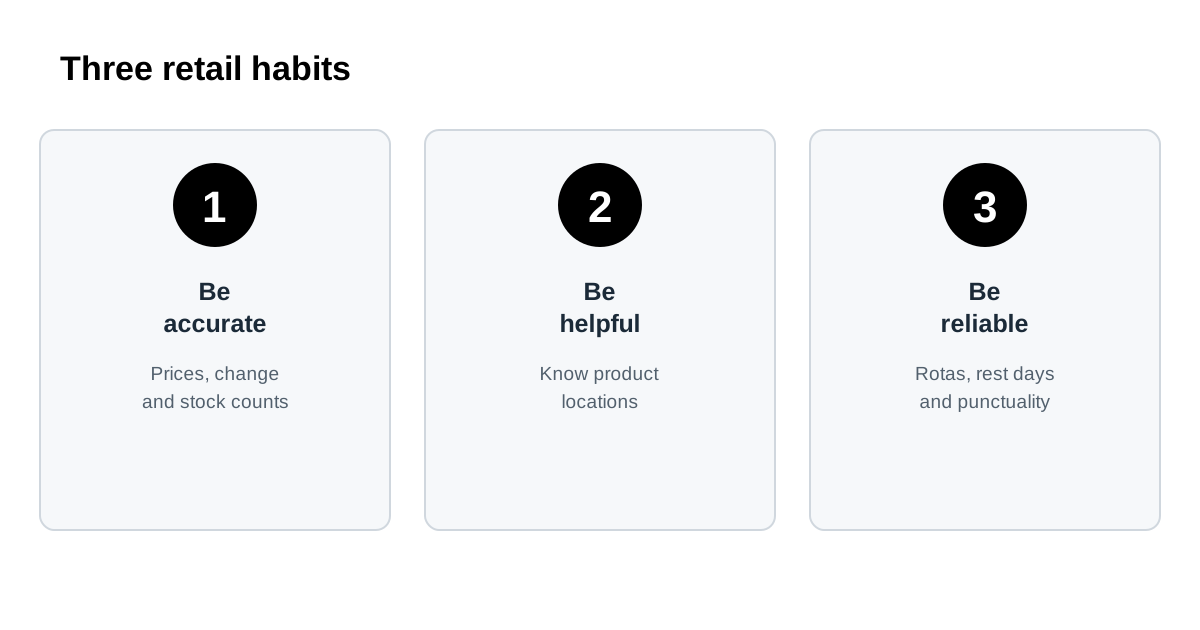
Shelf stocking, cash handling and customer help are the core of retail work. Show accuracy with money, patience at busy hours and willingness to learn product locations. Ask about weekly rest days, peak-season hours and how stock shortages or till differences are handled, in writing.
Accuracy habits that reduce stock loss
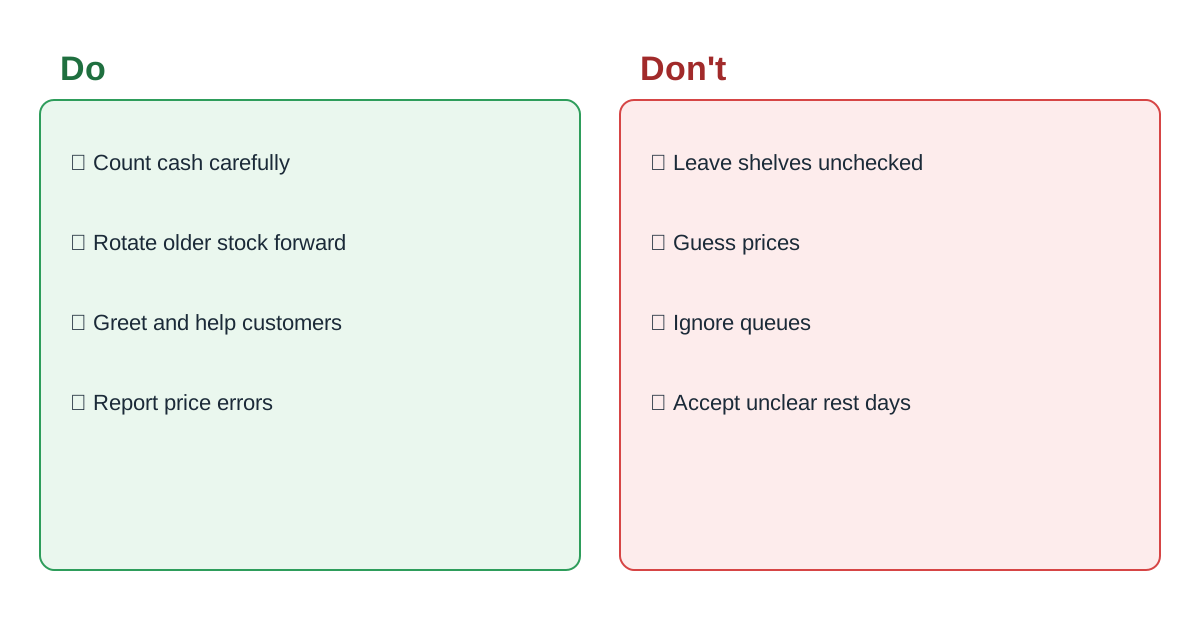
Check delivery quantities against paperwork, rotate older stock to the front, and report damaged goods immediately. At the till, count change aloud and keep your drawer tidy. Employers notice staff who spot pricing errors, since those protect both customers and the business. Mention one such habit on your CV if you can truthfully claim it.
Conclusion
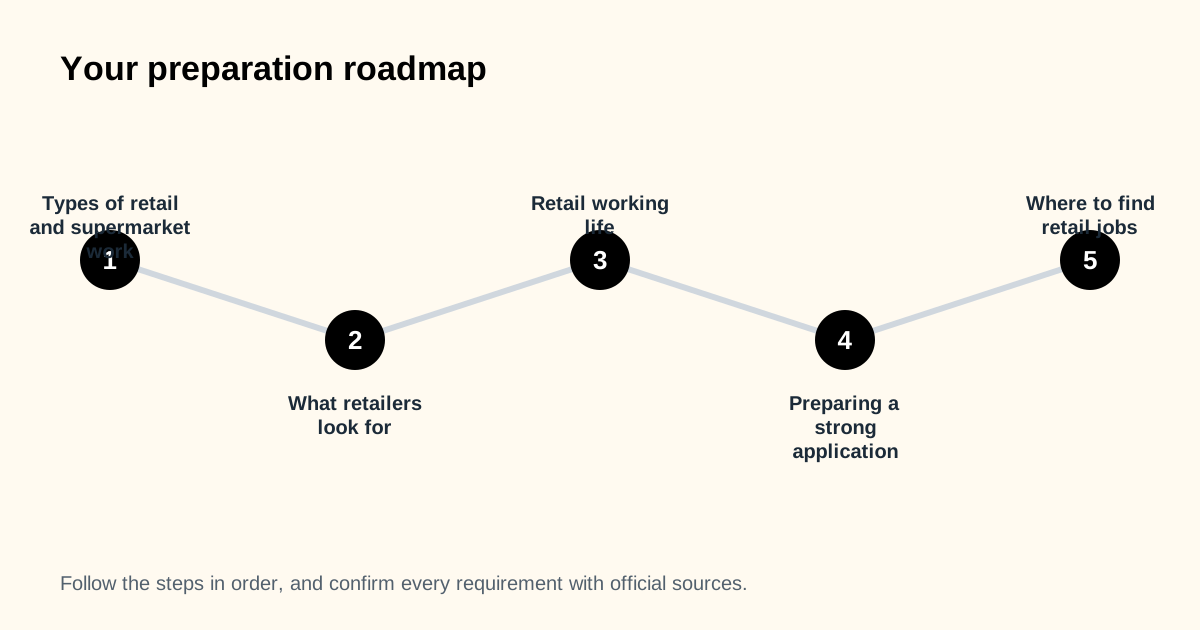
Retail and supermarket jobs in the UAE reward people who are reliable, friendly and accurate. Understand the roles, prepare an honest application, practise interview scenarios and read every offer carefully. Compare any offer with the contract guidance on MOHRE and the UAE Government portal, and walk away from requests for placement fees. Strong habits and a respectful attitude are the foundation of a retail career.
Handling a busy queue
When a queue builds, greet each customer, keep your pace steady and call for a second till if the procedure allows. Do not rush counting change, because mistakes cost more time than a short wait. A calm attitude keeps customers patient and impresses supervisors.
Growing in retail
Strong staff become team leaders, stock controllers or department supervisors. Learn the stock system, ask to help with receiving deliveries and keep a record of attendance and accuracy. These details make a promotion conversation easier.
Frequently asked questions
Do I need cashier experience?
Many entry roles train new staff, but cash accuracy is valued. Be honest about your experience.
Are weekends and festivals busy?
Retail is often busiest then. Ask about peak-season rosters and leave rules.
What happens if the till is short?
Policies vary. Ask how differences are checked and whether deductions apply, in writing.