Customer Service Jobs in Dubai: Language Skills and Application Advice

Customer service is the human face of a business. In Dubai, where residents and visitors come from almost every country, the people who answer calls, chats and counters need patience, clarity and cultural awareness. Banks, telecom companies, airlines, hotels, online retailers, healthcare providers and government-linked service centres all employ customer service staff, and many careers in management began at a service desk. This guide explains the types of customer service work, how languages are assessed, what employers measure, and how to prepare an application and interview without relying on unrealistic promises.
It does not list vacancies or give salary figures, and it cannot predict hiring. Requirements differ between employers, so read each advert closely.
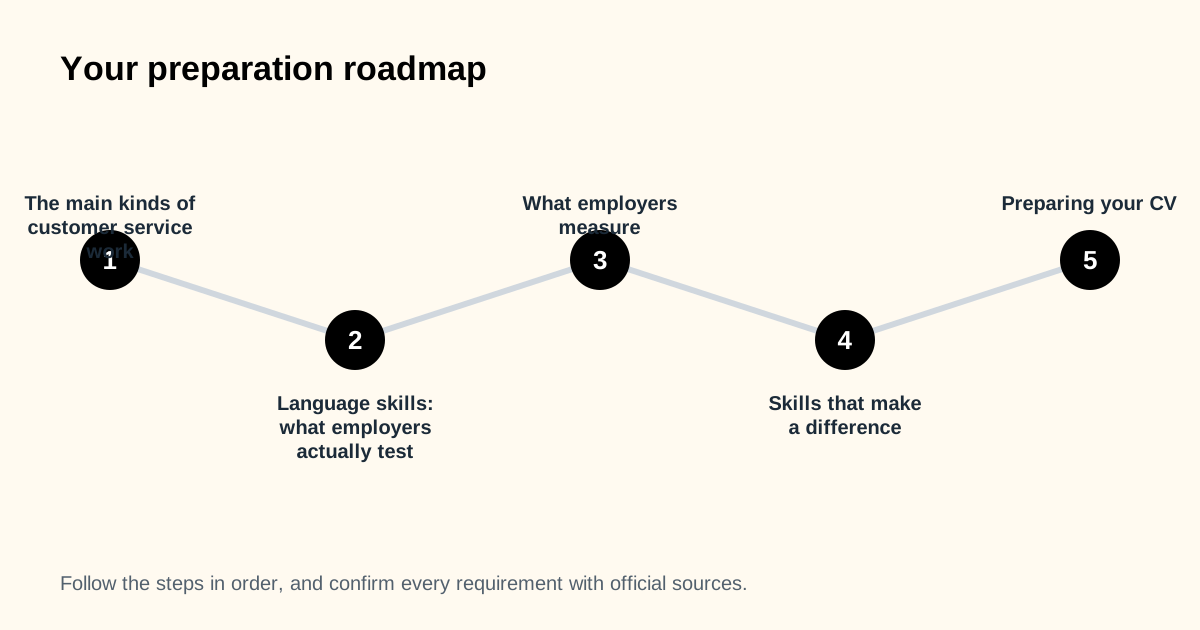
The main kinds of customer service work
Customer service is not one job. The channel changes the skills you need.
Call centre and phone support
Phone agents handle inbound or outbound calls, answer questions, solve problems and record details. Clear speech, listening and the ability to stay calm are central, and agents often work to scripts and quality standards. Shift patterns may include evenings and weekends.
Chat and email support
Written support requires accurate spelling, concise explanations and quick typing. Agents may handle several chats at once, so organisation matters. Employers often test writing before hiring.
Counter and branch service
Counter staff work in shops, service centres, banks and clinics. They handle queues, documents and payments face to face, and they must manage frustration politely. Grooming and body language matter as much as words.
Technical and specialist support
Some service roles involve explaining technical products, troubleshooting devices or guiding customers through complex processes. They suit people who enjoy solving problems and can explain them simply.
Customer success and relationship roles
In business-to-business settings, customer success staff manage ongoing relationships, solve account issues and help clients get value from a service. These roles usually ask for experience and strong communication.
Language skills: what employers actually test
English is the common working language in much of Dubai, and many employers ask for strong English. Arabic is valuable for certain roles, particularly where customers or government-linked services are involved, and other languages such as Hindi, Urdu, Tagalog, Russian or French can be an advantage for multilingual teams. Employers often assess language through phone interviews, written tests or role-plays.
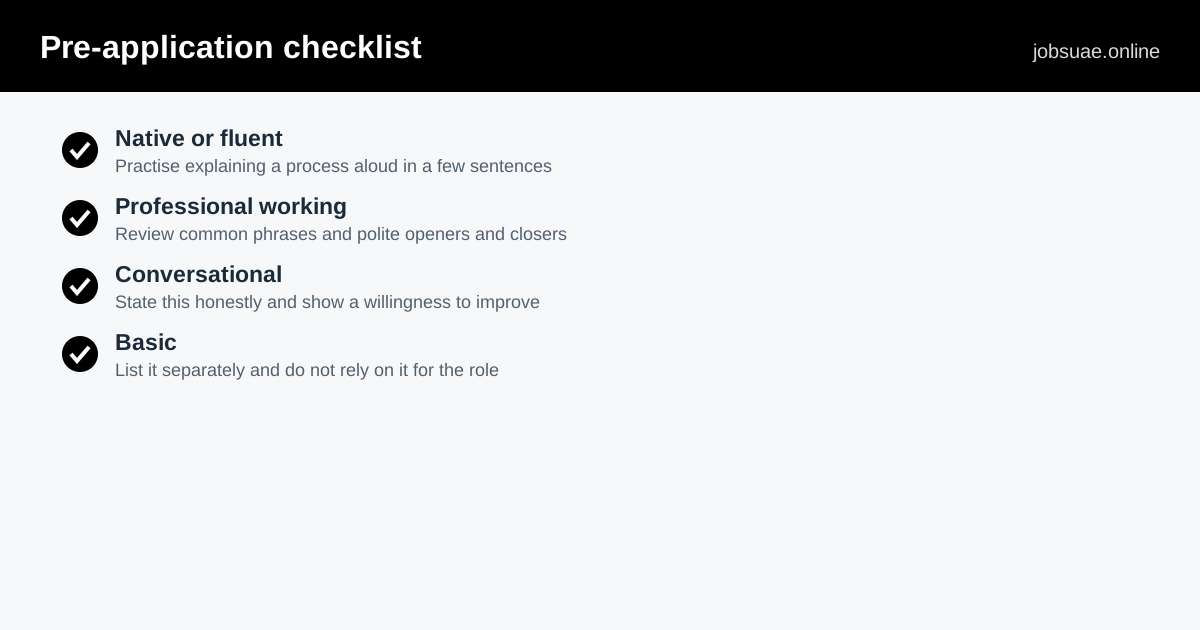
Honesty about your level matters. Do not claim fluency you cannot demonstrate, because interviewers can switch languages mid-call. The table below shows how to describe levels and prepare. It is a general guide, not an official scale.
| Level you can honestly claim | What it means in practice | How to prepare |
|---|---|---|
| Native or fluent | You can discuss complex issues, explain policies and write clearly | Practise explaining a process aloud in a few sentences |
| Professional working | You can handle most customer conversations with occasional help | Review common phrases and polite openers and closers |
| Conversational | You can manage simple exchanges but struggle with detail | State this honestly and show a willingness to improve |
| Basic | You know common words and phrases | List it separately and do not rely on it for the role |
What employers measure
Customer service teams are usually measured. Typical measures include how quickly calls or chats are answered, how many issues are solved on the first contact, accuracy of information, quality scores from supervisors and customer satisfaction ratings. Understanding these measures helps you answer interview questions and perform well. A candidate who says, "I focus on solving the problem the first time and recording it clearly," shows maturity.
At the same time, be wary of workplaces that set unrealistic targets or hide how performance is measured. Ask what the key measures are, how quality is reviewed and what support is given to new staff.
Skills that make a difference
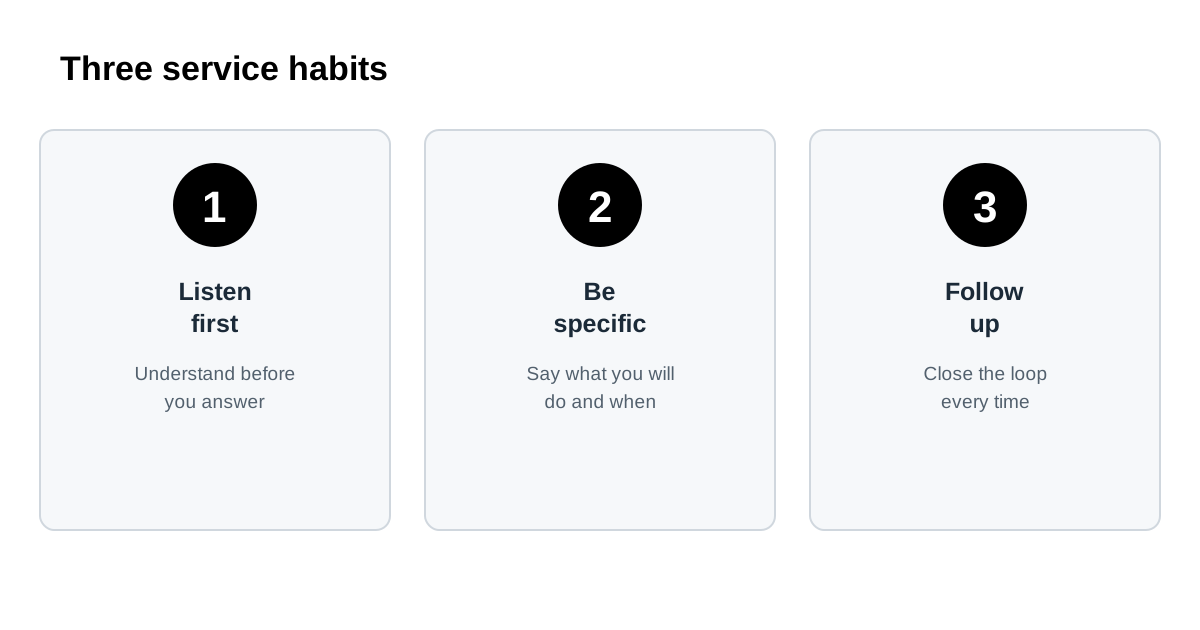
Beyond language, strong customer service staff share certain habits. They listen without interrupting, repeat key details to confirm understanding, stay polite when customers are upset and are honest about what can and cannot be done. They keep accurate notes, learn the product thoroughly and know when to escalate. Typing speed, basic computer skills and comfort with several systems at once are practical advantages.
Emotional control is perhaps the most important skill. Customers are often stressed, and abuse is sometimes directed at agents. Good employers provide training and support, and good agents develop techniques for staying calm, such as pausing before answering and focusing on the problem.
Preparing your CV
A customer service CV should show experience and results truthfully. Replace vague claims like "good with people" with details: "Handled around 60 inbound calls per day for a telecom provider, resolving billing and plan queries, with notes recorded in the CRM system," if that is accurate. If you lack formal experience, use examples from retail, hospitality, volunteering or study.
List languages with honest levels, typing speed if you know it, and systems you have used. Keep the CV to one or two pages. Our CV writing guide shows what to include and what to leave out.
Where to look and how to apply
Employer career pages in banking, telecoms, aviation, retail, healthcare and hospitality list many service roles, and licensed recruitment agencies place large numbers of agents. Reputable job boards and professional networks also help. The general search routine is described in our Dubai job search guide.
Be careful with adverts that hide the employer's name, ask for a deposit for training or equipment or promise high pay for no experience. Our guide to avoiding recruitment scams lists the warning signs, and it applies to remote customer service offers as well.
The interview and assessment
Customer service hiring often includes several steps: an application, a language or typing test, a phone or video interview and sometimes a group exercise. Interviewers want to see how you speak, listen and solve problems. Expect questions such as "Tell me about a time you dealt with an angry customer" or "What would you do if you did not know the answer?"
A strong answer follows a simple pattern: describe the situation briefly, explain what you did, and share the result. For example, you might say that a customer was upset about a delayed order, you apologised, checked the status, explained the cause honestly and offered the available options, and the customer accepted a replacement. If you have no direct example, describe how you would handle the situation using the same steps.
Handling difficult conversations
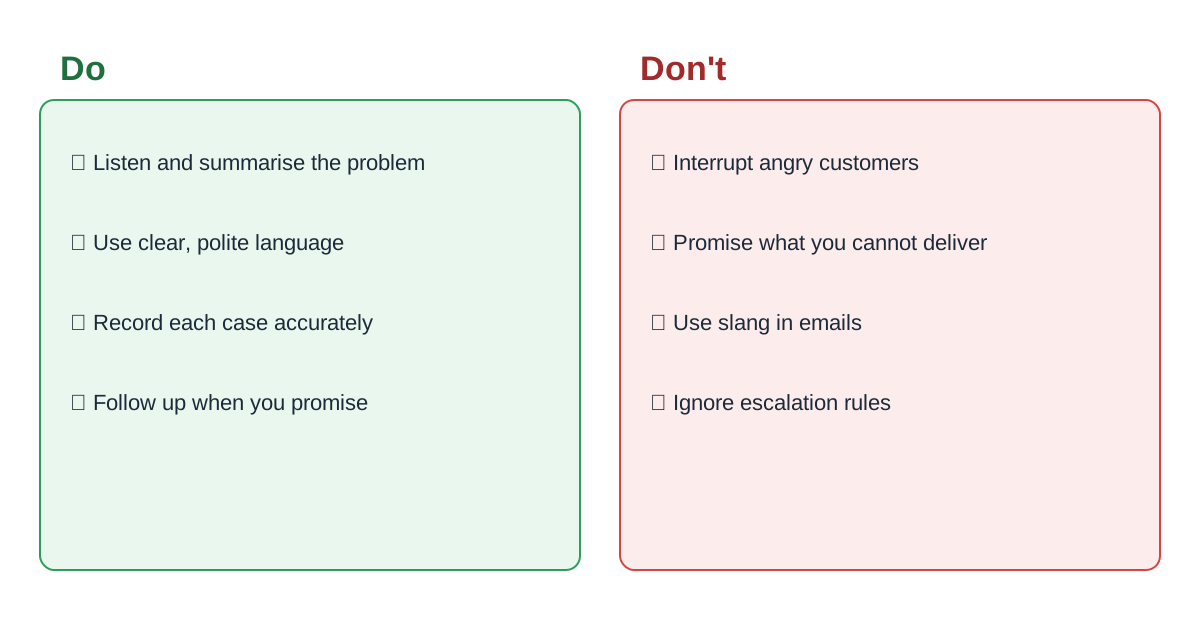
Practise a few core techniques. Begin by acknowledging the customer's feeling without blaming anyone: "I understand this is frustrating, and I will help." Clarify the issue by asking short questions, then summarise it back. Explain what you can do, give a realistic timeframe and follow through. If you must refuse a request, explain why politely and offer an alternative. If a customer becomes abusive, follow the company's procedure, which often includes a warning and then ending the call.
Keep records of every conversation. Clear notes protect you, help colleagues and improve service.
Contracts and working conditions
Before accepting a job, check the job title, basic salary, any incentive or bonus structure, working hours, shift patterns, breaks, probation and notice period. Ask about training, quality monitoring, transport and the location of the workplace. Be careful if an employer expects you to pay for training, equipment or a "security deposit". To confirm how contracts and permits should work, read the official pages of MOHRE.
Working shifts and staying well
Many service teams operate long hours, so shift work is common. Ask early whether the schedule rotates, how breaks are handled and whether transport is provided for late finishes. Protect your energy by keeping regular sleep, eating properly and taking short breaks away from the screen. Speaking all day can strain your voice, so drink water and speak at a steady pace. Employers appreciate agents who stay consistent, and good habits help you avoid burnout.
Career paths
Customer service can lead to team leader, quality analyst, trainer, workforce planner, operations supervisor or manager roles. Experience can also open paths into sales, account management, human resources or product support. To progress, learn the systems, study the product, ask for feedback, volunteer for training and keep a record of your achievements.
Mistakes customer service applicants often make
Some applicants exaggerate language skills and struggle in the interview. Others send a CV with no examples of real work. Some accept a role without understanding shift patterns and later find it hard to continue. A few pay for training that the employer should have provided. To avoid these problems, be honest, prepare examples, ask direct questions and verify the employer.
Handling a difficult customer: a simple method
Interviewers for customer service roles often ask how you handle anger. Use four steps: listen without interrupting, acknowledge the problem in one sentence, offer what you can actually do, and confirm the next step with a time. For example: "I understand the delivery is late. I will check the order now and update you within ten minutes." Avoid promising what you cannot control.
Language and channel skills
Many roles use phone, email, chat and social media, and each needs a different tone. Phone work needs a clear voice and patience, while written channels need short, correct sentences. Mention the languages you speak, since multilingual candidates are often valued, but only list the level you can truly use at work.
Ask about targets
Ask how performance is measured, such as call volume, resolution time or quality scores, and whether shifts include nights or weekends.
Conclusion
Customer service jobs in Dubai suit people who listen well, stay calm and communicate clearly in a multilingual environment. Understand the type of service work you want, describe your languages honestly, prepare real examples and read every offer carefully. Practise your examples, verify the employer and use MOHRE and the UAE Government portal to check contract terms before you sign. Steady practice and honest preparation are the best foundation for a service career.
Writing replies that customers trust
A good email reply thanks the customer, restates the problem in one line, explains what you did and gives a clear next step. For example: "Thank you for contacting us. I understand your order arrived damaged. I have arranged a replacement for delivery within two days and will confirm the tracking number today." Short, specific answers reduce repeat contacts.
Staying calm under pressure
High-volume service work is tiring. Use short breaks, keep a list of standard answers, and ask for feedback from your team lead. Interviewers like candidates who can describe how they stayed calm during a busy day.
Frequently asked questions
Do I need fluent English?
Most roles need good English, and other languages can help. Be honest about your level.
What systems might I use?
Common tools include ticketing, CRM and call-centre software. Mention any you have used.
How is performance measured?
Employers may track resolution time, quality scores and customer feedback. Ask what targets apply.