Receptionist Jobs in Dubai: Communication Skills and CV Preparation

A receptionist is often the first person a visitor meets and the first voice a caller hears. In Dubai's offices, clinics, salons, schools, real estate agencies and corporate towers, the reception desk shapes how an organisation is perceived. Because the role looks simple, applicants sometimes send weak applications, yet employers pay close attention to presentation, communication and reliability. This guide explains what receptionists do outside hotels, which skills matter, how to prepare a CV and how to approach interviews. For hotel front desks, read our separate guide to hotel jobs in Dubai.
It does not list vacancies or salary figures, and it cannot promise placement. Employer needs vary, so read each advert carefully.
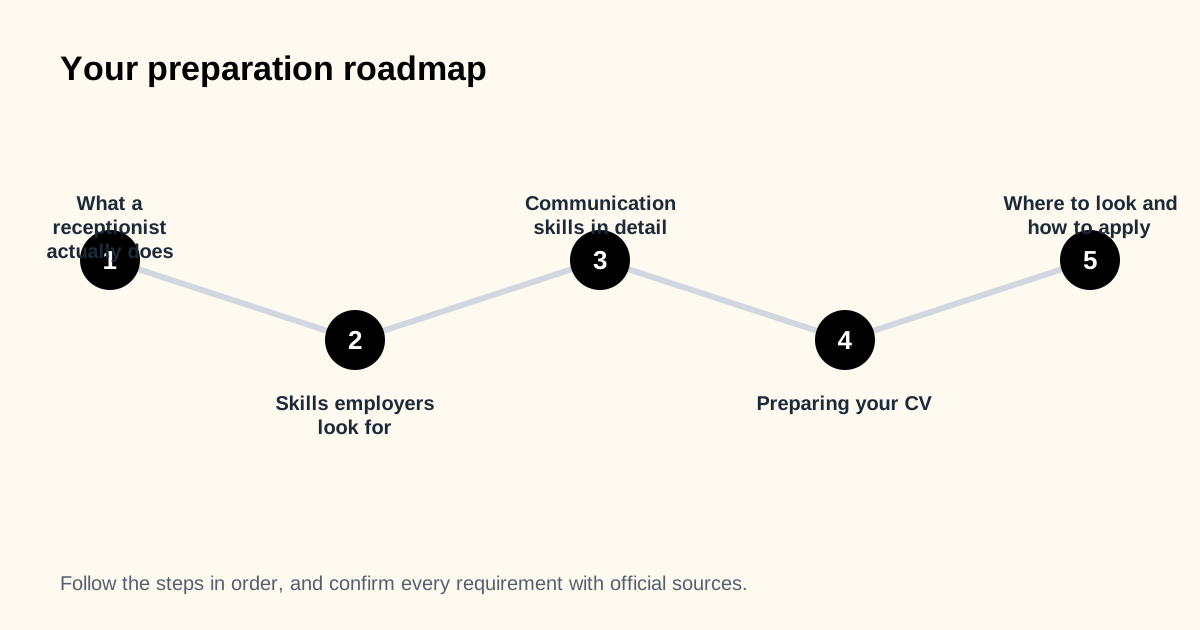
What a receptionist actually does
A receptionist manages the flow of people and information into an organisation. Typical tasks include greeting visitors, answering and directing phone calls, managing appointments, receiving deliveries, handling mail, keeping visitor logs, supporting meeting rooms, ordering office supplies and responding to basic enquiries. Many receptionists also assist with administration, such as data entry, scheduling, filing and preparing documents.
The role changes by workplace. In a clinic, the receptionist books appointments, checks patient details and handles confidentiality carefully. In a law or consulting office, discretion and formal communication are important. In a real estate agency, the receptionist may coordinate viewings and answer property enquiries. In a corporate office, security procedures for visitors are central.
Skills employers look for
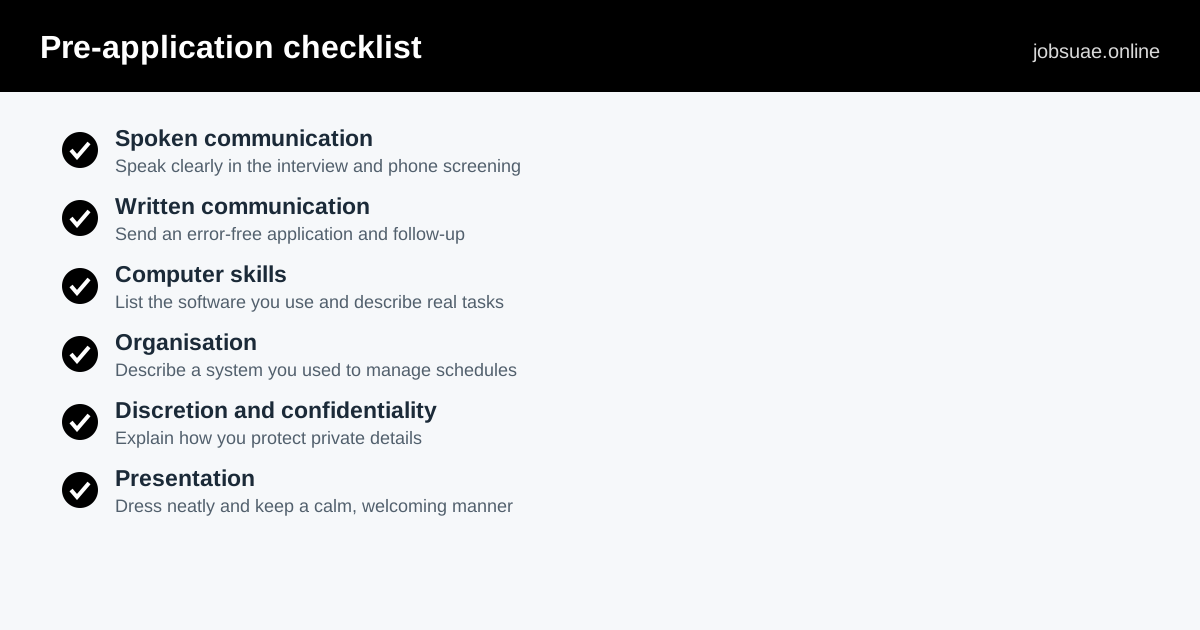
The table below shows common skills and how to demonstrate them. It is general guidance, not a fixed standard.
| Skill | Why it matters | How to show it |
|---|---|---|
| Spoken communication | Callers and visitors form impressions quickly | Speak clearly in the interview and phone screening |
| Written communication | Emails and messages represent the company | Send an error-free application and follow-up |
| Computer skills | Calendars, email and office software are daily tools | List the software you use and describe real tasks |
| Organisation | Appointments and deliveries must be tracked | Describe a system you used to manage schedules |
| Discretion and confidentiality | Receptionists see sensitive information | Explain how you protect private details |
| Presentation | Reception sets the tone for visitors | Dress neatly and keep a calm, welcoming manner |
| Problem solving | Unexpected situations arise often | Prepare examples of staying calm and finding solutions |
Communication skills in detail
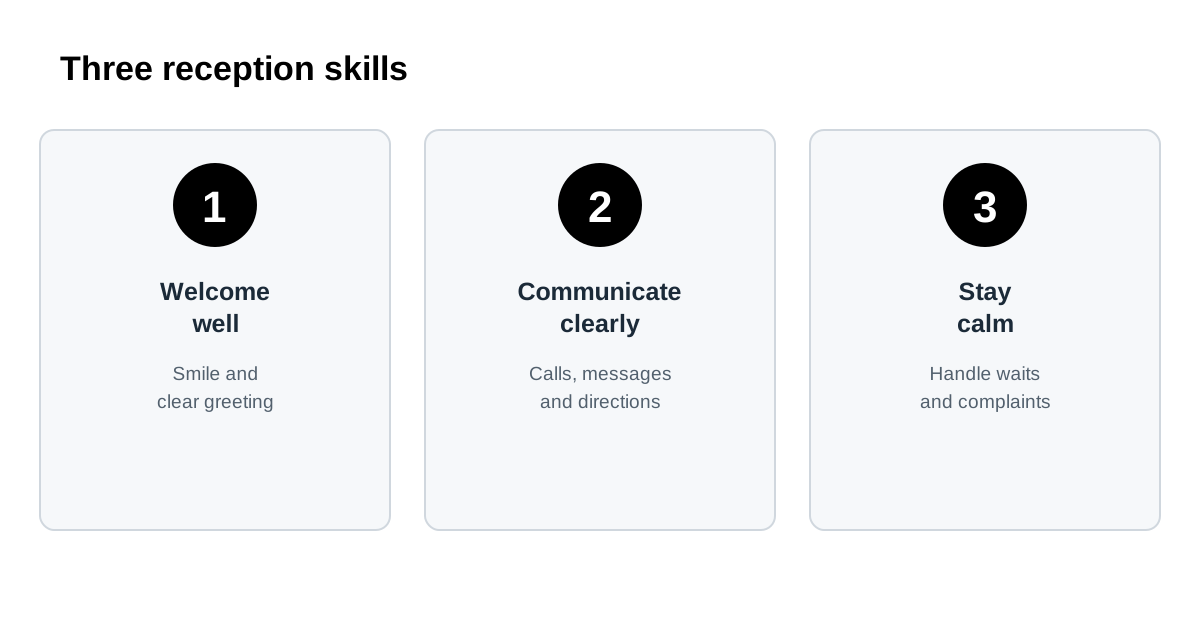
Good reception work starts with listening. Let the visitor or caller finish, repeat the key point to confirm and then act. Keep your tone warm but professional, and avoid jargon. When you must make someone wait, say how long and why, and keep them informed.
Telephone etiquette
Answer promptly with a clear greeting that includes the company name and your own, for example: "Good morning, [company name], this is [name], how may I help you?" Ask for the caller's name and purpose before transferring, and tell them whom you are connecting them to. If the person is unavailable, offer to take a message or arrange a callback, and write down the name, number, time and reason. Never promise something you cannot deliver, and never share confidential information with unverified callers.
Face-to-face greeting
Stand or look up, smile and greet the visitor promptly, even if you are busy. Ask whom they are visiting, check their appointment and follow the building's security process. Offer a seat and a drink if that is the office's practice, and tell the host that the visitor has arrived.
Cultural awareness
Dubai workplaces are multicultural, and visitors may have different expectations of greeting, formality and personal space. Be respectful, patient and polite, and avoid assumptions. Learning a few greetings in common languages can create goodwill, but only use them if you are confident.
Preparing your CV
A receptionist CV should be tidy, accurate and easy to read, because it is also a sample of your work. Begin with a short summary stating your job title, years of experience and strengths. In your experience section, describe duties with specifics: "Answered an average of 40 calls per day, scheduled appointments in the clinic system and welcomed patients" is clearer than "Responsible for reception". Include only figures you can support.
List software such as email, calendar tools, word processors and spreadsheets, along with any reception or phone system you have used. State languages honestly. Keep the document to one page if possible, and save it as a PDF unless the employer asks for another format. You can refine this further with the advice in how to write a UAE-style CV.
Where to look and how to apply
Employer career pages, reputable job boards, professional networks and licensed recruitment agencies list reception roles. Companies in healthcare, real estate, education, professional services and property management often hire receptionists. For a wider search plan, read how to find jobs in Dubai.
Be cautious with adverts that ask for photos in revealing clothing, request personal documents in the first message, hide the company name or require payment. Legitimate employers do not charge candidates. Our guide to avoiding recruitment scams explains the warning signs.
The interview
Reception interviews check both skills and manner, so you are being observed from the moment you arrive. Be on time, dress neatly and greet everyone politely, including the person at the door. Common questions include how you would handle a rude visitor, what you would do if two people arrived at once or how you would manage a busy phone line.
A strong answer is calm and practical. For two people arriving at once, you might acknowledge both, ask the first to wait briefly and serve the visitor with the earlier appointment. For a rude visitor, you would stay polite, listen, avoid arguing and inform a manager if needed. Some employers ask you to role-play a call or write a short email, so practise both.
Prepare questions about working hours, the number of staff, the phone system, expectations for administrative tasks and training.
Working conditions and contracts
Check the job title, duties, salary, working hours, days off, probation period and notice terms before accepting. Ask whether the role includes tasks beyond reception, such as accounts support or driving errands, and whether these are described in the contract. Do not accept vague descriptions that could allow duties to expand without agreement. Be wary of any request to pay a fee, and confirm the employer's identity. For official information on contracts and permits, consult MOHRE and the UAE Government portal.
Career paths
Reception can lead to office administrator, executive assistant, personal assistant, office manager, customer service supervisor or human resources assistant roles. Others move into sales support or operations. To progress, learn the company's systems, improve spreadsheet and presentation skills, take on additional responsibilities and keep records of your achievements.
A typical day at the desk
A realistic picture helps you decide whether the role suits you. The day often begins with opening the reception area, checking the visitor schedule and meeting room bookings, and reading overnight emails. During the morning the desk is busiest: calls arrive, visitors check in, couriers deliver parcels and colleagues ask for help. Around midday, a receptionist may cover lunch breaks, update the appointment diary and prepare materials for afternoon meetings. Late in the day, there are messages to pass on, post to sort and a handover note for the next day.
The pace changes quickly, so the key skill is switching tasks without losing courtesy. A visitor should never feel ignored because the phone is ringing, and a caller should never feel rushed because someone is at the desk. Learning to prioritise politely is what experienced receptionists do best.
Handling difficult situations
Receptionists meet awkward moments: a visitor arrives without an appointment, a client is angry about a delay, a caller will not accept that a manager is unavailable or a colleague asks you to say they are out. The safest approach is to stay calm, follow office policy and avoid lying. You can say that a colleague is not available at the moment and offer to take a message. If a visitor becomes aggressive, remain polite, keep a safe distance and call security or a manager. Document serious incidents in writing so that you are protected.
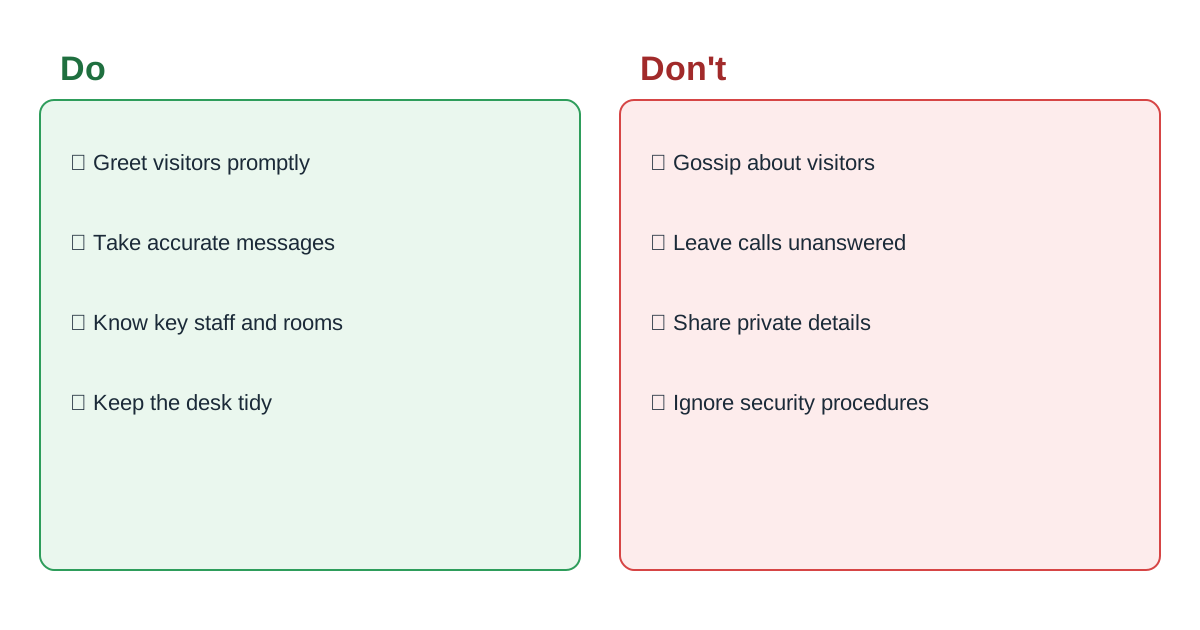
Confidentiality is another test. Do not share staff phone numbers, schedules or client details without permission, and be careful about conversations that others may overhear at the desk.
Mistakes receptionist applicants often make
Some applicants send CVs with spelling errors, which undermines a role that depends on accuracy. Others answer practice calls too casually or fail to take clear messages. Some arrive late to interviews, which signals unreliability. A few accept roles without checking whether duties will expand, and later feel overloaded. To avoid these problems, proofread everything, practise phone etiquette, arrive early and ask about responsibilities.
Your first impression is the job
Receptionists are the first person a visitor meets. Practise greeting people in one calm sentence, taking a message accurately and routing calls. Keep a neat appearance, speak clearly and learn the names of key staff quickly. Ask whether the role includes mail handling, visitor logs or basic admin so the duties match the offer.
A day on reception: practice scenarios
Rehearse three situations. A visitor arrives without an appointment: greet them, ask politely whom they want to see, check with the staff member and offer a seat. A caller is angry about a missed delivery: stay calm, take the details and promise a call-back time you can keep. Two calls arrive at once: put one on hold with a short explanation and return within a minute. Describe one of these in your interview, with the result.
Conclusion
Receptionist jobs in Dubai reward people who communicate clearly, stay organised and treat every visitor with respect. Understand the workplace you are applying to, prepare an accurate CV, practise phone and interview skills and read every offer carefully. Attention to detail wins interviews, and the same habit helps you check an offer against the pages on MOHRE and the UAE Government portal. Attention to small details is what makes a receptionist stand out.
Handling visitor security
Receptionists often act as the first security checkpoint. Follow the sign-in procedure, issue badges as instructed and never allow an unknown person into private areas. If you feel unsure, call the staff member or security. Politeness and firmness can go together.
Frequently asked questions
Which languages help?
English is essential in most roles, and Arabic or other languages can help. State your true level.
What software is used?
Roles may use phone systems, visitor logs and email. Mention any you have used.
What hours are common?
They vary by employer. Ask about shifts and weekend duties.