Office Assistant Jobs in Dubai: Skills, Duties, and Interview Preparation
Office assistants keep a workplace running. They organise documents, answer questions, schedule meetings, order supplies, prepare simple reports and support managers and colleagues with the practical tasks that no one else has time for. In Dubai's offices, from small trading companies to large corporate teams, the role is often a first step into administration or business. Because the title is broad, adverts can be vague and applicants may not know what to expect. This guide explains the duties, the skills that matter, how to prepare a CV and interview, and how to check an offer.
It does not list vacancies or salary figures, and it cannot promise placement. Employers differ, so read every advert carefully and confirm duties in writing.
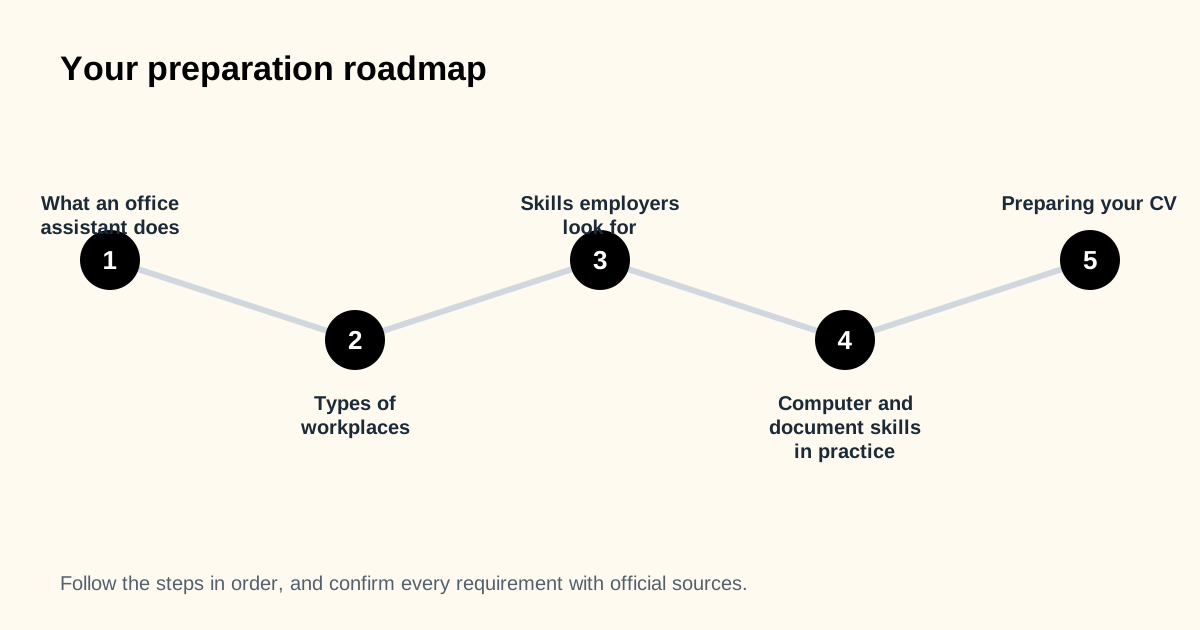
What an office assistant does
An office assistant supports daily operations. Typical tasks include filing and scanning documents, entering data, preparing letters and basic reports, answering calls and emails, arranging meetings, ordering stationery, maintaining records, coordinating with couriers and assisting managers. In small companies, an assistant may also handle simple accounting tasks, liaise with government service centres or help with human resources paperwork.
The role is wider than a receptionist's, which focuses on the front desk. If you are interested in that path, see our guide to receptionist jobs in Dubai. Office assistants work more with documents and systems and may never greet visitors.
Types of workplaces
The environment shapes the work. In a trading company, an assistant may prepare invoices, track shipments and communicate with suppliers. In a real estate office, tasks may include contracts, listings and appointments. In a school or clinic, the assistant may manage records and parent or patient queries. In a corporate office, the role may involve scheduling, minutes of meetings and travel arrangements. Reading the advert and the company's website helps you tailor your application.
Skills employers look for
The table below summarises common skills and how to show them. It is general guidance and varies by employer.
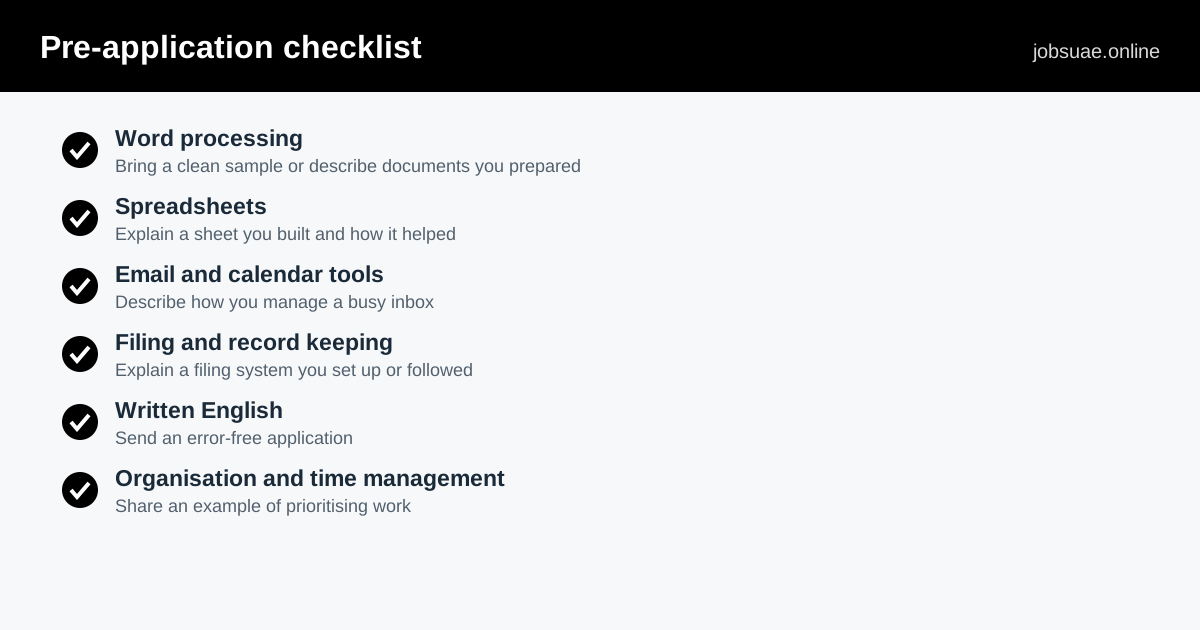
| Skill | Typical use | How to show it |
|---|---|---|
| Word processing | Letters, memos, forms, simple reports | Bring a clean sample or describe documents you prepared |
| Spreadsheets | Lists, schedules, simple calculations, tracking | Explain a sheet you built and how it helped |
| Email and calendar tools | Scheduling, correspondence, reminders | Describe how you manage a busy inbox |
| Filing and record keeping | Digital and paper archives | Explain a filing system you set up or followed |
| Written English | Professional emails and documents | Send an error-free application |
| Organisation and time management | Handling several tasks and deadlines | Share an example of prioritising work |
| Discretion | Handling confidential information | Describe how you protect sensitive documents |
Computer and document skills in practice
Employers often test basic computer skills. Be ready to type a short letter, format a table, sort and filter a spreadsheet or write a polite email. Learn keyboard shortcuts, such as copying, pasting and saving, because they save time. Practise creating clear folders and file names, such as "2026-10-invoice-supplier-name", so that documents can be found later.
Accuracy matters more than speed. A misspelled client name or incorrect date can cause real problems, so develop the habit of checking your work before sending it. If you are not strong in a particular tool, consider a short course from a recognised provider, but verify the provider before paying and be wary of anyone who guarantees a job after training.
Preparing your CV
An office assistant CV should be tidy, accurate and specific. Begin with a short summary of your experience and strengths. In the experience section, describe real tasks: "Maintained supplier files, prepared weekly shipment lists in a spreadsheet and handled courier bookings" is clearer than "Did office work". List software, languages and any relevant courses. Keep the CV to one page if you have limited experience. See the UAE-style CV guide for a section-by-section approach.
If you are new to the field, use examples from studies, volunteering or part-time work, such as organising an event, keeping records for a club or helping at a family business. Avoid claiming skills you cannot show in a test.
Where to look and how to apply
Employer career pages, reputable job boards, professional networks and licensed recruitment agencies list administrative roles. Small companies sometimes recruit through referrals, so tell trusted contacts that you are looking. Our guide to finding jobs in Dubai sets out a weekly routine for searching and tracking applications.
Be careful with adverts for "office assistant" roles that promise high pay with no experience, ask you to pay for registration or training, or require you to send identity documents in the first message. Some are used to collect personal data or fees. Our guide to avoiding recruitment scams explains the warning signs.
Interview preparation
Office assistant interviews often include questions about your experience, how you organise your work, how you handle mistakes and what you would do if two managers gave you conflicting tasks. A strong answer is practical: ask for clarification, explain priorities, and inform both managers so they can agree. Interviewers may also test your computer skills or ask you to write an email.
Prepare examples of times you met a deadline, solved a problem or helped a colleague. Keep them truthful and brief. Ask about the team, systems used, daily tasks, working hours, training and opportunities to grow.
Working habits that get noticed
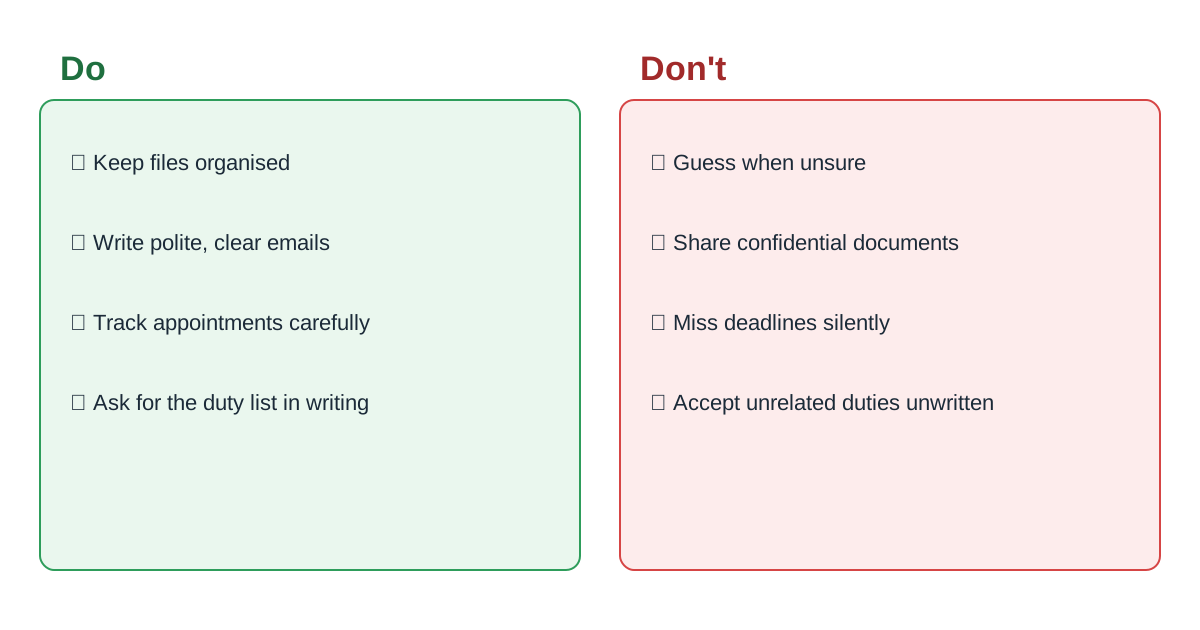
Small habits distinguish good assistants. Arrive on time, keep your desk and files organised, write down instructions and confirm them, and follow up when tasks are complete. Keep a daily list and update it as priorities change. Communicate early if you cannot meet a deadline. Treat confidential information carefully, avoid discussing it casually and lock your screen when you leave the desk. Managers trust people who are consistent.
Contracts and conditions
Before accepting an offer, check the job title, duties, salary, working hours, days off, probation period and notice terms. Ask whether duties may include tasks outside the job description, such as driving or personal errands, and get the answer in writing. Be wary of any request to pay a fee or hand over your passport. MOHRE and the UAE Government portal publish current guidance on contracts and permits.
Career paths
Office assistants can progress to administrative officer, executive assistant, office manager, accounts assistant, human resources assistant or operations coordinator. Skills in spreadsheets, writing and organisation are transferable across industries. To progress, learn the company's systems, volunteer for new tasks, take relevant courses and record your achievements.
A typical working day
A realistic picture of the day helps you judge whether the role fits you. The morning often starts with checking emails, reviewing the manager's calendar and listing the day's tasks. Mid-morning may involve preparing documents, updating spreadsheets, coordinating couriers or booking meeting rooms. After lunch, there may be filing, scanning, ordering supplies or following up on requests from colleagues. Late in the day, the assistant tidies files, notes unfinished tasks and prepares for tomorrow.
Interruptions are normal, so flexibility is essential. The skill lies in handling urgent requests without dropping routine work, and in telling people honestly when something will take longer than expected.
Communication with managers and colleagues
Good assistants make their manager's work easier. Ask clear questions when instructions are vague, repeat key details to confirm them and send brief updates when tasks are complete. Use polite, professional language in emails, with a clear subject line and a short message. When two people ask for different things, explain the conflict and let them decide the priority rather than guessing.
Learn how each colleague prefers to communicate, whether by email, message or in person, and respect their time. Offer solutions, not just problems, such as suggesting an alternative meeting time when a room is booked. This habit builds trust.
Learning and growing on the job
Office assistants can develop quickly if they treat each task as learning. Ask how a report is used, why a document must be filed in a certain way and what happens after you pass it on. Learn the main software the company uses, and practise features that save time, such as templates, filters and mail rules. Keep a notebook of procedures so you can train a new colleague later. Employers notice people who understand the whole process, not just their own step.
Mistakes office assistant applicants often make
Some applicants send general CVs with vague duties. Others overstate their software skills and fail practical tests. Some accept roles without clarifying duties and later find themselves doing unrelated tasks. A few pay for placement or training that does not lead to a job. To avoid these problems, be specific, practise key tools, ask about responsibilities and verify the employer.
Everyday skills that get you hired
Office assistant work is about reliability. Show that you can manage files, answer calls politely, book meetings, prepare simple documents and keep records tidy. Excel basics, such as sorting, filtering and simple formulas, are useful in many offices, and clear business email writing is often tested.
A short practice test you can do at home
Set a timer for 20 minutes. Create a simple attendance sheet in Excel, write a polite email rescheduling a meeting, and file ten sample documents into labelled folders. Repeating this builds speed and confidence for employer tests.
Questions to ask
Ask which teams you will support, what a typical day looks like, and whether the role includes errands or driving, so that the duties in the written offer match what you are told.
Conclusion
Office assistant jobs in Dubai suit people who are organised, accurate and willing to learn. Understand the duties, build practical computer skills, prepare an honest CV and read every offer carefully. Verify the employer, read the contract slowly and use MOHRE and the UAE Government portal to check anything that sounds unusual. Steady habits and clear communication help an assistant become indispensable.
Managing a busy day
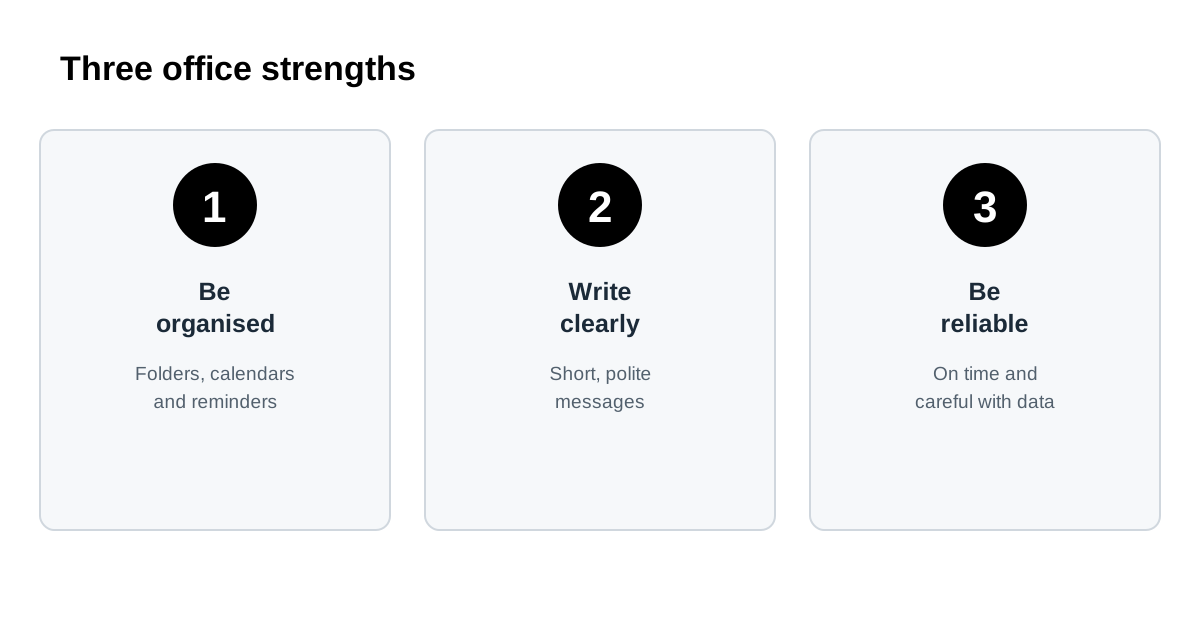
Start with a list of three priorities, deal with urgent requests first and record promises in your calendar. If two managers ask for conflicting things, explain the conflict politely and ask them to agree on the order. This habit protects you and shows maturity.
Frequently asked questions
Is Excel necessary?
Basic Excel is useful in many offices. Practise sorting, filtering and simple formulas.
Will I handle confidential data?
Often yes. Show that you understand privacy and follow company rules.
Are errands part of the job?
Sometimes. Ask for the duty list before accepting.