Security Guard Jobs in Dubai: Licensing, Training, and Eligibility
Security guards are part of daily life in Dubai. They stand at building entrances, patrol malls and residential communities, monitor cameras, manage access at events and protect industrial sites. Because the work involves safety, property and sometimes cash or confidential areas, private security is a regulated sector. This guide explains what guards actually do, how regulation and training generally work, what employers look for, and how to approach applications without falling for the unlicensed offers that circulate on social media.
Regulations change, and this article cannot replace official guidance. Confirm every requirement with the relevant authority before paying for training or documents.
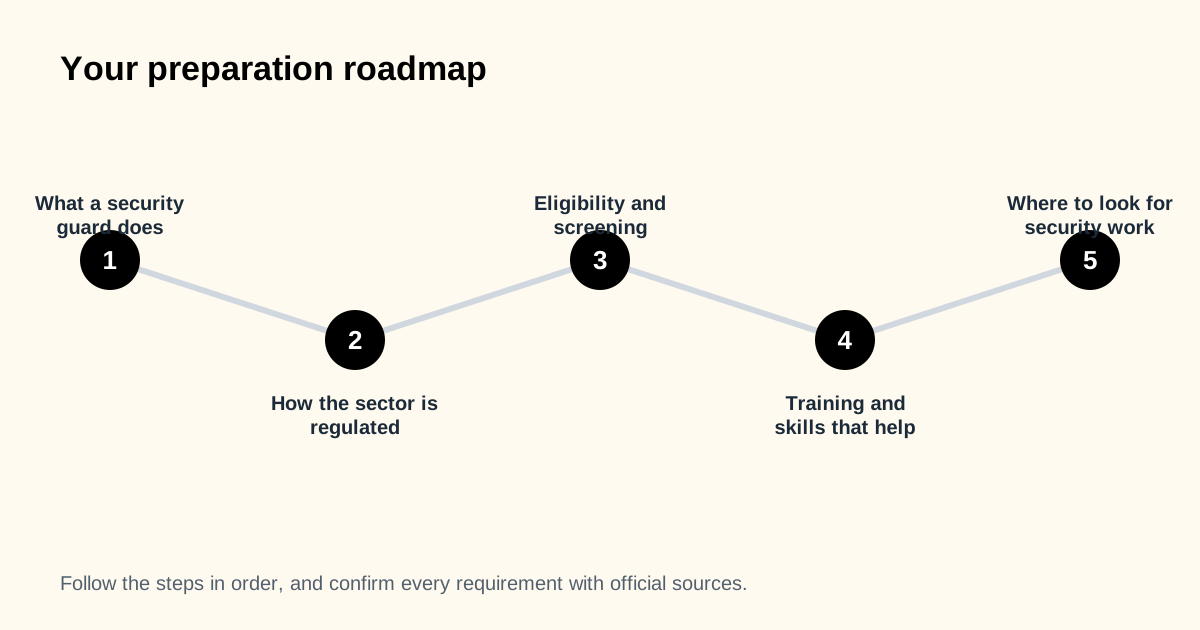
What a security guard does
The job is more than standing at a gate. Guards check identification, control entry and exit, log visitors, patrol areas, respond to alarms, report incidents, and help in emergencies such as fire alarms or medical incidents. They also deal with the public, often handling questions and complaints politely. At some sites, guards monitor CCTV or operate a control room, and at others they follow written post orders that describe exactly what to do and whom to call.
Good guards are observant, calm, physically fit enough for long shifts, and able to write a clear incident report. The role often involves standing, walking and working nights, weekends or holidays, so consider the lifestyle impact before you apply.
How the sector is regulated
Private security in the UAE is regulated, and rules are administered at emirate level. In Dubai, the Security Industry Regulatory Agency (SIRA) oversees the private security industry, including companies and personnel. In other emirates, different police or regulatory bodies are responsible. In general, legitimate security companies are licensed, and guards are expected to meet screening and training requirements before they work at a post.
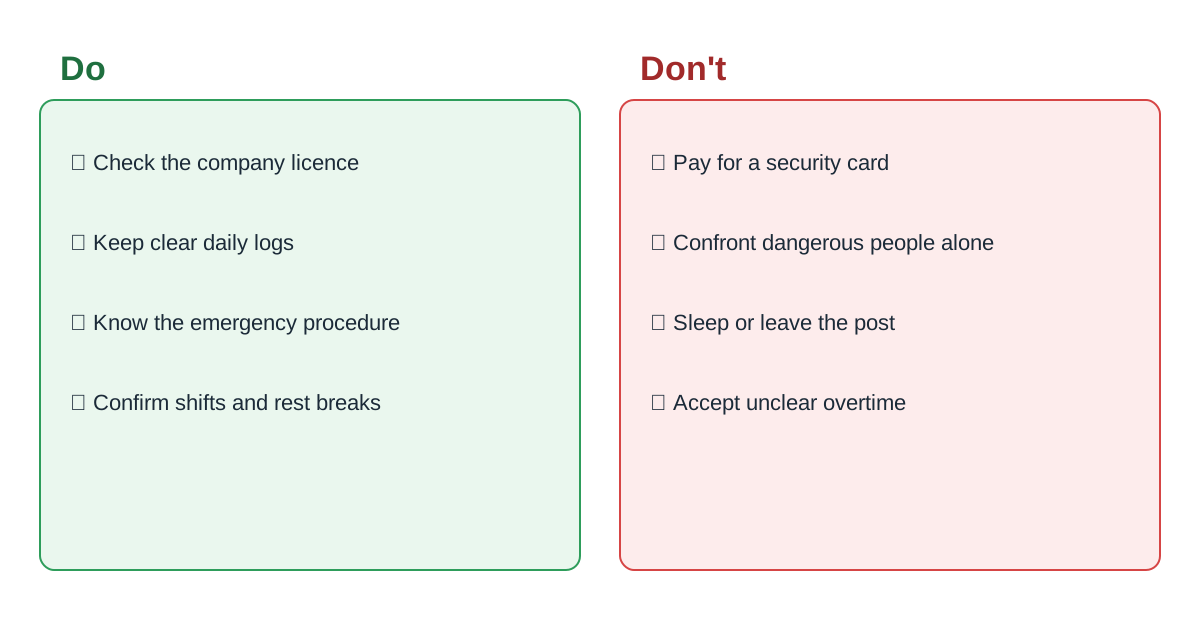
The practical point for job seekers is simple: a real guard job is usually offered by a licensed security company or an organisation with its own authorised security arrangements, and the training and permits are part of the formal process. Treat anyone who promises a security job without any screening or training as suspicious. Do not pay private individuals for "guard cards" or certificates. If you are unsure about a company, ask for its licence details and confirm them with the regulator.
Eligibility and screening
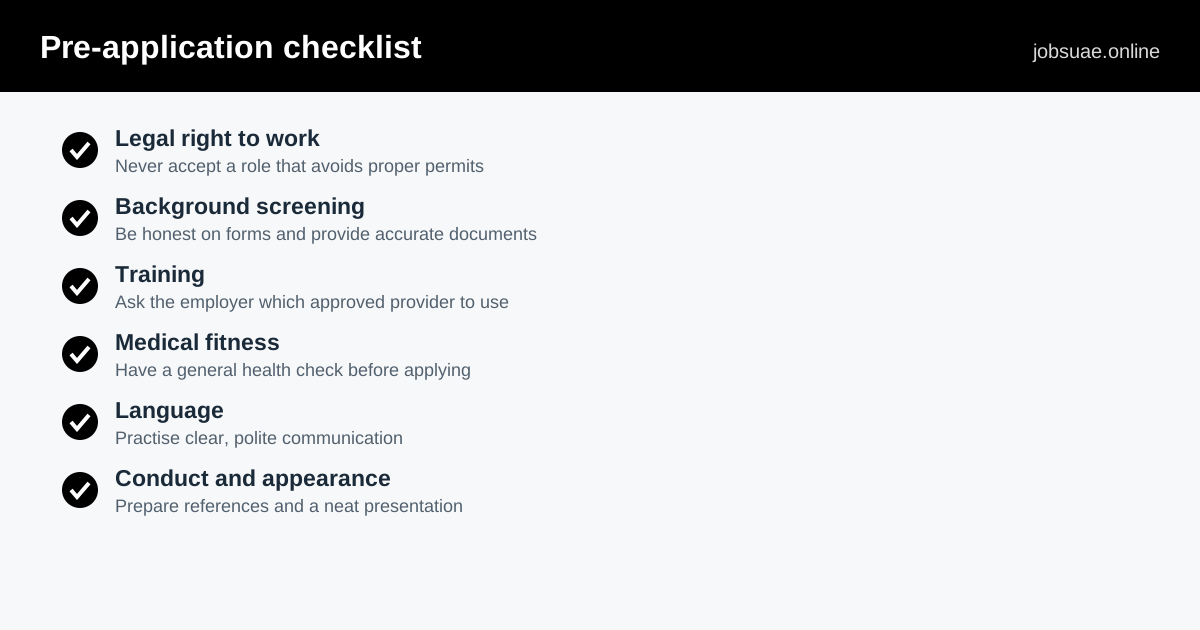
Requirements vary by employer and by the regulator, and they can be updated, so use the following as general guidance only.
| Area | What may be checked | What you can do |
|---|---|---|
| Legal right to work | Valid residency and work permit arrangements through the employer | Never accept a role that avoids proper permits |
| Background screening | Identity and any record checks required by the regulator | Be honest on forms and provide accurate documents |
| Training | Approved security training, first aid and emergency response | Ask the employer which approved provider to use |
| Medical fitness | Ability to stand, walk and respond for long shifts | Have a general health check before applying |
| Language | Basic English, and often Arabic or Hindi for the site | Practise clear, polite communication |
| Conduct and appearance | Professional behaviour and uniform standards | Prepare references and a neat presentation |
Training and skills that help
Even where an employer provides training, you can strengthen your profile in advance. Useful skills include basic first aid, fire safety awareness, report writing, conflict de-escalation and customer service. If you have worked in the army, police or a security firm in another country, describe that experience carefully and honestly, but do not assume it replaces local requirements.
Before you pay for any course, ask the employer or the regulator whether the provider is approved. A certificate from an unrecognised school may not be accepted. Many legitimate employers arrange or require specific training themselves as part of onboarding, which is a good sign.
Where to look for security work
Search through channels you can verify. Large licensed security companies publish roles on their own career pages. Property managers, malls, hospitals, hotels and facilities management firms may advertise guard positions directly or through contractors. Recruitment agencies can also place guards, but they should be licensed and should not charge candidates fees. Our guide to finding jobs in Dubai lists channels in more detail, and our scam guide explains how to test an offer.
Preparing your application
Keep your CV short and factual. Put your licence or training details, relevant experience, languages and availability near the top. State whether you can work night or rotating shifts, since many posts need them. A summary might read: "Security guard with two years of experience at a residential community, trained in first aid and fire safety, able to work rotating shifts, English and Hindi."
Prepare documents: passport copy, photographs, training certificates and any reference letters. Share them only with companies you have verified and at the stage when they are requested.
The interview
Interviewers want to see judgement and temperament. Typical questions ask how you would deal with a visitor without identification, an argument between residents, a lost child or a fire alarm. Strong answers follow procedure: stay calm, speak politely, follow site rules, avoid unnecessary force, call the supervisor or emergency services, and write a report. Employers also ask about punctuality and your willingness to work shifts.
Ask questions too: where the post is, the shift pattern, whether uniform and training are provided, how overtime is recorded and what the reporting line is.
A realistic shift from start to finish
Understanding a typical shift helps you decide whether the job suits you. A guard usually arrives early for a handover, reading the logbook and speaking with the previous shift about incidents, broken equipment or special instructions. After checking the uniform, radio, torch and keys, the guard takes up the post. Through the shift the routine includes checking visitors, answering questions, patrolling at set times, recording each round and watching for anything unusual. A guard may deal with a delivery driver who lacks authorisation, a resident who forgot an access card or a contractor who needs a permit.
Most of the time the work is quiet and repetitive, and concentration is the real skill. When something happens, the guard follows the written orders, informs the supervisor, calls emergency services if necessary and records the details clearly. At the end of the shift, the guard completes the logbook and hands over to the next person. People who enjoy structure, patience and responsibility tend to do well, while those who dislike long stretches of standing or night work may find it hard.
Mistakes guard applicants often make in security applications
Applicants often undermine themselves in predictable ways. Some say they have training but cannot name the course, provider or date, so the employer cannot check it. Others write vague CVs that never mention shifts, sites or languages. Some pay agents for documents that the employer would have arranged for free, and a few accept a post with no written contract. Being late for an interview is another quiet signal, because punctuality is central to the job.
To avoid these problems, keep a short list of your training with dates, bring originals to the interview, ask which parts of onboarding are paid for by the employer and insist on written terms before you resign from another job or travel.
Contracts, pay and conditions
Do not trust verbal promises. Request a written offer that states the job title, salary, working hours, rest days, overtime terms, accommodation or transport if offered, and who pays for training and uniform. Be wary if you are asked to pay recruitment, visa or training fees to the employer or an agent as a condition of the job. Check official guidance from MOHRE on contracts and read our guide on avoiding recruitment scams. If a deal seems to ignore licensing or permits, walk away.
Working safely and professionally
A guard should know the site's emergency plan, escape routes, and contact numbers on the first day. Report hazards early, keep your logbook accurate and avoid physical confrontation unless the law and your orders permit it. Heat is a real issue in summer, so ask about water, breaks and shaded posts. Professional conduct, including a respectful tone with residents, staff and visitors, protects both you and your employer.
Career paths
Experienced guards may become supervisors, control room operators, security trainers or site managers. Others move into related fields such as facilities management, safety coordination or loss prevention. Record your achievements, such as completed courses, incident reports handled well and positive feedback, because they support your next application.
Training and licensing
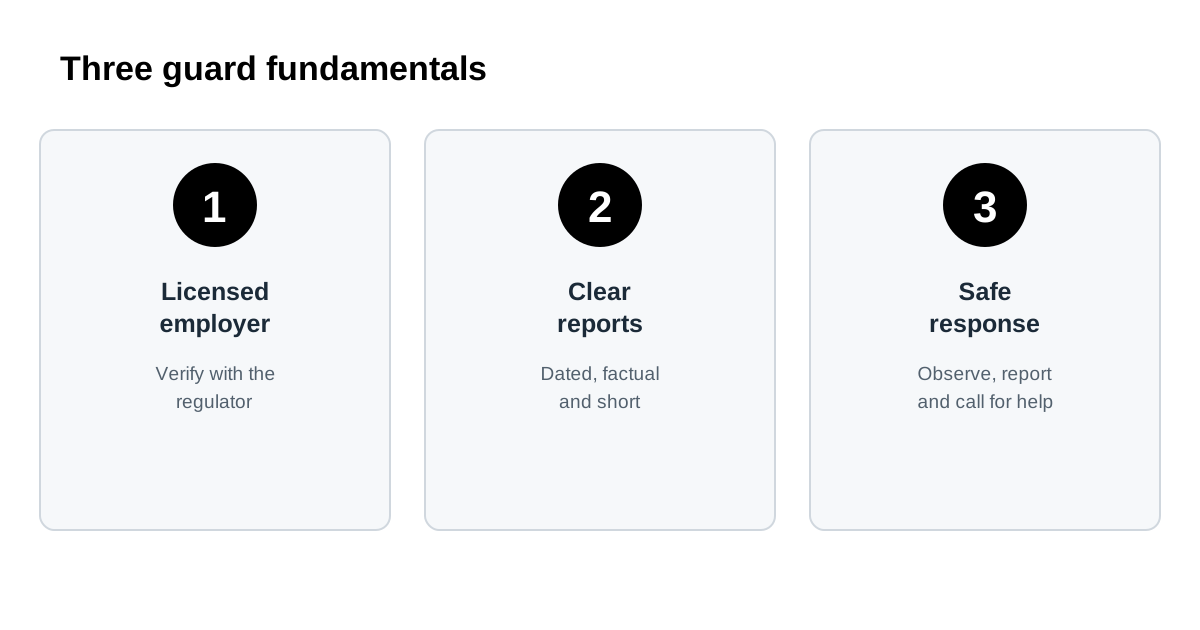
Private security work is regulated. In Dubai, the Security Industry Regulatory Agency oversees licensed security companies and personnel, and other emirates have their own regulators. A genuine employer should be licensed and should explain any required training, background checks and ID process. Do not pay an individual for a security "licence" or "card". Ask the company for its licence details and check them with the regulator.
What a good site report looks like
Guards are often judged on their records. A good log is dated, timed, factual and free of guesses: who arrived, what was checked, what was unusual, and who was informed. Practise writing short, neutral entries, since a clear incident report can protect both you and your employer.
Know your limits
Security guards are not police. Learn your employer's procedure for emergencies: who to call, when to observe and report rather than confront, and how to protect yourself. Ask about shift length, rest breaks and uniform costs before signing.
Conclusion
Security guard jobs in Dubai suit people who are alert, patient and dependable, and they take place in a regulated environment. Look for licensed employers, understand the screening and training involved, prepare honest documents, and read every offer before you accept. Ask the regulator about licensing, check general employment rules on the UAE Government portal and avoid any seller of unofficial guard cards. A careful approach protects you from fraud and shows employers that you take the responsibility seriously.
A day on duty: what employers expect
A typical shift begins with a handover from the previous guard: incidents, keys, equipment and special instructions. During the shift you check entry points, log visitors, patrol at set times and respond to alarms using the procedure. At the end you write a handover for the next guard. Reliability here means being on time, alert and consistent, because gaps in a log can cause real problems.
Handling difficult people
Stay calm, speak politely and keep distance. Explain the rule, offer an alternative, and call your supervisor if the person does not comply. Never argue or use force beyond your authority. Write the details in your report as soon as it is safe.
Frequently asked questions
Do I need training?
Many employers require approved training or briefings. Ask which are required and who pays.
Can a guard detain someone?
Powers are limited and depend on law and company policy. Follow the written company procedure and call the authorities.
What shifts are common?
Many sites use long or rotating shifts, including nights. Ask for the roster and rest-break rules.