Cleaner Jobs in the UAE: Responsibilities, Requirements, and Job Search Tips
Every clean office tower, shining mall corridor and spotless hotel room in the UAE depends on cleaning staff who often work before most people arrive and after most have left. Cleaning is physically demanding, requires care and discipline, and is essential to public health and a company's reputation. Yet it is also one of the fields where job seekers are most often misled, because the work is in constant demand and applicants may be less familiar with their rights. This guide explains what cleaners do, the settings they work in, the skills and safety knowledge employers value, how to apply and how to check an offer before you commit.
It does not list vacancies or salary figures, and it cannot promise any employer is hiring. Conditions vary, so ask for every important detail in writing.
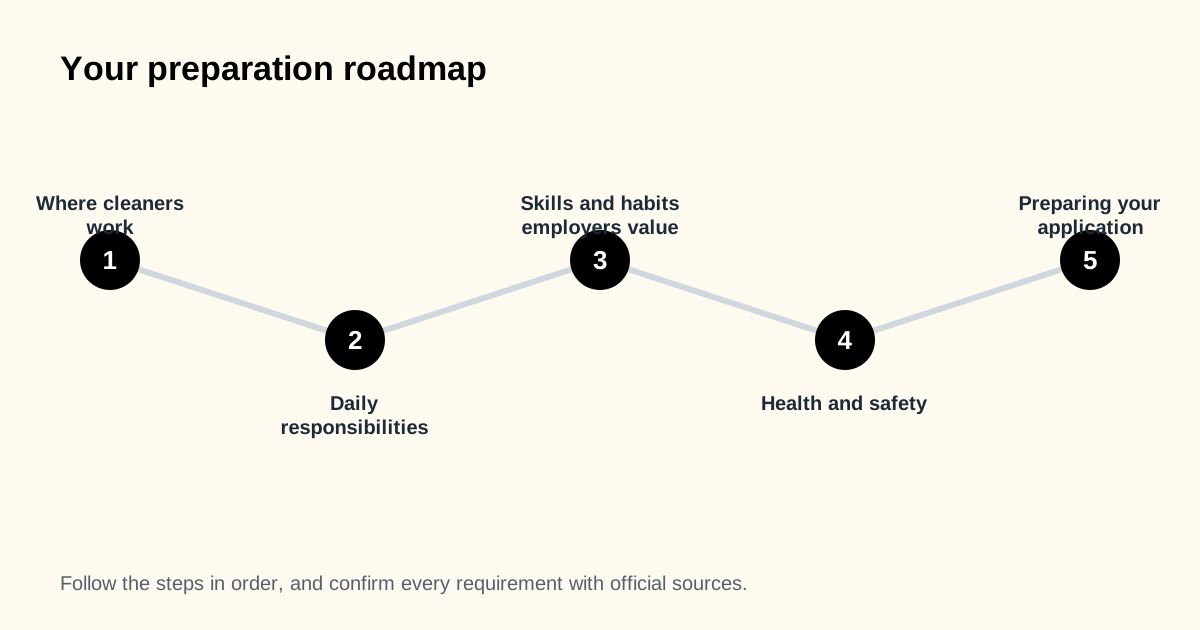
Where cleaners work
The word "cleaner" covers several different jobs, and the setting changes the tasks, hours and tools.
Commercial and office cleaning
Office cleaners empty bins, vacuum, mop, dust, clean restrooms, restock supplies and tidy shared areas. Many shifts take place early in the morning or in the evening to avoid disturbing staff. Reliability and trustworthiness are central, because cleaners often work in spaces containing equipment and documents.
Malls and public spaces
Mall cleaners maintain floors, restrooms, food courts and entrances throughout opening hours. They must work quickly without obstructing visitors, and they respond to spills and incidents. The work is on foot for long periods.
Hotels and hospitality
Room attendants, public area cleaners and laundry staff keep hotels ready for guests. Standards are high, and supervisors inspect rooms. Our guide to hotel jobs in Dubai explains how housekeeping fits into the wider hotel structure.
Healthcare and specialised cleaning
Hospitals and clinics require strict hygiene procedures, including handling of waste, disinfecting surfaces and following infection control rules. Staff in these places receive specific training, and mistakes can have serious consequences.
Residential and domestic cleaning
Some cleaners work for companies that serve homes, while others are employed directly as household staff. The legal and practical arrangements differ from commercial employment, and job seekers should check current official rules for the type of arrangement offered.
Daily responsibilities
Although tasks differ, many cleaning roles share a basic routine: preparing equipment and chemicals, cleaning surfaces in a set order, handling waste, restocking supplies, completing a checklist and reporting problems such as leaks, broken fixtures or safety hazards. A good cleaner works systematically, from top to bottom and from clean to dirty areas, to avoid spreading dirt. Supervisors usually check work against a written standard, so learning the standard is part of the job.
Skills and habits employers value
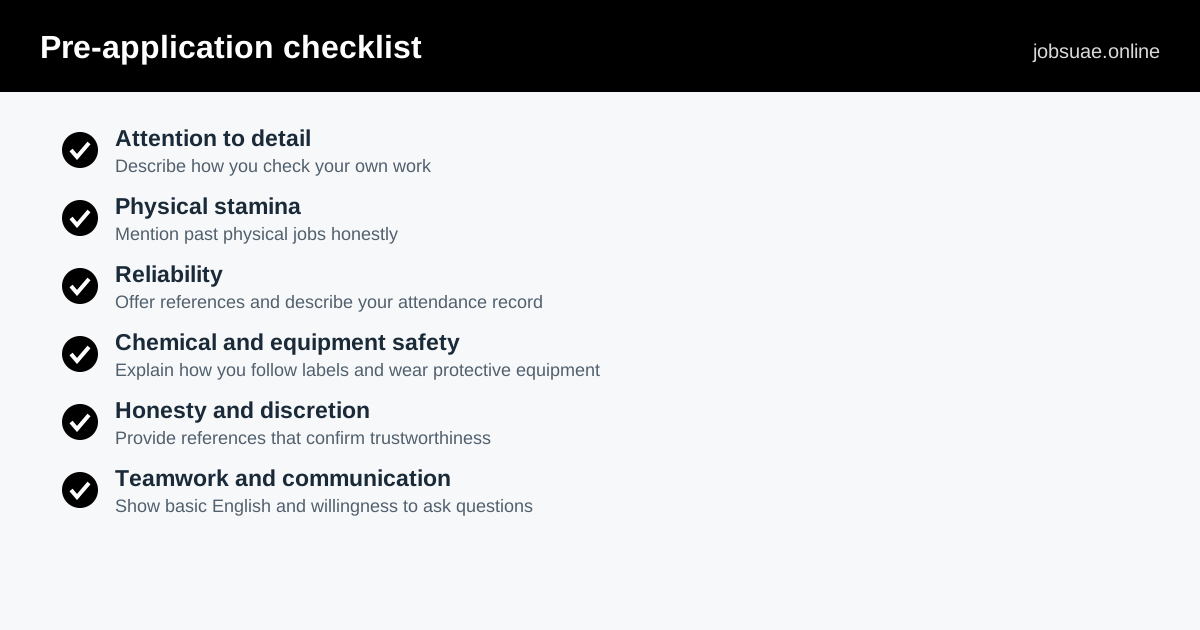
The table below summarises common requirements and how to show them. It is general guidance and varies by employer.
| Skill or habit | Why it matters | How to show it |
|---|---|---|
| Attention to detail | Missed spots lead to complaints and failed inspections | Describe how you check your own work |
| Physical stamina | The work involves standing, bending and walking | Mention past physical jobs honestly |
| Reliability | Cleaning schedules depend on every team member | Offer references and describe your attendance record |
| Chemical and equipment safety | Misuse can cause injury and damage | Explain how you follow labels and wear protective equipment |
| Honesty and discretion | Cleaners work in private and sensitive spaces | Provide references that confirm trustworthiness |
| Teamwork and communication | Instructions must be understood and followed | Show basic English and willingness to ask questions |
| Time management | Work must be completed within a set shift | Describe how you plan a cleaning round |
Health and safety
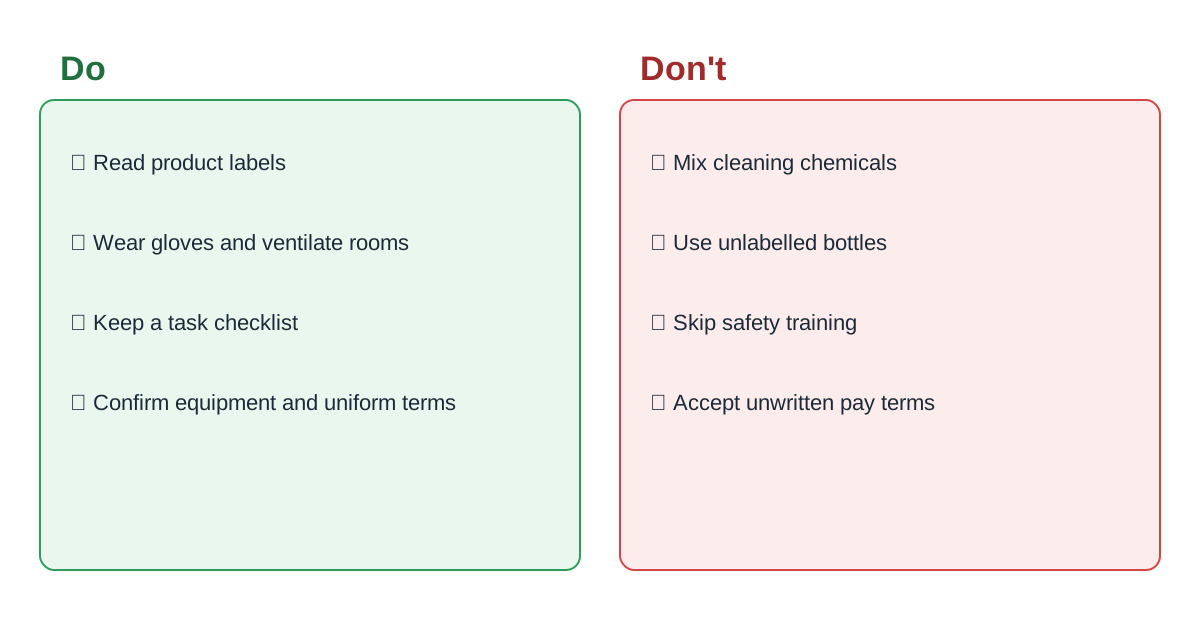
Cleaning looks easy but carries real risks. Chemicals can harm skin, eyes and lungs, especially when products are mixed. Never mix cleaning products unless instructed, always read labels and use gloves, masks or eye protection when required. Wet floors cause slips, so use warning signs. Lifting buckets and equipment can strain the back, so bend the knees and ask for help.
Heat is a major issue in the UAE, particularly for work near entrances, outdoors or in buildings with poor cooling. Drink water regularly, take authorised breaks and tell a supervisor if you feel dizzy or unwell. Report accidents and near misses promptly. A good employer provides training, protective equipment and clear procedures, and asking about these during the interview is reasonable.
Preparing your application
Cleaning employers usually want a simple CV or application form. List previous cleaning, housekeeping or similar work, the type of places, tasks performed and equipment used. Mention languages, availability for shifts and willingness to work early or late hours. If you are new to cleaning, describe relevant experience, such as running a household or helping in a family business. See the UAE-style CV guide for a section-by-section approach.
Prepare identity documents and references, but share sensitive documents only with verified employers and at the stage requested. A genuine employer does not ask cleaners to pay for a job.
Where to look and how to be careful
Cleaning and facilities management companies publish openings on their own sites and through licensed recruitment agencies. Hotels, malls, hospitals and property managers sometimes recruit directly. Our guide to finding jobs in Dubai sets out a weekly routine for searching and tracking applications.
Be cautious with social media adverts that promise very high pay, accommodation and visas for cleaning work in exchange for a fee. Our guide to avoiding recruitment scams lists the warning signs. If you are offered a job abroad, ask for a written contract, verify the company's identity and confirm with official sources how permits and entry work before you travel.
The interview or trial
Interviews for cleaners are often short and practical. You may be asked about previous work, availability, ability to work in heat and how you would handle specific tasks, such as cleaning a restroom or dealing with a spill. A trial shift or practical test is common, and employers watch how you organise your work, how careful you are and whether you follow safety rules.
Good answers are simple and truthful: explain your method, mention safety, and show that you take responsibility. Ask about shift times, breaks, protective equipment, training, transport and the location of the workplace.
Contracts, pay and conditions
Do not rely on verbal promises. Ask for a written offer stating the job title, salary, working hours, rest days, overtime terms, accommodation and transport if provided, and any deductions. Check who pays for uniforms and equipment, and what the notice period is. If the employer or an agent asks for a recruitment or visa fee, or wants to hold your passport, treat it as a serious warning and seek official guidance. MOHRE and the UAE Government portal publish current guidance on contracts and permits.
Career paths in cleaning
Experienced cleaners can progress to team leader, supervisor, inspector or facilities coordinator roles. Some specialise in areas such as healthcare cleaning, machine operation or window and façade cleaning, which may require additional training. Others move into housekeeping management or facilities administration. To progress, learn the standards, take training offers, improve your English and keep a reputation for reliability.
Planning a cleaning round
A good cleaner works to a plan rather than wandering from room to room. Start by collecting equipment and checking that chemicals are labelled. Clean from the highest surfaces to the lowest, so dust falls onto areas that have not yet been done. Move from the cleanest zones to the dirtiest, with restrooms usually last, and use separate cloths for different areas to avoid spreading germs. Finish with floors, retreating toward the exit, and then restock supplies and empty waste.
Following a routine makes you faster and more consistent, and it helps supervisors trust your work. If you are given a checklist, tick tasks as you go and report anything you could not complete, with the reason.
Dealing with customers and colleagues
Cleaners often meet staff and visitors. Greet people politely, stand aside when they pass and apologise if you interrupt. Use warning signs for wet floors and avoid blocking exits. If someone leaves valuables unattended, do not touch them and tell a supervisor. Respect privacy in offices and rooms, and never go through belongings. If a conflict arises, stay calm and call a supervisor rather than arguing. A professional attitude protects your reputation and your job.
Mistakes cleaning applicants often make
Some applicants accept jobs without asking about accommodation, transport or shift length, then find the conditions difficult. Others mix chemicals or ignore safety instructions. Some pay agents for placement and lose money. A few are unclear about what is included in the contract and later face disputes. To avoid these problems, ask questions, follow safety rules, keep copies of documents and verify the employer.
Chemical safety every cleaner should know
Never mix cleaning products, especially bleach with ammonia-based or acidic cleaners, because dangerous fumes can form. Read labels, keep products in their original containers, wear gloves, and ventilate rooms. If a product splashes into your eyes or you feel dizzy, stop and follow your employer's emergency procedure. Ask for training on products you have not used before.
Residential, commercial and specialist cleaning
Home cleaning depends on trust and flexibility. Commercial cleaning means set routines, checklists and often night shifts. Specialist work such as deep cleaning or facade cleaning needs equipment training and strict safety. Choose the type that matches your stamina and schedule.
Check the agreement
Confirm who provides uniforms, equipment and transport, how overtime is counted, and where you will live. Be careful with arrangements that pay by the hour but give no written terms.
Conclusion
Cleaner jobs in the UAE are demanding but essential, and they reward people who are careful, reliable and safety-conscious. Understand the setting you are applying for, prepare an honest application, use legitimate channels and read every offer before you accept. Before signing, compare the written terms with the guidance on MOHRE and the UAE Government portal, and keep your passport in your own hands. Good work habits and clear agreements protect both your health and your income.
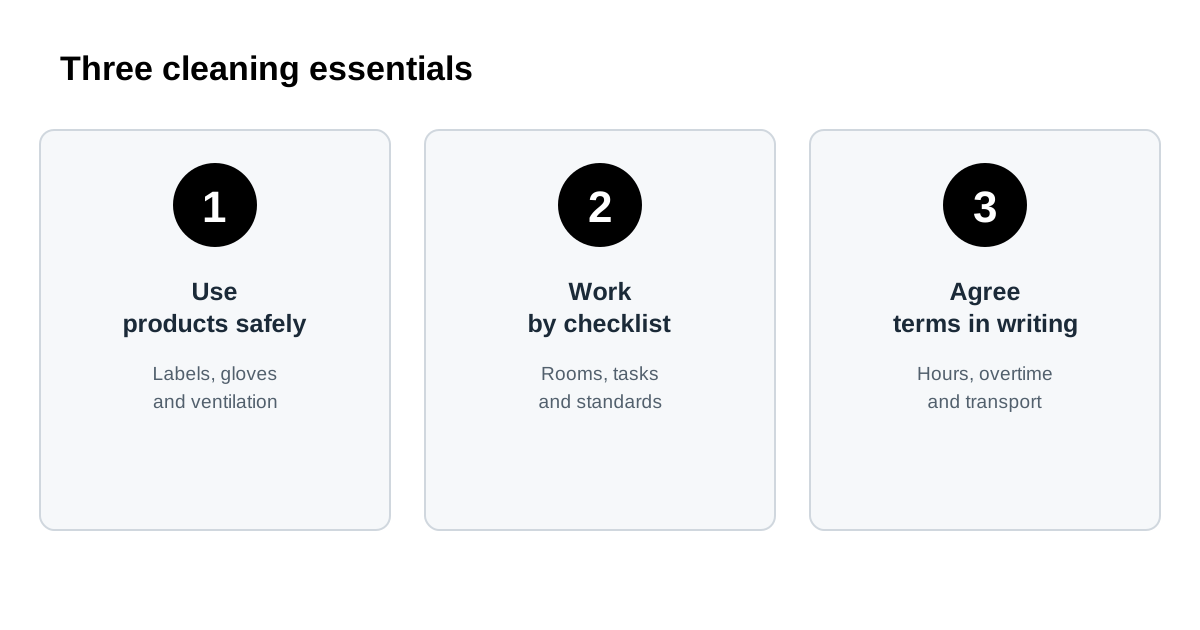
A simple room-cleaning order that saves time
Work from top to bottom and from clean to dirty: remove rubbish, dust high surfaces, clean fixtures, wipe surfaces, and mop the floor last as you move towards the exit. Use separate cloths for bathrooms and kitchens to prevent cross-contamination. Supervisors value cleaners who follow a consistent routine, because results are predictable and faster.
Protecting your body
Lift with your legs, avoid twisting while carrying, and take short breaks. Report any skin irritation or breathing problems from products and ask for a different product or gloves. Do not ignore pain, since small injuries become big problems over time.
Frequently asked questions
Do cleaners need experience?
Many entry roles train new staff, but experience helps. Be honest about what you have done.
Who provides equipment?
It depends on the employer. Ask who supplies uniforms, tools and products.
Are night shifts common?
Commercial cleaning often uses early or night shifts. Ask for the roster and transport options.